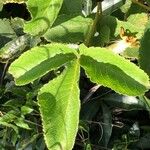
Caryocar brasiliense
Pequi · Piki · Pekea nut · Souari nut · Sowarri nut
Description
Source: leafsnapCaryocar brasiliense, commonly known as the Pequi tree, is a species native to the Cerrado biome of Brazil. This medium-sized tree can grow up to 10 meters tall and features a dense crown with dark green leaves. Its most notable aspect is the Pequi fruit, which is orange-yellow and contains edible seeds encased in a fragrant yellow pulp with an intense flavor. For centuries, indigenous communities in Brazil have utilized the Pequi fruit for its nutritional and medicinal properties. The oil extracted from its seeds is rich in fatty acids, antioxidants, and vitamins A and E, making it highly valued in the cosmetic industry. Ecologically, the Pequi tree is crucial as it provides food for various animal species, including birds and monkeys. It also helps maintain soil fertility by fixing atmospheric nitrogen into the soil. Despite its ecological importance and cultural significance in Brazilian cuisine, Caryocar brasiliense faces threats from deforestation due to agricultural expansion and urbanization. Conservation efforts are underway, including reforestation programs and sustainable management practices, to protect this species while promoting its economic value and preserving natural resources. In conclusion, the Caryocar brasiliense, or Pequi tree, plays a vital ecological and cultural role. Its edible fruits and the oil extracted from its seeds offer significant nutritional and medicinal benefits, making it highly valuable in the cosmetic industry as well.
Care Guide
💧 Water Every 7 days
☀️ Light Full sun
Pequi comes from open habitats like sunny meadows and forest margins that provide abundant light. It does best in full sun but can endure partial sun, adapting to a range of light conditions.
🌡️ Temperature 20–37.8°C
Pequi comes from tropical areas where the climate is generally warm and humid. Consequently, it is well suited to high temperatures and humidity. It does not tolerate sudden temperature shifts and prefers a steady temperature, so avoid fluctuations indoors. It typically cannot withstand cold and needs warmer conditions to grow. If the surrounding temperature falls too low, the plant may stop growing or even die.
💨 Humidity
🪴 Soil 6-7
🌱 Fertilizer
Prefer organic fertilizers (for example, fish emulsion or compost) instead of chemical ones for Pequi. Supply young plants with higher levels of nitrogen and phosphorus in spring. Mix compost or fertilizer into the soil either before or after planting. For mature plants, apply a balanced spring fertilizer or one specific to the nutrient deficiency. Nutrient shortages result in small leaves, stunted branches, yellow or bronze foliage, sour fruits, premature fruit drop, and fruit splitting.
🪴 Pot & Repot
✂️ Pruning
🌿 Propagating
🐛 Diseases & pets
☠️ Toxicity
Characteristics
- Plant Type
- Tree
- Life Cycle
- Perennial
- Genus
- Caryocar
- Family
- Caryocaraceae
- Hardiness Zone
- 9-11
- Mature Height
- 4.88 m to 10.06 m
- Mature Spread
- 6.1 m to 7.92 m
- Leaf Color
- Dark Green
- Leaf Type
- Evergreen
- Flower Color
- White
- Flower Size
- 5.08 cm to 6.35 cm
- Bloom Time
- Fall
- Planting Time
- Spring, Summer, Autumn
- Harvest Time
- Winter