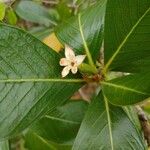
Casasia clusiifolia
Seven-Year-Apple · Sevenyear apple · Seven-year Apple
Description
Source: leafsnapCasasia clusiifolia, commonly known as the Clusia or Autograph Tree, is a tropical evergreen plant native to the Caribbean and South America. This slow-growing shrub or small tree can reach heights of up to 30 feet. It features thick, leathery, oval-shaped leaves that are glossy green. Notably, the underside of the leaves has a waxy coating that helps the plant retain moisture. Casasia clusiifolia produces small white flowers with yellow centers that bloom year-round. These flowers are followed by round fruit capsules containing numerous seeds. The Clusia plant is popular as an ornamental plant due to its attractive foliage and unique growth habit. It can be cultivated both indoors and outdoors in warm climates, provided the soil is well-draining and the plant receives partial shade. Besides its ornamental value, Casasia clusiifolia has several medicinal uses. It is known for its antibacterial properties, which make it useful for treating skin conditions such as burns and wounds. In summary, Casasia clusiifolia is a fascinating tropical plant with appealing foliage, suitable for decorative and medicinal purposes.
Care Guide
💧 Water Every 7 days
The seven-year apple is well-adapted to dry spells, thriving due to its balanced tolerance for both moisture and drought. It needs watering every 2-3 weeks and benefits from rain during the growing season, which enhances its growth. This plant is ideally suited for warmer climates.
☀️ Light Full sun
Seven year apple comes from open habitats, such as sunny meadows and forest edges, which offer abundant light. It grows best in Full Sun but can tolerate Partial Sun, adapting well to various sunlight conditions.
What are the sunlight requirements for Seven year apple plants?
Seven year apple (Casasia clusiifolia) thrives best in full sun, which means it requires more than 6 hours of sunlight daily, but it can also tolerate partial sun, needing about 3-6 hours of sunlight. This adaptability makes it suitable for various garden spots, ensuring it gets the right balance of light and shade. Remember to observe the sunlight's movement through your garden to pick the ideal location for these plants.
How do I use artificial lighting for indoor Seven year apple plants?
When natural sunlight is lacking, especially during winter or in less sunny spaces, artificial lighting becomes crucial for the growth of indoor Seven year apple plants. LED lights are recommended because they can be customized to provide the specific wavelengths your plants need. For full sun plants, 30-50W/sq ft of light is ideal, partial sun plants require 20-30W/sq ft, and full shade plants need 10-20W/sq ft. Place the light source 12-36 inches above the plant, simulating natural sunlight, and ensure the plants get 8-12 hours of light each day.
What symptoms indicate my Seven year apple is receiving insufficient light?
If your Seven year apple is not getting enough light, it may show signs like smaller new leaves, leggy or sparse growth, premature leaf drop, slowed or halted growth, and lighter-colored or chlorotic new leaves. Excessive sunlight can lead to symptoms such as sunscald, leaf curling, wilting, and leaf scorching. These symptoms highlight the plant's need for an ideal light balance, whether that involves moving it to a spot with more sunlight or employing artificial lighting solutions.
How can I address light-related issues for my Seven year apple?
To mitigate light deficiency, gradually move your Seven year apple plants to locations with more sunlight, aiming for at least 6 hours of direct sunlight daily. This could involve using a south-facing window or artificial lights for indoor plants and carefully moving outdoor plants to sunnier spots each week to avoid shock. If trees obstruct sunlight, consider pruning them. For smaller plants, you might transplant them during their dormant period to a brighter location. Note that while parts of the plant already damaged by insufficient sunlight might not recover, new growth should be healthy with improved lighting conditions.
🌡️ Temperature 20–37.8°C
Seven year apple comes from tropical areas, where the climate is generally warm and humid. Because of this, it is well suited to high temperatures and humidity. It is sensitive to sudden temperature changes and prefers a steady temperature, so it is important to avoid indoor temperature fluctuations. It usually cannot tolerate cold and needs higher temperatures to grow. If the surrounding temperature falls too low, the plant may stop growing or even die.
💨 Humidity
🪴 Soil 6-6
🌱 Fertilizer
The best time to fertilize a Seven year apple is in early spring as it breaks dormancy. This encourages overall growth and flower development. Fertilizing improves foliage, stems, and branches, and supports flowers that are large, bright, and long-lasting. It helps transfer nutrients from the roots to the flowers and enhances the plant's health and resistance to disease.
🪴 Pot & Repot
✂️ Pruning
A Seven-Year Apple Tree flourishes with the right care, especially when pruned from early to late winter. Remove any dead or damaged branches to improve air circulation and encourage balanced growth. Be sure to use clean, sharp tools for precise cuts, which helps prevent disease and enhances the tree's overall appearance.
🌿 Propagating
🐛 Diseases & pets
☠️ Toxicity
Characteristics
- Plant Type
- Tree, Shrub
- Life Cycle
- Perennial
- Genus
- Casasia
- Family
- Rubiaceae
- Hardiness Zone
- 10-12
- Mature Height
- 2.44 m to 6.1 m
- Mature Spread
- 2.44 m to 4.57 m
- Leaf Color
- Dark Green
- Leaf Type
- Evergreen
- Flower Color
- White
- Flower Size
- 5.08 cm to 6.35 cm
- Bloom Time
- Late spring, Summer
- Planting Time
- Spring, Summer, Autumn
- Harvest Time
- Late summer, Fall
- Native Area
- Bahamas, Cuba