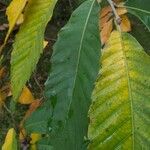
Castanea sativa
بلوط · Sweet Chestnut · European chestnut · Spanish chestnut · European Horse Chestnut
Description
Source: leafsnapCastanea sativa, commonly known as the sweet chestnut, is a deciduous tree of the Fagaceae family. Native to southern Europe and western Asia, it has been cultivated for its edible nuts for thousands of years. The tree can grow up to 30 meters tall and features a broad crown with deeply furrowed bark. Its leaves are long, narrow, and toothed, with a glossy green surface that turns yellow in autumn. The sweet chestnut produces male flowers in long catkins that hang from the branches, while female flowers are located at the base of new shoots. The nuts develop inside spiny burrs, which split open when ripe in the autumn, revealing one or two shiny brown nuts. Historically, the sweet chestnut has been used for various purposes, including timber for furniture making, construction material, and fuelwood or charcoal production. It is also popular as an ornamental tree due to its attractive foliage and distinctive bark texture. In addition to being delicious when roasted or boiled as a snack or used as an ingredient in various dishes like stuffing or soups, sweet chestnuts have also been used medicinally. They are highly nutritious, containing vitamins B6 and C, minerals such as potassium and magnesium, and antioxidants like flavonoids and tannins. These antioxidants help protect against oxidative stress caused by free radicals, which can potentially harm our cells over time if not counteracted by proper nutrition habits.
🌳 Sweet chestnut is often known for its strong wood and tasty nuts, but its bark hides a secret — it is rich in tannins used for tanning leather and producing ink. Notably, Roman soldiers once boiled the bark to treat their horses' battle wounds, and ink made from that bark appears in numerous Medieval writings. Its nectar also feeds a range of pollinators, boosting local biodiversity.
🎭 Precaution, forethought, fruitfulness, supply, plenty, long life, revitalization
Care Guide
💧 Water Every 7 days
The sweet chestnut, native to temperate regions of Europe, thrives best with moderate moisture and can tolerate short periods of drought. It should be watered every one to two weeks, ensuring the soil is allowed to dry out slightly between watering sessions. Its growth cycle is closely linked to seasonal rainfall, which influences its dormancy and water requirements.
How often do I need to water my Sweet chestnut tree?
The Sweet chestnut prefers deep and infrequent watering. When planted in pots, it is important to soak them with a gallon of water each time, as the water storage in pots is limited and the soil dries out quickly. In cold regions, water is needed every 3 to 5 days. It is recommended to water early in the morning when the soil is dry, both indoors and outdoors. You can check if watering is needed by examining the soil - when the top 2-3 inches are dry, it's time for a full watering. On hot days, check the moisture daily, as the heat can dry out the soil rapidly. For gardens, irrigation is necessary. In hot climates, watering once a week is suitable. Make sure not to add water if about 2 to 3 inches of soil are already dry, taking into account the amount of rainfall the plant receives. Sweet chestnuts mainly grow during spring and fall. Outdoors, adding mulch about 3 to 4 inches deep helps conserve water. In sandy soil, more frequent watering is necessary as it drains faster. However, with clay soil, watering can be done less frequently, allowing 2-3 days for the plant to dry out and prevent root rot. To keep track of watering, mark the dates on a calendar and be attentive if the leaves start drooping, as this may indicate the need for immediate watering.
Why do I need to water my Sweet chestnut tree?
To properly nourish the Sweet chestnut plant, it is important to water it in order to transport nutrients from the soil to the rest of the plant. The amount of water needed depends on the weather conditions and soil type in your area. While this species thrives on moist soil, it does not do well with excessive waterlogging. When planting in the ground, make sure to use enough mulch and avoid under-watering. In pots, it is best to water them until the soil is moist at the base to encourage optimal growth. If growing for foliage, water them to a depth of 10 to 20 inches for continuous growth. During rainy periods, it is not necessary to water them as they will obtain the needed nutrients from the rainwater.
How should I water my Sweet chestnut tree?
Here are some tips for watering your plants effectively: - Place a garden hose at the base of the plant to promote root development. Avoid spraying the leaves directly, as this can cause issues. - If your plants are outdoors and exposed to direct sunlight, their leaves will need more water. Consider this when watering. - Bubblers can be used to moisten the roots of each plant. This is a good option to ensure proper watering. - Soaker hoses are great for covering the entire garden or bed. Use them when adding or removing plants to ensure that the roots are deeply watered. - After watering, make sure to drain any excess water and allow the soil to dry before watering again. - Watering at ground level helps prevent diseases. - On a sunny day, it's a good idea to spray the entire bush with water. - Whether your plants are potted or in the ground, remember that Sweet chestnut prefers deep watering rather than light sprinkling.
What should I do if I give a Sweet chestnut tree too much or too little water?
An overwatered Sweet chestnut can exhibit several signs, including yellowing leaves that drop off and wilt, and a dull, unhealthy appearance with mushy stems. It's important to adjust your watering schedule when these signs begin to show. On the other hand, wilting can also indicate under watering, with leaves becoming crispy and dry. To address this issue, check the soil and give it a thorough watering when it is dry. However, even with enough water, the Sweet chestnut may still appear dry with yellow leaves for a few days due to root damage. Once it returns to normal, the yellowing of the leaves will cease. When keeping Sweet chestnut indoors, always check the moisture levels in the pot and avoid overwatering. Look for signs of black spots, and if present, allow the soil to dry out by refraining from watering for a few days. Overwatering can cause root rot, so consider transferring the plant to a different pot if you notice discolored and slimy roots. It's important to avoid root rot by preventing the soil from becoming too soggy. When planting the Sweet chestnut outdoors, dig a little deeper and if the soil feels dry, it may indicate underwatering. Adequate watering is necessary to facilitate the plant's recovery.
How much water should I give my Sweet chestnut?
The Sweet chestnut tree should generally be given about a gallon of water on a regular basis. For potted plants, water them deeply until water starts dripping from the bottom of the pot. Then, wait for the soil to dry before watering again. To determine the amount of water given in a week, you can use a water calculator or a moisture meter. During the flowering period, provide plenty of water but allow the moisture to evaporate to avoid root rot. If the Sweet chestnut tree is planted outdoors and there is adequate rainfall, additional watering may not be necessary. However, when the tree is young or newly planted, ensure it receives 1-2 inches of rain per week. As the tree grows, it can rely solely on rainfall. Only in very hot weather or during prolonged periods of no rainfall for 2-3 weeks, consider giving the tree a full watering during cooler times of the day to prevent damage from heat. Additional watering will be needed during extended dry spells.
☀️ Light Full sun
Sweet chestnut grows best in places with abundant sunlight for most of the day, although it can tolerate locations that receive sun for only part of the day. Both too much and too little sunlight can impair its vigorous growth and overall health.
What are the sunlight requirements for Sweet Chestnut (Castanea sativa)?
Sweet Chestnut (Castanea sativa) thrives best in environments where it can receive abundant sunlight for most of the day. However, it is capable of growing in areas that receive only a few hours of sunlight each day. The plant requires more than 6 hours of sunlight for full sun conditions, and about 3-6 hours for partial sun. An important note is to observe the movement of sunlight through your garden to find spots that offer a perfect balance of light and shade, which ensures the plant's optimal growth and happiness.
What are the solutions for Sweet Chestnut when exposed to too much or too little sunlight?
For indoor Sweet Chestnut plants suffering from insufficient sunlight, gradually transitioning them to receive at least 6 hours of direct sunlight daily is key. Utilize south-facing windows and keep curtains open during the day. If natural light is inadequate, supplement with artificial lighting, maintaining it for at least 8 hours daily. Outdoor plants should also be gradually moved to sunnier spots to avoid sunburn, ensuring they adapt without stress. If certain parts of your garden block sunlight, consider pruning or transplanting smaller plants during their dormant period to sunnier locations with better drainage.
What artificial lighting requirements should be considered for indoor Sweet Chestnut plants?
When natural sunlight is insufficient for indoor Sweet Chestnut plants, particularly during winter or in less sunny spaces, artificial lighting becomes necessary. LED lights are recommended due to their ability to be customized for specific wavelengths needed by your plants. Full sun plants need 30-50W/sq ft, partial sun plants need 20-30W/sq ft, and full shade plants need 10-20W/sq ft of artificial light. The light source should be positioned 12-36 inches above the plant, mimicking natural sunlight, and the lighting duration should replicate the plant's natural daylight needs, typically 8-12 hours per day.
What are key symptoms of light deficiency or excessive light in Sweet Chestnut?
Sweet Chestnut may display several symptoms if it experiences light deficiency or excess. Symptoms of insufficient light include reduced leaf size, leggy or sparse growth, faster leaf drop, slower or halted growth, lighter-colored new leaves, indicating a lack of chlorophyll and essential nutrients. Excessive sunlight can cause chlorosis (yellowing leaves due to chlorophyll breakdown), sunscald (damage from intense light exposure), leaf curling (a defense mechanism against too much light), wilting (loss of turgor pressure due to water loss), and leaf scorching (brown, dry edges on leaves). These symptoms highlight the plant's struggle with inappropriate light levels.
🌡️ Temperature 5–32.2°C
The native habitat of sweet chestnut indicates it prefers moderate temperatures between 41 and 90 °F (5 and 32 °C). Overall, it does best in a temperate climate. In winter it can tolerate colder conditions down to 23 °F (-5 °C) with some protective measures, and in summer it can endure highs up to 90 °F (32 °C) when supplied with adequate water and shade.
What is the native environment preference for sweet chestnut?
Sweet chestnut thrives in a temperate climate, favoring mild temperatures that range from 41 to 90°F (5 to 32°C). It is capable of tolerating lower temperatures down to 23°F (-5°C) during winter with some protective measures. In summer, sweet chestnut can withstand temperatures up to 90°F (32°C), provided it receives sufficient water and shade. Despite its high cold tolerance, it is suggested to water the plant generously before the first freeze in autumn to ensure the soil remains moist, helping prevent drought and water scarcity during winter and early spring.
How does sweet chestnut respond to low temperatures and what are the recommended solutions?
Sweet chestnut demonstrates extreme cold tolerance, but it's crucial that winter temperatures are kept above -25°C. If temperatures fall below this threshold, the plant might not show noticeable changes during winter; however, branches could become brittle and dry by spring, leading to a lack of new shoots. The recommended solution for these symptoms is to prune away any dead branches that have failed to produce new leaves in the spring.
What happens to sweet chestnut under high temperatures and how can it be protected?
Sweet chestnut shows a low tolerance to high temperatures. When the mercury climbs above 32°C, the plant might experience significant leaf drop, and in severe cases, it could wither and die. To protect and care for a sweet chestnut under such conditions, it's advisable to trim away sunburned and dried-up parts. Moving the plant to a shaded location during the midday and afternoon sun or using a shade cloth can provide much-needed relief. Additionally, watering the plant in the morning and evening helps keep the soil suitably moist.
💨 Humidity normal (40-60%)
This plant will thrive in moderate humidity, which is probably the level in your home. However, misting it a few times a week can be very beneficial. Make sure the room has good ventilation.
🪴 Soil 5-6
🌱 Fertilizer
Apply fertilizer to your Sweet chestnut in early spring to promote healthy growth. Regular fertilization boosts overall health, leading to vigorous growth, greater tolerance of harsh conditions, and improved resistance to diseases and pests. Follow a consistent fertilization schedule for your Sweet chestnut to keep foliage vibrant, deeply colored, and lush in appearance.
When should I put fertilizer on my Sweet chestnut tree?
To ensure healthy growth, it is recommended to fertilize your Sweet chestnut tree for the first time in late winter or early spring. This will provide the necessary nutrients for the tree as it starts to grow in warmer weather. If you live in a warm climate region, it can be beneficial to give the tree another round of fertilizer in early fall. This will not only supply additional nutrients for the following growing season, but it will also help the tree be more resilient against the cold winter and avoid foliage damage. Fertilizing earlier in the year will allow new branches to develop and withstand the winter conditions successfully.
Why should I add fertilizer to my Sweet chestnut tree?
No matter what type of Sweet chestnut you have, regular fertilization is important for the plant's overall health. Providing the right nutrients will promote stronger growth, making your Sweet chestnut more resilient to tough conditions and better able to fight off diseases and pests. It is important to maintain the foliage of your Sweet chestnut, as it is one of its most attractive features. This can be achieved by following a specific fertilization schedule, which will result in deep-colored leaves and a lush appearance.
When is the best time to not put fertilizer on my Sweet chestnut?
There are a few times throughout the year when you shouldn't fertilize your Sweet chestnut. Firstly, during the early and mid-winter months, when the plant is dormant and doesn't require any feeding. It is also not recommended to fertilize during late spring and summer when the weather is usually hotter and drier. These conditions can negatively affect your Sweet chestnut if it is fertilized. To avoid any problems, it is best to stick to a fertilization schedule that involves feeding only during early spring and early fall.
Which fertilizer should I use for my Sweet chestnut tree?
In most cases, nitrogen is the most important nutrient for a Sweet chestnut. However, phosphorus and potassium should still be considered important. To ensure proper nutrition, a balanced fertilizer like a 10-10-10 can be effective. However, a more nuanced ratio of nutrients can lead to optimal growth for Sweet chestnuts. Fertilizers with slightly higher nitrogen content, such as a 10-6-4 ratio, often work well. Granular or liquid-based fertilizers can be used for application.
How should I add fertilizer to my Sweet chestnut plant?
To fertilize your Sweet chestnut, you can choose between using a granular fertilizer or a liquid fertilizer. For granular fertilizer, simply sprinkle it on the soil at the appropriate time. The slow-release feature of granular fertilizer gradually releases nutrients into the soil. It's advisable to lightly water your Sweet chestnut before applying fertilizer. Alternatively, you can opt for a liquid fertilizer, although it is less common. To use a liquid fertilizer, mix it with water and pour the mixture around the base of your Sweet chestnut. Occasionally, it may be helpful to conduct a soil test beforehand to determine if any adjustments to the pH are necessary.
🪴 Pot & Repot Every 12 months
✂️ Pruning
Prune sweet chestnut trees in early spring to encourage growth and increase nut production. During the dormancy period, remove any dead or overcrowded branches to improve airflow and reduce stress on the tree. Proper pruning enhances the tree's structural integrity and promotes flowering. Be sure to use sharp, clean tools to prevent the spread of diseases.
🌿 Propagating
🐛 Diseases & pets
☠️ Toxicity
No information exists about its possible toxic effects. Usually not toxic to people, pets and livestock.
Characteristics
- Plant Type
- Tree
- Life Cycle
- Perennial
- Genus
- Castanea
- Family
- Fagaceae
- Hardiness Zone
- 5-7
- Mature Height
- 20.12 m to 35.05 m
- Mature Spread
- 9.14 m to 14.94 m
- Leaf Color
- Green, Variegated
- Leaf Type
- Deciduous
- Flower Color
- Yellow, Green, White
- Flower Size
- 1.02 cm
- Bloom Time
- Early summer, Mid summer
- Planting Time
- Spring, Autumn
- Harvest Time
- Mid summer
- Native Area
- Tunisia, Turkey, Montenegro, Bulgaria, Armenia, Greece, Croatia, Slovenia, Morocco, Serbia, Italy, Iran, Albania, Azerbaijan, Algeria, Hungary, France