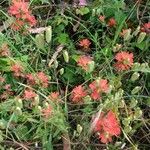
Castilleja coccinea
Scarlet Indian-Paintbrush · Painted-cup Paintbrush · Scarlet Paintbrush · Eastern Paintbrush · Red Paintbrush
Description
Source: leafsnapCastilleja coccinea, commonly known as scarlet Indian paintbrush or scarlet painted-cup, is a flowering plant in the family Orobanchaceae. It is usually found in moist meadows, prairies, and barrens from Maine to Minnesota, and south to Florida and Louisiana.
Care Guide
💧 Water Once a week
The Scarlet Indian Paintbrush thrives in humid environments and prefers consistent moisture with weekly watering. Although it can tolerate moderate drought, it performs best in moist soil. As an herbaceous perennial, it goes dormant in winter, requiring less water. This shows its adaptability to seasonal changes.
How should I water my Scarlet indian-paintbrush plant?
Scarlet indian-paintbrush can be watered using various tools like a garden hose with a spray nozzle or a watering can. It is not fussy about the type of water it receives, whether rainwater, tap water, or filtered water. However, it is best to avoid overhead watering as it can damage the leaves and flowers and may cause disease. Setting up a drip irrigation system is often recommended for even and direct watering of Scarlet indian-paintbrush. If you have a container-grown plant, you can use a cup, watering can, or tap water to water it directly in the soil.
What do I do if I give my Scarlet indian-paintbrush too much or too little water?
To help prevent underwatering Scarlet indian-paintbrush, make sure to water the plant more regularly when you notice it lacks moisture. On the other hand, overwatering can be a bigger problem as it can lead to diseases and even death of the plant. To prevent overwatering, choose a proper location for growth that gets plenty of sunlight and has good drainage. This will help dry the soil and prevent water from pooling and becoming waterlogged. If you overwater a potted Scarlet indian-paintbrush, consider transferring it to a new pot with better soil drainage and more drainage holes. Make sure to use loose soil and a pot that drains efficiently when repotting.
How often do I need to water my Scarlet indian-paintbrush?
Scarlet indian-paintbrush needs regular watering throughout the growing season. In the spring, water it once per week. As the season progresses and it gets warmer, increase the watering to two to three times per week. It's important not to exceed this rate as it can harm the plant. The soil should be relatively moist but not wet, regardless of how often you water. For potted Scarlet indian-paintbrush, you'll need to water more frequently as the soil in pots can dry out faster. Generally, water a container-grown plant a few times per week, compared to just once per week for a plant in the ground.
How much water does my Scarlet indian-paintbrush plant need?
Determining how much water to give your Scarlet indian-paintbrush can be done in a few different ways. Some gardeners prefer to feel the soil for moisture and water until the top six inches are moist. Others choose to use a specific measurement, like about two gallons per week, adjusting based on temperature and the soil's drying rate. However, it's important to avoid overwatering if your plant needs less than two gallons. When growing in a container, you can gauge the water needed by making sure all layers of soil are moist and checking for excess water drainage.
How can I know if I am giving the right amount of water to my Scarlet indian-paintbrush?
Avoiding overwatering your Scarlet indian-paintbrush can be somewhat tricky. On one hand, you should water them weekly to moisten the soil since they have deep roots. However, Scarlet indian-paintbrush are prone to root rot and can suffer from browning if overwatered. Underwatering is less of a concern as these plants can survive without additional water for some time. However, prolonged periods without water can cause wilting and dry leaves.
☀️ Light Full sun
Scarlet indian-paintbrush grows best with plenty of sunlight, though it can tolerate some shade. It comes from areas with abundant sun exposure, which supports the plant's healthy growth. Throughout its life stages, appropriate sun exposure is important. Both excessive and insufficient sunlight can harm the plant, leading to leaf discoloration or stunted growth.
What are the sunlight requirements for Scarlet indian-paintbrush?
Scarlet indian-paintbrush thrives best under ample sunlight, requiring more than 6 hours of sunlight for 'full sun' conditions, and about 3-6 hours for 'partial sun.' It's essential to observe how sunlight moves through your garden to find spots with the ideal balance of light and shade, ensuring your plants grow healthily. This species originates from sun-abundant habitats which aid in its robust growth, though it can also tolerate some shade. Observing and adjusting the plant's exposure to sunlight is crucial throughout its lifecycle for maintaining health and preventing issues such as leaf discoloration or stunted growth.
How can artificial lighting be used for indoor Scarlet indian-paintbrush plants?
For indoor Scarlet indian-paintbrush plants where natural sunlight is insufficient, especially during winter or in less sunny spaces, artificial lighting is a beneficial solution to support optimal growth. LED lights are a popular option because they can provide specific wavelengths needed by plants. Full sun plants require 30-50W/sq ft of artificial light, partial sun plants need 20-30W/sq ft, and full shade plants need 10-20W/sq ft. The light source should be placed 12-36 inches above the plant to mimic natural sunlight, and the duration should match the natural daylight hours for the plant species, typically 8-12 hours per day.
What are the signs of inadequate light for indoor Scarlet indian-paintbrush?
When Scarlet indian-paintbrush is grown indoors under inadequate light, it may show several symptoms indicating light deficiency. These include smaller new leaves, leggy or sparse growth, faster leaf drop, slower or no new growth, and lighter colored new leaves. Each of these symptoms reflects the plant's struggle with insufficient light, affecting its growth, leaf production, and overall health. Adapting the plant's environment to ensure adequate light, either by moving it closer to a light source or using artificial lighting, is essential for reversing these effects.
What are the symptoms of excessive light exposure in Scarlet indian-paintbrush?
Scarlet indian-paintbrush can suffer from excessive sunlight exposure, leading to symptoms like chlorosis, where leaves lose their green color, and sunscald, which damages leaves and stems with pale or necrotic patches. Leaf curling may occur as a defense against too much sunlight, and wilting can happen due to increased water loss. Leaf scorching is another sign, with brown, dry, and crispy leaf edges indicating damage from excessive sunlight. These symptoms highlight the importance of providing just the right amount of sunlight for healthy growth.
How can you improve light conditions for Scarlet indian-paintbrush?
Improving light conditions for Scarlet indian-paintbrush involves several strategies, depending on where it's grown. Indoors, plants can be gradually moved to sunnier locations to achieve at least 6 hours of direct sunlight daily, using south-facing windows for natural light or artificial lights for additional support. Outdoors, it's crucial to adapt plants gradually to sunnier spots to prevent sunburn, avoiding sudden changes in light intensity. For plants in the ground, reducing obstructions like pruning trees or transplanting the plant to sunnier locations can significantly improve sunlight exposure. Ensuring your plant receives the right amount of light is key to fostering new and healthy growth.
🌡️ Temperature 5–32.2°C
The scarlet Indian-paintbrush is native to temperate climates and prefers temperatures between 68 and 95 °F (20 to 35 °C). In seasons with different temperatures, it may need slight relocation to achieve optimal growth.
What is the native climate for Scarlet indian-paintbrush?
Scarlet indian-paintbrush, botanically known as Castilleja coccinea, thrives in temperate climates. It prefers temperatures ranging from 68 to 95°F (20 to 35°C). In seasons when temperatures fall outside this range, slight adjustments to the plant's location might be necessary to ensure optimal growth.
Does Scarlet indian-paintbrush need special frost protection during winter?
Scarlet indian-paintbrush exhibits strong cold resistance, typically requiring no special frost protection measures during winter. However, if temperatures are anticipated to fall below -30°C, it's important to protect the plant from the cold. This can be accomplished by covering it with soil or straw. Additionally, watering the plant abundantly before the first autumn freeze is recommended to maintain moist soil that will freeze, helping prevent drought and water scarcity throughout winter and early spring.
How does low temperature affect Scarlet indian-paintbrush, and what are the solutions?
Scarlet indian-paintbrush is cold-tolerant and performs best when temperatures remain above 20°C. In winters, it is essential to keep it above 0°C. Should temperatures drop below -30°C, the plant may not show immediate adverse effects, but a decrease in sprouting or complete lack of sprouting may be observed in spring. The solution for this is to remove any parts of the plant that have failed to sprout during spring.
What should be done if Scarlet indian-paintbrush experiences high temperatures?
During summer, it's crucial to ensure that Scarlet indian-paintbrush remains below 35°C. Exposure to temperatures above 38°C can cause the leaves to lighten in color, become prone to curling, suffer from sunburn, and, in severe cases, the entire plant may wilt and dry out. To mitigate these issues, sunburned and dried parts should be trimmed away. The plant should be moved to a shaded location, especially from midday and afternoon sun, or covered with a shade cloth. Watering in the morning and evening helps keep the soil moist, providing further relief to the plant.
💨 Humidity
🪴 Soil 5-7
🌱 Fertilizer
When Scarlet indian-paintbrush has opened most of its flowers to full size, resume fertilizing. Around the peak of bloom production, fertilize again every three to four weeks, as weather permits. Then, once the plant begins producing fewer new flowers, stop fertilizing; there’s no need to feed it when it can no longer produce more blooms.
🪴 Pot & Repot
✂️ Pruning
The Scarlet Indian Paintbrush boasts vibrant red-orange flowers and benefits from pruning between early and late spring. To maintain the plant's health and encourage air circulation, trim away spent flowers and remove any dead stems using clean tools. Regular pruning supports strong growth and increased flower production, enhancing the plant's overall appearance.
🌿 Propagating
🐛 Diseases & pets
☠️ Toxicity
All parts of the Castilleja coccinea are poisonous if ingested. These plants are known to absorb as well as concentrate selenium from the soil. This can potentially be quite toxic if the plant is consumed.
Characteristics
- Plant Type
- Herb
- Life Cycle
- Annual, Perennial, Biennial
- Genus
- Castilleja
- Family
- Orobanchaceae
- Hardiness Zone
- 4-8
- Mature Height
- 23 cm to 46 cm
- Mature Spread
- 30 cm to 46 cm
- Leaf Color
- Green, Dark Green
- Leaf Type
- Deciduous
- Flower Color
- Red
- Flower Size
- 2.03 cm
- Bloom Time
- Mid spring, Late spring, Early summer
- Planting Time
- Spring
- Harvest Time
- Summer
- Native Area
- Missouri