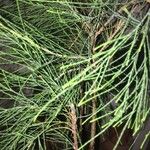
Casuarina cunninghamiana
Australian Pine · Beefwood · River she-oak · River-oak · Creek-oak
Description
Source: leafsnapCasuarina cunninghamiana, commonly known as river she-oak or river oak, is a fast-growing evergreen tree native to Australia. Belonging to the family Casuarinaceae, this tree can reach up to 30 meters in height. It features a slender trunk with rough bark and drooping branches that give it a weeping appearance. The leaves of Casuarina cunninghamiana are reduced to small scales arranged in whorls around the stem. The male flowers are small and reddish-brown, while the female flowers are larger and greenish-brown. The fruit is a woody, cone-like structure containing numerous tiny seeds. River she-oak is commonly found along rivers, creeks, and other waterways, where its extensive root system helps stabilize banks. It also provides habitat for various bird species, including cockatoos, parrots, honeyeaters, and finches. Casuarina cunninghamiana has many uses. Its deep root system aids in erosion control, stabilizing soil along waterways. It is also valuable for timber production, windbreaks due to its dense foliage, ornamental purposes thanks to its attractive weeping habit, and fuelwood production as it burns hot with little smoke or ash residue. Overall, Casuarina cunninghamiana is a vital plant species in Australia's ecosystem, offering numerous ecological and economic benefits while being an attractive addition to landscaping designs.
🌳 River she-oak has a variety of distinctive uses beyond its commonly known roles in timber production and riverbank stabilization. Its foliage is recognized as a source of fodder for livestock during droughts, helping to reduce the vulnerability of farming operations. Its wood is well regarded for making furniture and turned objects because of its durability and attractive grain. River she-oak timber is also used for barbecues due to its high calorific value, making it an excellent source of renewable energy. The plant’s ecological engineering capabilities are not widely recognized but could encourage sustainable practices in agriculture and land management.
Care Guide
💧 Water Every 7 days
The river she-oak, native to the riverbanks of Australia, thrives in environments that are intermittently watered, demonstrating a remarkable tolerance to drought. Ideally, it should be watered every 2-3 weeks. Although it can withstand dry conditions, the river she-oak prefers moist, well-draining soil that mimics its natural riparian habitat.
How should I water my River she-oak in the best way?
Your River she-oak is not picky about how you water it. You can use common watering tools like watering cans, hoses, or cups to water this plant. It's important to water the soil directly and make sure all areas are moistened evenly to provide water to the entire root system. Using filtered water is recommended to avoid harmful particles in tap water. It's also helpful to use water that is at or slightly above room temperature, as extremely cold or hot water can be a shock to the plant. However, the River she-oak usually responds well to any type of water.
What do I need to do if I give my River she-oak too much or too little water?
If you have outdoor plants, particularly newly planted ones or seedlings, they can easily become dehydrated. It's important to water them consistently for a few months while they are small or newly planted. Once the roots are established, River she-oak plants can usually rely on natural rainfall. When River she-oak plants are in pots, overwatering is a common issue. If you accidentally overwater your plant, there are steps you can take to fix the problem. First, stop watering it immediately to minimize the impact. Then, carefully remove the plant from its pot and check the roots for signs of rot. If there is no rot, you can return the plant to its container. However, if there is rot, trim the affected roots and consider applying a fungicide. Repot the plant in well-draining soil. If the plant is underwatered, simply increase the frequency of watering. Underwatering is usually easy to correct, as the leaves will droop and dry out but will quickly recover after sufficient watering. Adjust your watering schedule as soon as you notice the signs of underwatering.
How often do I need to water my River she-oak plant?
If your area doesn't get much rain, it's important to water your outdoor plants regularly. In the spring and fall, watering them every 2 weeks should be enough. In the summer, you'll need to water them more often. During the winter, when plants grow slower and require less water, you can water them less frequently or not at all. However, if your River she-oak is young or newly planted, it will need more frequent watering to help it establish and grow. For potted plants, there are two ways to determine how often to water your River she-oak. The first is to stick to a set watering schedule, such as once a week or once every other week. However, this may not always take into account the specific conditions of your plant's environment. Another option is to check the soil moisture before watering. It's generally best to wait until the top 2 to 4 inches of soil have completely dried out before watering again. Adjusting your watering frequency based on the season is also important, as the plant's water needs are highest in the summer.
How much water does my River she-oak plant need?
When watering your River she-oak, you don't always need to use a large amount of water. If only a few inches of soil have dried since your last watering, giving it about five to ten ounces of water each time will support healthy growth. You can also determine the amount of water to use based on how dry the soil is. Pay attention to how many inches of soil have dried out between waterings. To ensure your River she-oak gets enough moisture, water enough to moisten all the dry soil layers since the last watering. If over half of the soil has become dry, consider giving more water than usual. In those cases, keep watering until excess water drains from the pot's holes. If your River she-oak is planted in an area with ample rainfall, it may not need additional watering. For young or newly established plants, make sure they receive 1-2 inches of rain per week. As they grow and establish, they can rely solely on rainwater unless there is a hot, rain-free period lasting 2-3 weeks. In that case, give them a thorough watering to avoid stress.
How can I know if I'm giving my River she-oak enough water?
Overwatering is a common issue for the River she-oak, and there are clear signs to watch out for. When a River she-oak is overwatered, you will notice yellowing leaves and possibly leaf loss. Overwatering can also cause the plant to shrink and encourage root rot. Conversely, an underwatered River she-oak will start to droop and may have brown or brittle leaves. Regardless of whether you see signs of too much water or too little water, it's important to take action and revive your River she-oak's health.
☀️ Light Full sun
River she-oak grows best in unobstructed sunlight, reflecting its origin in open environments. Its overall condition, including foliage development, is largely helped by this level of light. While it can cope without light, too little or too much can impair its health, producing stress signs such as poor leaf colour and vigour.
What are the sunlight requirements for River she-oak?
River she-oak requires full sun, which means it thrives when exposed to above 6 hours of sunlight daily. It's crucial to observe how sunlight moves through your garden to ensure spots provide a balance of light and shade. This ensures the plant's happiness, mimicking its natural open environment origins. However, it's important to choose the right balance, as both lack and excess of light can induce stress symptoms in the plant, affecting its health negatively.
How essential is sunlight for River she-oak and are there solutions for inadequate light?
Sunlight is essential for the health and growth of River she-oak, impacting its foliage growth significantly. In situations where natural sunlight is insufficient, especially during winter or in less sunny spaces, artificial lighting can provide a vital solution. LED lights are recommended for indoor plants, with 30-50W/sq ft for full sun plants, 20-30W/sq ft for partial sun plants, and 10-20W/sq ft for full shade plants. It's important to mimic natural sunlight by placing lights 12-36 inches above the plant and ensuring they're on for 8-12 hours per day to promote healthy growth.
What are the common symptoms of inadequate sunlight in River she-oak?
When River she-oak receives insufficient sunlight, it may exhibit symptoms such as small leaves, leggy or sparse growth, faster leaf drop, slower or no new growth, lighter-colored new leaves, chlorosis, sunscald, leaf curling, wilting, and leaf scorching. These symptoms indicate stress due to inadequate lighting conditions, affecting the plant's ability to photosynthesize and maintain healthy growth.
What steps can be taken to address light deficiency in River she-oak?
To address light deficiency in River she-oak, gradual adjustment to sunlight is key. For indoor plants, moving them to a sunnier location or using artificial light like desk or ceiling lamps for at least 8 hours daily can help. Outdoor plants should be moved gradually to avoid sunburn. Reducing obstructions, such as pruning trees thatBlock sunlight, and transplanting smaller plants during their dormant period to a location with ample sunlight and good drainage are also effective strategies. It's important to note that while parts of the plant affected by insufficient sunlight may not recover, new growth will be healthy with increased light exposure.
🌡️ Temperature 15–37.8°C
River she-oak is naturally adapted to temperatures between 59 and 100.4°F (15 to 38 ℃). Native to temperate climates, it favors warmer conditions during growth and cooler conditions in winter. Seasonal changes in temperature may enhance its vigor.
What is the natural temperature range for River she-oak?
River she-oak, also known by its botanical name Casuarina cunninghamiana, thrives within a natural temperature range of 59 to 100.4°F (15 to 38°C). It is well-suited to moderate climates, favoring warmer temperatures during its growth periods and cooler conditions in winter. Adjusting to the seasonal temperature variations can enhance its growth and vigor.
How does the River she-oak handle cold temperatures?
The River she-oak has a moderate tolerance to cold, thriving best when temperatures are above 15°C. It generally does not require special care if the temperature stays above -5°C. However, if temperatures are expected to fall below -5°C, taking temporary protective measures, such as wrapping the plant with materials like plastic film or fabric, is advisable to shield it from the cold. Any protective coverings should be removed once temperatures warm up again.
What should I do if the River she-oak experiences low temperatures?
If temperatures dip below -10°C, the River she-oak's leaves may droop, and in severe cases, they might wilt and fall off. To help the plant recover from frost damage, trim off the affected parts. To prepare for future low temperatures, wrap the plant with non-woven fabric or other suitable materials and set up a wind barrier to provide additional protection from cold winds.
How should I care for the River she-oak in high temperatures?
During high temperatures, especially above 38°C, the River she-oak's leaves may change color, and the tips may dry out and wither. The leaves could also curl and the plant might be more prone to sunburn. To mitigate damage, remove the sunburned and dried parts of the plant. Relocate the plant to a shaded area or use a shade cloth to protect it from direct midday and afternoon sun. Ensuring the soil remains moist by watering in the morning and evening is also crucial.
💨 Humidity dry (<40%)
This plant prefers dry conditions, so don't mist it. However, watering it less often can also thrive in higher humidity.
🪴 Soil 6-8
🌱 Fertilizer
River she-oak has specific nutrient needs and does not require heavy fertilization. Spring is the best time to apply fertilizer for peak growth. Supplying nutrients improves its health, raises its resistance to pests and diseases, and helps maintain a long lifespan.
Why should I put fertilizer on my River she-oak tree?
To ensure the health and beauty of your River she-oak, it is important to fertilize regularly. By providing the necessary nutrients, your plant will experience vigorous growth and increased resilience in challenging conditions. This will also enhance its ability to combat diseases and pests. The attractive foliage of your River she-oak can be maintained by following a consistent fertilization schedule, tailored specifically to its needs. This will result in leaves that are vibrant in color and give your tree a lush appearance.
When should I fertilize my River she-oak?
To ensure healthy growth, it is recommended to fertilize your River she-oak in late winter or early spring. This helps provide the necessary nutrients for the plant to thrive as the weather warms up. In warm climate regions, an additional fertilization in early fall can be beneficial. This not only adds nutrients for the upcoming growing season but also helps the plant become more resilient to winter cold and prevent foliage damage. Fertilizing earlier in the year also allows new branches to develop and withstand the cold temperatures of winter.
When is it best to not fertilize my River she-oak?
There are a few times throughout the year when you should avoid fertilizing your River she-oak. One of these times is in the early and mid-winter months when the plant is dormant and does not require feeding. It is also not recommended to fertilize the plant in late spring and throughout the summer. During this period, the weather is usually hotter and drier, which can have a detrimental effect on the River she-oak if it is fertilized. To prevent any problems, it is best to stick to a fertilization schedule that only includes feeding in early spring and early fall.
What kind of fertilizer does my River she-oak tree need?
River she-oak primarily requires nitrogen as it's the most important nutrient, but this does not mean that phosphorus and potassium are irrelevant. On the contrary, the plant needs a sufficient amount of all three nutrients. To ensure a balanced nutrient supply, a fertilizer with a 10-10-10 ratio is recommended. However, a more nuanced approach with a slightly higher nitrogen ratio, such as 10-6-4, often leads to optimal growth. Fertilizers can be either in granular or liquid form.
How can I make my River she-oak grow better?
To fertilize your River she-oak, you have two options: using a granular fertilizer or a liquid fertilizer. If you choose the granular fertilizer, simply sprinkle it on the soil at the right time. The slow-release nature of this fertilizer will gradually release nutrients into the soil. Before applying the granular fertilizer, it's a good idea to lightly water your River she-oak. Alternatively, you can use a liquid fertilizer. This method is less common but still effective. To do this, mix the fertilizer with water and then pour the mixture onto the soil around the base of your River she-oak. Before fertilizing, it can be helpful to perform a soil test to determine if any adjustments to the pH are necessary.
🪴 Pot & Repot
✂️ Pruning
The River She-Oak, with its needle-like foliage, benefits greatly from strategic pruning during its dormant winter period. To improve air circulation, remove any dead branches and thin out dense areas. Regular shaping not only enhances the tree’s health, size, and structure but also promotes vigorous growth and reduces the risk of disease.
🌿 Propagating
🐛 Diseases & pets
☠️ Toxicity
Characteristics
- Plant Type
- Tree
- Life Cycle
- Perennial
- Genus
- Casuarina
- Family
- Casuarinaceae
- Hardiness Zone
- 8-11
- Mature Height
- 10.06 m to 35.05 m
- Mature Spread
- 10.06 m
- Leaf Color
- Green
- Leaf Type
- Evergreen
- Flower Color
- Red, Brown
- Flower Size
- 2.54 cm
- Bloom Time
- Mid spring, Late spring, Early summer
- Planting Time
- Winter, Spring, Summer
- Harvest Time
- Mid summer, Late summer, Early fall