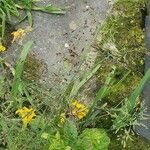
Catabrosa aquatica
Whorl-grass · Water whorl-grass · Water whorlgrass · Brookgrass · Water Whirlgrass
Description
Source: leafsnapCatabrosa aquatica, commonly known as water whisker grass, is a perennial aquatic plant classified under the family Poaceae. Native to Europe and Asia, this plant typically thrives in shallow water bodies, such as ponds, lakes, and slow-moving streams. The plant features a slender stem that can grow up to 50 cm in height, adorned with long, narrow leaves that are either flat or slightly rolled. These glossy green leaves end in pointed tips. During the summer months, Catabrosa aquatica produces small flowers, arranged in spikelets at the end of the stem. These flowers lack petals but are distinguished by their bristles or awns, giving them a unique appearance. Ecologically, Catabrosa aquatica serves as a crucial food source for aquatic animals like ducks and geese, which feed on its seeds. Additionally, it provides shelter for small fish species. Beyond its ecological role, Catabrosa aquatica has medicinal uses in certain cultures due to its anti-inflammatory properties, which can help alleviate pain associated with arthritis and other inflammatory conditions. In summary, Catabrosa aquatica is a significant aquatic plant species with both ecological importance and potential medicinal benefits.
Care Guide
💧 Water Every 3 days
Water whorlgrass thrives in wetland habitats where the soil is consistently moist. To maintain its ideal moisture levels, it requires weekly watering. This plant prefers high humidity and cannot tolerate drought, flourishing in areas where water availability aligns with its growth cycle.
☀️ Light Partial sun
🌡️ Temperature 0–32.2°C
Water whorlgrass is adapted to environments with temperatures from 32 to 90 °F (0 to 32 °C). It can tolerate seasonal fluctuations within that range, but requires cooler conditions in winter. Extra care should be taken at the temperature extremes.
What are the suitable temperature conditions for Water whorlgrass?
Water whorlgrass, also known by its botanical name Catabrosa aquatica, thrives in a range of temperatures from 32 to 90 °F (0 to 32 °C). It is adaptable to seasonal changes, requiring cooler environments during the winter months. Despite its high tolerance to cold, it is important to ensure that special care is taken during extremely cold or hot conditions to maintain its health.
How should Water whorlgrass be cared for in extreme temperatures?
In response to extreme cold, Water whorlgrass does not need additional frost protection but should be watered generously before the first freeze of autumn to maintain soil moisture, which helps prevent drought and water scarcity throughout the winter and early spring. For extreme warmth, when temperatures exceed 32°C, measures should be taken to protect the plant from heat stress. This includes trimming sunburned or dried parts, relocating the plant to a shaded area or using a shade cloth, and watering in the cooler early morning or evening.
What are the symptoms of Water whorlgrass being affected by low temperature?
While Water whorlgrass is extremely cold-tolerant, maintaining winter temperatures above -35°C is crucial. If temperatures fall below this threshold, there may not be visible changes during winter; however, there could be a decrease in spring sprouting or no sprouting at all. The solution for affected plants is to remove any parts that have failed to sprout come spring.
What are the symptoms of Water whorlgrass suffering from high temperature and the solutions?
Water whorlgrass struggles with high temperatures, halting growth and becoming more susceptible to rot when the temperature exceeds 32°C. The symptoms include sunburned and dried-up parts. To mitigate these issues, affected areas should be trimmed. Moving the plant to a shaded site or using a shade cloth, along with morning and evening watering, can help manage the plant's temperature and maintain its moisture levels.
💨 Humidity
🪴 Soil
🌱 Fertilizer
Water whorlgrass benefits from applying compost twice a year, which mimics the nutrient dynamics of its natural riparian habitat. Take care not to over-fertilize, as this can lead to harmful runoff into nearby water bodies. During its active growth period, particularly in the spring, adjust the amount of nutrients supplied and ensure they are distributed evenly to boost the plant's health. Additionally, keep an eye on how the plant responds to ensure optimal conditions.
🪴 Pot & Repot
✂️ Pruning
Water whorlgrass is a perennial aquatic plant with slender, spiraled leaves that thrive in wet environments. For healthy growth and disease prevention, prune the plant in early spring using sharp shears. Regular pruning improves airflow and light penetration, promoting vibrant plant health.
🌿 Propagating
🐛 Diseases & pets
☠️ Toxicity
Characteristics
- Plant Type
- Grass
- Life Cycle
- Perennial
- Genus
- Catabrosa
- Family
- Poaceae
- Hardiness Zone
- 3-7
- Mature Height
- 61 cm
- Mature Spread
- 3 cm
- Leaf Color
- Light Green, Pale Green
- Leaf Type
- Semi-evergreen
- Flower Color
- Yellow, Green, Purple, Brown
- Flower Size
- 10.16 cm to 20.32 cm
- Bloom Time
- Summer
- Planting Time
- Spring, Summer
- Harvest Time
- Late summer, Early fall, Mid fall
- Native Area
- Libya, Turkey, Sweden, India, Austria, Slovakia, Montenegro, Pakistan, Slovenia, Morocco, Croatia, Belarus, Uzbekistan, Russia, Iraq, Germany, Iceland, Estonia, Romania, Latvia, Belgium, Netherlands, France, Tajikistan, Czech Republic, Bulgaria, Armenia, Poland, Greece, Ukraine, Serbia, Lebanon, Lithuania, Norway, Colombia, China, Syria, Afghanistan, Kyrgyzstan, Kazakhstan, Italy, Spain, Switzerland, Denmark, Mongolia, Finland, Iran, Albania, Ireland, United Kingdom, Hungary, Algeria, Azerbaijan, Turkmenistan