Catananche lutea
Yellow Cupidone
Description
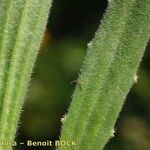
Source: leafsnapCatananche lutea, is a woolly annual plant, in the family Asteraceae, with most leaves in a basal rosette, and some smaller leaves on the stems at the base of the branches. Seated horizontal flowerheads develop early on under the rosette leaves. Later, not or sparingly branching erect stems grow to 8–40 cm high, carrying solitary flowerheads at their tips with a papery involucre whitish to beige, reaching beyond the yellow ligulate florets. Flowers are present between April and June. This plant is unique for the five different types of seed it develops, few larger seeds from the basal flowerheads, which remain in the soil, and smaller seeds from the flowerheads above ground that may be spread by the wind or remain in the flowerhead when it breaks from the dead plant. This phenomenon is known as amphicarpy. The seeds germinate immediately, but in one type, germination is postponed. It naturally occurs around the Mediterranean. Sources in English sometimes refer to this species as yellow succory.
Care Guide
💧 Water
☀️ Light Full sun
Yellow cupidone is a perennial herbaceous species that favors sunny sites and is native to open habitats, commonly flourishing in meadows and grasslands. It prefers full sun but can also tolerate partial sun.
🌡️ Temperature 15–37.8°C
Yellow cupidone can tolerate a wide range of temperatures, though its distribution may still be restricted by different combinations of moisture and heat. It does best in warm summer climates with sufficient rainfall or regular watering. Extended periods of cloudy, rainy weather or sustained high temperatures can raise the risk of Yellow cupidone dying. In winter, protecting it from the cold can enhance the plant's chances of survival.
💨 Humidity
🪴 Soil 6-8
🌱 Fertilizer
The best time to fertilize a Yellow cupidone is in early spring, when it is coming out of dormancy and beginning active growth. Fertilization supplies essential nutrients for healthy development. Although Yellow cupidone has relatively low fertilizer requirements, applying fertilizer annually can improve its survival and encourage better, longer-lasting flowers.
🪴 Pot & Repot
✂️ Pruning
🌿 Propagating
🐛 Diseases & pets
☠️ Toxicity
Characteristics
- Plant Type
- Herb
- Life Cycle
- Perennial
- Genus
- Catananche
- Family
- Asteraceae
- Hardiness Zone
- 8-11
- Mature Height
- 20 cm to 49 cm
- Mature Spread
- 15 cm to 30 cm
- Leaf Color
- Light Green
- Leaf Type
- Semi-evergreen
- Flower Size
- 2.03 cm to 3.05 cm
- Bloom Time
- Mid spring, Late spring, Early summer
- Planting Time
- Spring, Summer
- Harvest Time
- Summer
- Native Area
- Libya, Turkey, Tunisia, Syria, Italy, Spain, Portugal, Cyprus, Lebanon, Greece, Algeria, Morocco, France