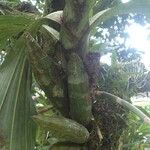
Catasetum maculatum
Spotted catasetum
Description
Source: leafsnapCatasetum maculatum is a species of orchid native to Central and South America. It is an epiphytic plant, meaning it grows on other plants, and is commonly found in tropical rainforests. The plant has pseudobulbs that store water and nutrients, aiding its survival in its natural habitat. Catasetum maculatum produces large, fragrant flowers that are typically yellow or green with red or brown spots. These flowers attract pollinators such as bees, butterflies, and moths. This orchid species thrives in bright but indirect light. While it prefers high humidity levels, it can tolerate some dryness between waterings. Catasetum maculatum should be planted in well-draining soil or mounted on a piece of bark or other material. In cultivation, Catasetum maculatum has become popular among orchid enthusiasts for its unique appearance and relatively easy care compared to other orchids. With proper care, this plant can bloom multiple times per year for many years.
Care Guide
💧 Water Every 7 days
The spotted catasetum thrives with adequate moisture but can tolerate occasional drought. During the summer, water it weekly, and in the fall and winter, water it every ten days. To maintain humidity, especially in dry conditions, regularly mist the plant. When watering, use water with a neutral pH; let tap or rainwater sit for a while before using it.
☀️ Light Partial sun
The spotted catasetum is native to habitats like forest understories and rocky areas, where it grows in natural shade. It favors partial sun but can tolerate full sun or full shade, showing its adaptable and hardy nature.
🌡️ Temperature 20–37.8°C
The spotted catasetum prefers warm conditions. It performs best in moderately high temperatures, but not in extreme heat and humidity. Sunlight warms the plant and stimulates flowering. However, extended direct sun in summer can cause sunburn, so the amount of light it receives should be controlled during that season. The plant is generally intolerant of cold, so it needs proper protection and warmer temperatures in winter to prevent freezing.
What is the botanical name of the spotted catasetum?
The botanical name of the spotted catasetum is Catasetum maculatum. This species is known for its unique characteristics, but specific details such as its essential features, care instructions, and symptoms of poor health have not been provided in the available data.
💨 Humidity
🪴 Soil 5-6
🌱 Fertilizer
Appropriate fertilization is essential for the health and appearance of spotted catasetum. Fertilize spotted catasetum during the summer, applying it monthly throughout the season. Nutrients power growth and help maintain the plant’s parts. Fertilization improves the spotted catasetum’s flowering display, ensuring the best blooms.
🪴 Pot & Repot Every 12 months
When repotting spotted catasetum, pick a pot that is slightly larger and has good drainage, preferably a clear orchid pot. Use a well-draining, orchid-specific potting mix that contains bark or moss. Carefully clean the roots and trim any that are dead or rotting. Repot after flowering, typically in spring or fall, water thoroughly, and place in bright, indirect light. After repotting, avoid disturbing the roots.
✂️ Pruning
Prune your spotted catasetum in early spring to remove any dead pseudobulbs and reduce overcrowding. This will enhance air circulation and allow more light to penetrate, promoting healthy growth and vibrant blooms while preventing disease. Remember to sterilize your tools before pruning to avoid infections.
🌿 Propagating
🐛 Diseases & pets
☠️ Toxicity
Characteristics
- Plant Type
- Herb
- Life Cycle
- Perennial
- Genus
- Catasetum
- Family
- Orchidaceae
- Hardiness Zone
- 10-12
- Mature Height
- 30 cm to 61 cm
- Mature Spread
- 20 cm to 40 cm
- Leaf Color
- Light Green
- Leaf Type
- Deciduous
- Flower Size
- 5.08 cm to 7.62 cm
- Bloom Time
- Summer, Early fall, Mid fall
- Planting Time
- Spring, Summer, Autumn
- Harvest Time
- Fall, Early winter, Mid winter
- Native Area
- Colombia, Honduras, Venezuela, Brazil, Nicaragua, Ecuador, Costa Rica, Panama