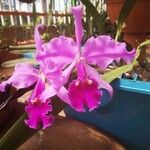
Cattleya labiata
Orchid · Autumn cattleya · Corsage orchid
Description
Source: leafsnapCattleya labiata, also known as the crimson cattleya or ruby-lipped cattleya, is the type species of Cattleya, discovered in 1818 in Brazil. This plant grows in the northeastern area of Brazil, in the states of Pernambuco and Alagoas. They grow to different sizes depending on the area from which they originate. Those that are growing in Pernambuco are smaller, with small but colored flowers, with most of them being lilac. The interior part of the flower is a dark lilac color. Plants from Alagoas are bigger and have larger flowers. Some varieties, such as Cattleya labiata var. semialba, have large white flowers with a touch of yellow. There is another variety of semialba, with lilac in the inferior part of the flower. This plant is an epiphyte, growing up in trees, where light is plentiful. However, there are also many other places where this plant could grow, such as directly on rock with very little soil. The plant itself is a medium-sized unifoliate (labiate) Cattleya, with a medium-sized rhizome. The plant has long leaves, with a tough (coriaceous) consistency because of the aridity in the canopy of trees, due to a short dry season. For water requirements, the plant has a pseudobulb under every leaf to store water and nutritive substances during the short dry season. In the wet season new leaves grow rapidly, producing a large flowered inflorescence. Flowers are white or lavender colored with a darker spot in the lip. Pollination is performed by insects, usually by a scent-collecting male euglossine bee. The result is a capsule with a very large number of seeds (10,000-20,000).The diploid chromosome number of C. labiata has been variously determined as 2n = 40, 41, and 46. The haploid chromosome number of C. labiata has been variously determined as n = 21 and 21.
💡 This Brazilian species is highly valued in Britain. According to legend, the story of how these plants arrived in London involves the botanist William Cattley. He received a shipment of ferns in which the crimson cattleya was used as packing material to protect the ferns. Captivated by the beauty of the crimson cattleya, Cattley decided to save it and started cultivating it in his greenhouses.
🌳 Aside from its visual appeal, crimson cattleya may have lesser-known uses. For example, some orchid species have been investigated for remediation applications, including their possible role as bioindicators of soil heavy metals because of their sensitivity to environmental changes. In addition, their distinctive fragrances have been examined for producing perfumes and essential oils. The targeted cultivation of crimson cattleya for these aims is a field open to further research and development, which could extend its value beyond ornamental purposes.
🎭 Fortitude and perseverance
Care Guide
💧 Water Every week
The Crimson Cattleya thrives in high humidity, preferring consistent moisture without being waterlogged. It should be watered weekly and can tolerate moderate drought conditions. To simulate its natural habitat indoors, regular misting is recommended, as this helps maintain healthy leaves and vibrant blooms.
☀️ Light Partial sun
The crimson cattleya does best with moderate sunlight but can endure both high and low light conditions. This tolerance mirrors the variable light levels of its place of origin. Too much or too little sun can harm the plant's health, possibly damaging its foliage or restricting its growth.
🌡️ Temperature 20–37.8°C
The crimson cattleya does best in a warm native habitat, with temperatures of 68 to 95 ℉ (20 to 35 ℃). When grown, it still needs relatively high daytime temperatures of 68 to 100 ℉ (20 to 38 ℃) to do well. The orchid also benefits from a moderate nighttime drop of 5 to 10 ℉ (3 to 5 ℃).
What are the ideal temperature conditions for Crimson Cattleya?
Crimson Cattleya thrives in warm environments, ideally with daytime temperatures ranging from 68 to 100°F (20 to 38°C) and enjoys a moderate nighttime temperature decrease of 5 to 10°F (3 to 5°C). During winter, it's crucial to ensure the temperature does not drop below 5°C. If it does, the plant should be moved indoors and kept in conditions above 20°C, ideally near a south-facing window to receive ample sunlight. Proper humidity levels should be maintained by regularly misting the plant or using a humidifier.
How should I care for Crimson Cattleya in cold temperatures?
Crimson Cattleya is sensitive to cold temperatures and requires special care during winter or in cooler climates. If the temperature falls below 5°C, or especially below 1°C, where the leaves may show signs of extensive water-soaked necrosis, wilting, and drooping, it's essential to trim off the frostbitten areas and move the plant indoors to a warm, sunny spot near a south-facing window. Avoid placing the plant near heaters or air conditioning vents as these may cause excessive dryness.
What steps should I take if Crimson Cattleya is exposed to high temperatures?
During the summer, when temperatures can soar above optimum levels, it's vital to keep Crimson Cattleya below 38°C to avoid growth cessation and leaf wilt. Should temperatures exceed 43°C, causing potential sunburn and increased risk of root rot, you should trim away damaged parts and relocate the plant to a shaded area, especially from the midday and afternoon sun. Ensure adequate watering in the morning and evening to maintain moisture for both the plant and its surroundings.
💨 Humidity
🪴 Soil 5-6
🌱 Fertilizer
Correct fertilization is vital for the health and appearance of the Crimson cattleya. Fertilize the Crimson cattleya during summer, applying it monthly throughout the season. Nutrients supply energy for growth and help preserve the plant's parts. Fertilization improves the Crimson cattleya's flower display, ensuring the best blooms.
🪴 Pot & Repot
When repotting Crimson cattleya, select a slightly larger pot that drains well, ideally a clear orchid pot. Use an orchid-specific, well-draining mix containing bark or moss. Gently clean the roots and trim any that are dead or rotting. Repot after flowering, typically in spring or fall, water thoroughly, and place in bright, indirect light. Avoid disturbing the roots once repotted.
✂️ Pruning
Crimson cattleya orchids require regular maintenance to thrive. During their dormancy period, from late winter to early spring, it's important to prune them correctly. Start by removing any dead pseudobulbs and leaves to improve airflow and light penetration. Additionally, cut back faded flower spikes to stimulate new growth. Proper pruning not only enhances the plant's health and abundance of blooms but also extends its lifespan.
🌿 Propagating
🐛 Diseases & pets
☠️ Toxicity
Characteristics
- Plant Type
- Herb
- Life Cycle
- Perennial, Annual
- Genus
- Cattleya
- Family
- Orchidaceae
- Hardiness Zone
- 10-12
- Mature Height
- 25 cm
- Mature Spread
- 30 cm
- Leaf Color
- Green
- Leaf Type
- Evergreen
- Flower Color
- Pink, Yellow, Purple, White, Red, Lavender, Gold
- Flower Size
- 12.70 cm to 17.78 cm
- Bloom Time
- Spring
- Planting Time
- Spring, Autumn
- Harvest Time
- Early summer, Mid summer
- Native Area
- Brazil