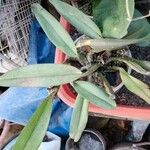
Cattleya warneri
Description
Source: leafsnapCattleya warneri (the "Warner's Cattley's orchid") is a labiate Cattleya species of orchid. The diploid chromosome number of C. warneri has been determined as 2n = 40.
Care Guide
💧 Water
☀️ Light Partial sun
Cattleya warneri occurs naturally in habitats like forest understories or rocky sites, where it is exposed to natural shade. It prefers partial sun but can adapt to full sun or full shade, illustrating its versatility and hardiness.
🌡️ Temperature 20–37.8°C
Cattleya warneri prefers warm conditions. It does best in temperatures that are fairly high but not excessively hot or humid. Sunlight helps warm the plant and encourages flowering. However, extended direct sun in summer can cause sunburn, so it's important to regulate how much light it receives during that season. The plant typically does not tolerate cold well, so it needs sufficient protection and warmer temperatures in winter to avoid freezing.
💨 Humidity normal (40-60%)
This plant will thrive in moderate humidity, which is probably the level in your home. However, misting it a few times a week can be very beneficial. Make sure the room has good ventilation.
🪴 Soil 5-6
🌱 Fertilizer Every 30 days
Appropriate fertilization is essential to the health and appearance of Cattleya warneri. Apply fertilizer to Cattleya warneri in summer, repeating the application monthly throughout the season. Nutrients supply energy for growth and help maintain the plant's components. Fertilization improves Cattleya warneri's flower display, helping to ensure the best blooms.
🪴 Pot & Repot
When repotting Cattleya warneri, select a slightly larger pot with good drainage, ideally a clear orchid pot. Use a well-draining, orchid-specific mix that includes bark or moss. Carefully clean the roots and remove any that are dead or rotting. Repot after flowering, typically in spring or fall, water thoroughly, and place the plant in bright, indirect light. Avoid disturbing the roots once it has been repotted.
✂️ Pruning
🌿 Propagating
🐛 Diseases & pets
☠️ Toxicity
Characteristics
- Plant Type
- Herb
- Life Cycle
- Perennial
- Genus
- Cattleya
- Family
- Orchidaceae
- Hardiness Zone
- 10-12
- Mature Height
- 30 cm to 61 cm
- Mature Spread
- 20 cm to 40 cm
- Leaf Color
- Dark Green
- Leaf Type
- Evergreen
- Flower Color
- Lavender, Pink
- Flower Size
- 15.24 cm to 20.32 cm
- Bloom Time
- Late spring, Summer
- Planting Time
- Spring, Summer, Autumn, Winter
- Harvest Time
- Mid summer, Late summer, Early fall, Mid fall
- Native Area
- Brazil