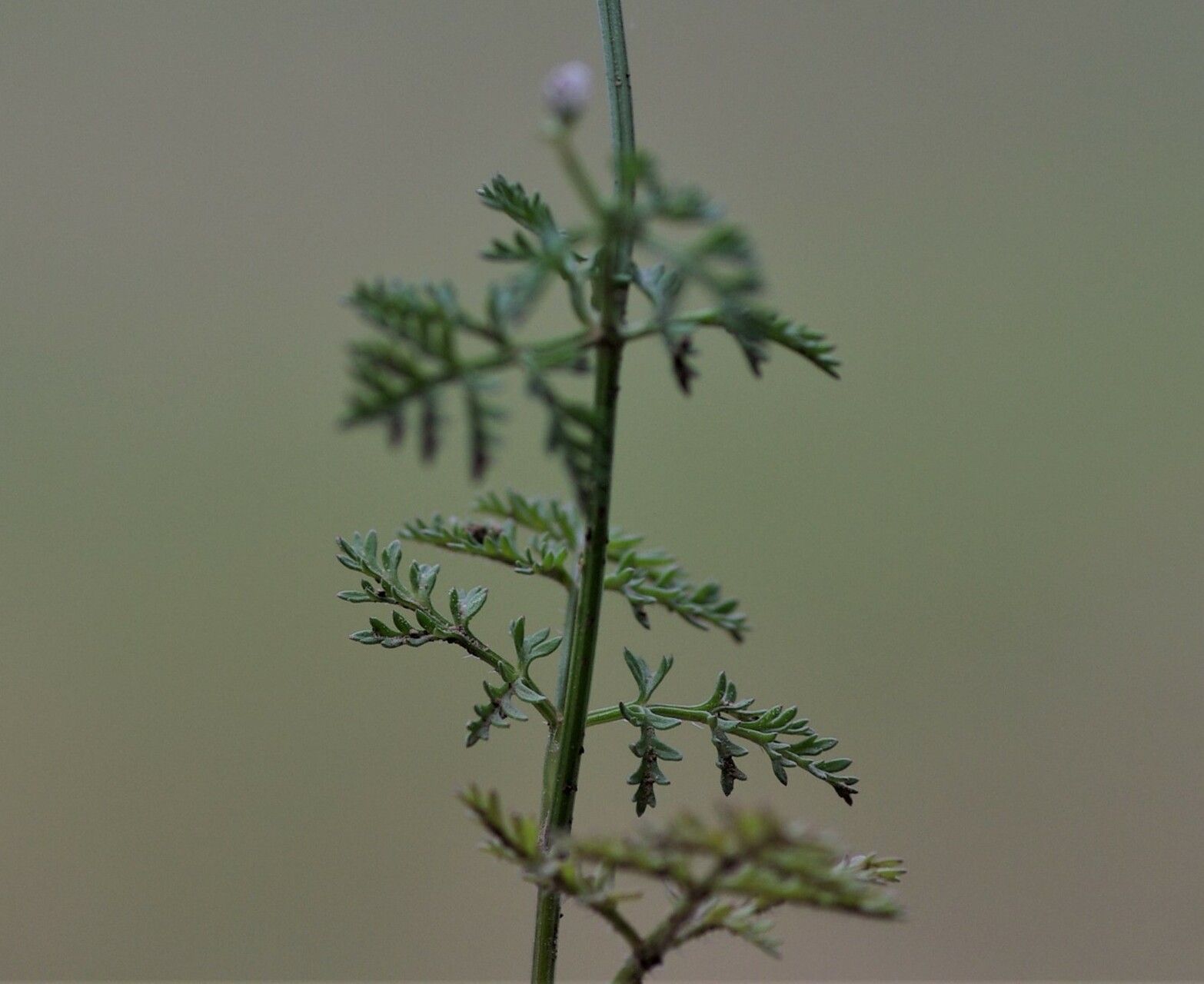
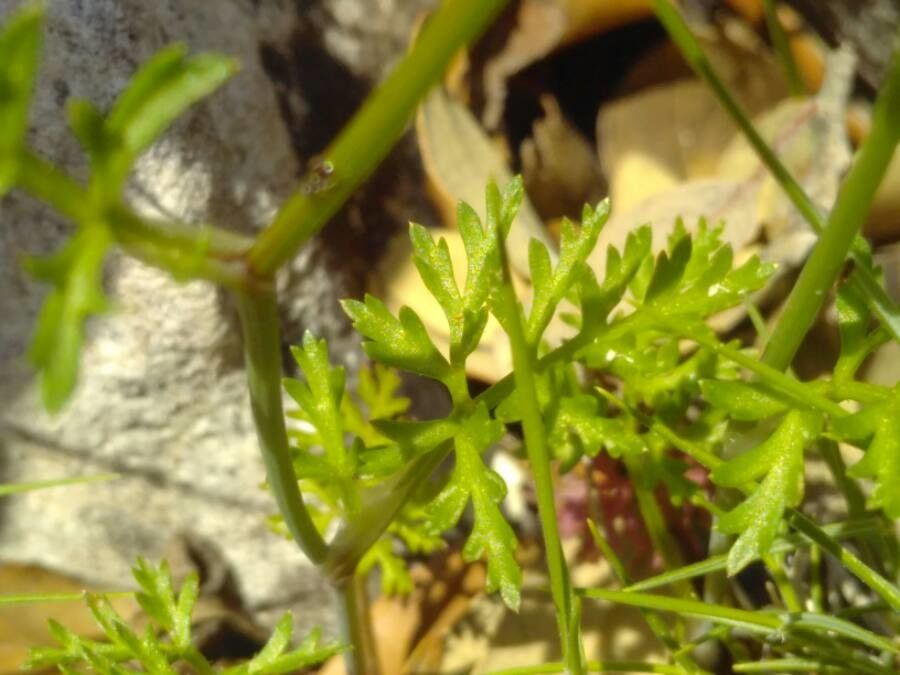
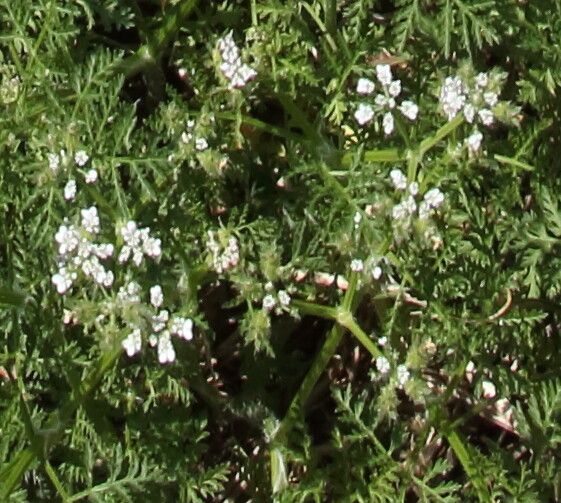
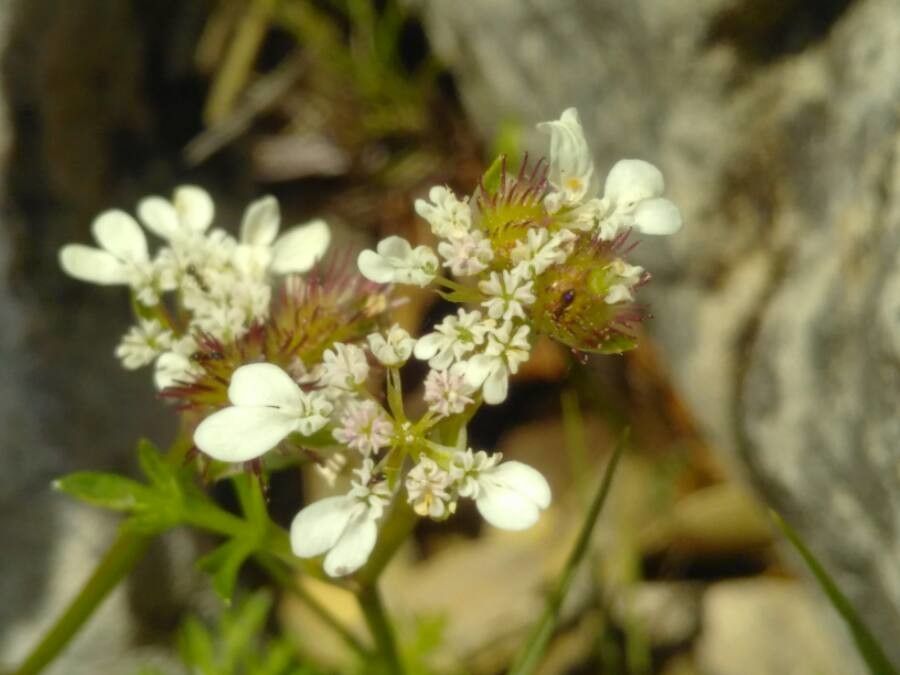
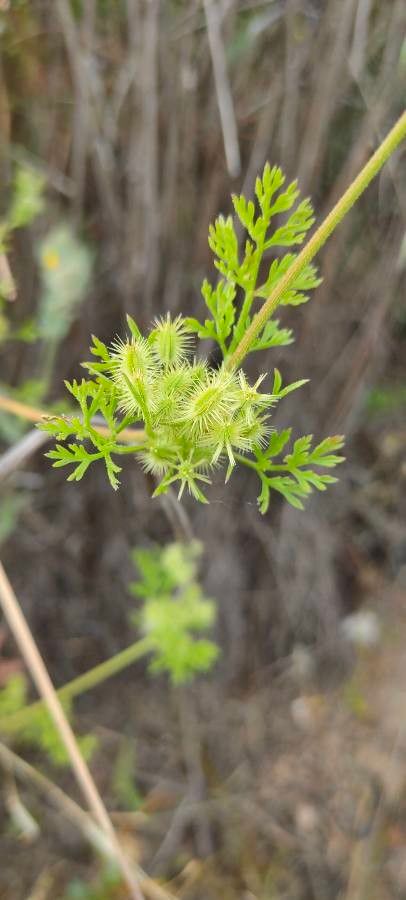
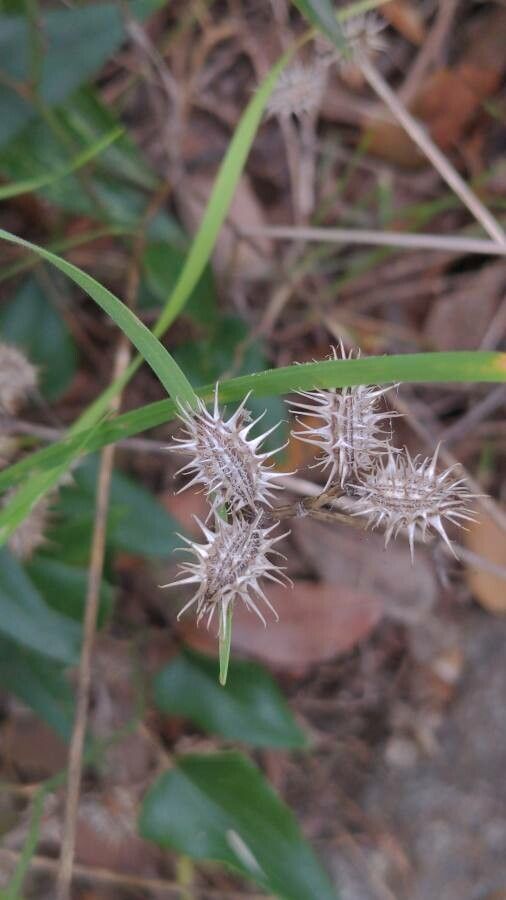
Caucalis platycarpos, commonly known as broadfruit bur parsley, is a species of flowering plant in the Apiaceae family. Native to Europe and western Asia, it has also been introduced to North America. This plant can grow up to 60 cm tall and features finely divided, green leaves. Its small flowers, which can be white or pinkish-white, are arranged in umbels at the end of the stems. The fruit is broad and oval-shaped, equipped with hooked spines that facilitate dispersal by attaching to clothing or animal fur.
Caucalis platycarpos thrives in well-drained soils with full sun exposure but can also tolerate partial shade. It is commonly found in dry meadows, rocky slopes, roadsides, and disturbed areas such as abandoned fields.
Traditionally, this plant has been used for medicinal purposes, including the treatment of digestive disorders and respiratory problems, thanks to its anti-inflammatory properties.
Overall, Caucalis platycarpos is a fascinating species, easily recognizable by its unique fruit structures that distinguish it from other members of its family.
Hedgehog parsley has strong disease resistance and is generally unlikely to develop illnesses. Still, it can be affected by pests and diseases present in its surroundings. These infections are generally mild. Care-wise, this plant needs a moderate amount of attention. It should be pruned regularly to keep a good appearance and support healthy growth. Fertilizing can also help encourage flowering. Hedgehog parsley is suitable for anyone with outdoor space, such as a garden or patio, and does not demand extensive experience in plant care. It may need more attention when grown indoors.
How to keep Caucalis Platycarpos.
Light
Hedgehog parsley does best with plenty of light, reflecting its native habitat, and does not need to be kept in shade. Not enough light can limit its full development; however, excessive exposure can scorch it. Different growth stages tolerate similar light conditions.
Water
Hedgehog parsley flourishes in a Mediterranean climate, where it benefits from consistent moisture and can withstand short periods of drought. For optimal growth, it should be watered weekly. This plant thrives best outdoors, where it can take advantage of natural rainfall that aligns its growth cycle with the environmental water supply.
Temperature
Hedgehog parsley grows best in its native habitat when temperatures are between 68 and 95 °F (20 and 35 ℃). During different seasons, small adjustments may be necessary to maintain this temperature range for optimal growth.
Fertilizer
Hedgehog parsley does well with regular, diluted fertilizer applications to encourage healthy leaf development. Fertilize hedgehog parsley roughly once a month during the summer. Nitrogen is important for foliage, so adding nitrogen-rich nutrients helps hedgehog parsley thrive.
Pruning
To encourage the healthy growth of hedgehog parsley, prune the plant from early to late spring. Begin by removing any dead or damaged stems and thinning out crowded areas to improve airflow. Be sure to use clean, sharp tools to minimize stress on the plant and prevent infection. This will promote a lush appearance and enhance flowering.
Botanical profile.
- Plant Type
- Herb
- Life Cycle
- Annual
- Genus
- Caucalis
- Family
- Apiaceae
- Hardiness Zone
- 5-9
- Mature Height
- 10 cm to 30 cm
- Mature Spread
- 15 cm to 30 cm
- Leaf Color
- Green
- Leaf Type
- Semi-evergreen
- Flower Color
- White
- Flower Size
- 0.20 cm to 0.25 cm
- Bloom Time
- Late spring, Early summer, Mid summer
- Planting Time
- Spring, Summer
- Harvest Time
- Mid summer, Late summer, Early fall
- Native Area
- Libya, Turkey, Austria, Slovakia, Montenegro, Slovenia, Morocco, Croatia, Belarus, Russia, Iraq, Germany, Romania, Belgium, Moldova, Portugal, France, Tajikistan, Tunisia, Czech Republic, Cyprus, Bulgaria, Poland, Armenia, Greece, Ukraine, Lebanon, Serbia, Afghanistan, Kyrgyzstan, Italy, Spain, Switzerland, Iran, Albania, Azerbaijan, Algeria, Hungary, Turkmenistan
Other names.
Reader questions.
How should I water my Hedgehog parsley?
You have several options for watering Hedgehog parsley. You can use a garden hose with a spray nozzle, a watering can, or any other common watering tool. Hedgehog parsley is not too particular about the type of water it receives - rainwater, tap water, or filtered water will all do fine. However, it's best to avoid watering this plant from overhead as it can harm the leaves, flowers, and potentially cause disease. Setting up a drip irrigation system is often the most effective way to water Hedgehog parsley, as it delivers water evenly and directly to the soil. When watering a container-grown Hedgehog parsley, you can still follow a similar approach by using a cup, watering can, or tap to water the soil directly.
What are the sunlight requirements for Hedgehog parsley?
Hedgehog parsley thrives in full sun, requiring more than 6 hours of direct sunlight daily to flourish. It's essential to monitor the sunlight's path through your garden to ensure a judicious mix of light and shade, offering optimal growing conditions for Hedgehog parsley. Remember, the right balance promotes the plant's well-being and growth.
What is Hedgehog Parsley and where does it thrive?
Hedgehog Parsley, botanically known as Caucalis platycarpos, is a plant that thrives best in its native environment with temperature ranges between 68 to 95 °F (20 to 35 °C). For optimal growth, it sometimes requires slight seasonal adjustments to maintain these conditions. Since Hedgehog Parsley has strong cold resistance, special frost protection measures are generally not necessary during the winter. However, if temperatures are expected to drop below -25°C, it's important to protect the plant by covering it with soil or straw. It's also advisable to water the plant abundantly before the first freeze of autumn to keep the soil moist, helping to prevent drought and water scarcity through the winter and into early spring.
What should I do if I give my Hedgehog too much or too little parsley?
If Hedgehog parsley is not getting enough water, the solution is simple: start watering it more regularly. However, overwatering can be a more serious problem if not caught early. Overwatered Hedgehog parsley can get sick and die. To prevent this, choose a good growing location with plenty of sunlight to help dry the soil and good drainage to prevent water buildup. If you overwater potted Hedgehog parsley, consider moving it to a new pot with better soil and drainage.
How does insufficient or excessive sunlight affect Hedgehog parsley?
Hedgehog parsley thrives best under ample sunlight, true to its natural habitat, ensuring it grows without the confinement of shade. Insufficient light can impede its growth, while too much direct exposure might cause harm. Plants at various growth stages tend to adapt similarly to the same levels of light intensity. When natural light is lacking, especially during winter or in less sunny indoor settings, utilizing artificial lighting can be a significant countermeasure by mirroring the necessary conditions for the plant's growth. Artificial lights, particularly LED types, are beneficial for indoor plants, providing specific light wavelengths essential for their development.
How should I protect Hedgehog Parsley in extreme temperatures?
Hedgehog Parsley shows great tolerance to cold, thriving when the temperature stays above 20°C and ideally remaining above 0°C during winter. In the event that temperatures fall below -25°C, you may not see immediate damage, but it could lead to decreased sprouting or no sprouting at all come spring. In such cases, remove any parts that failed to sprout. During summer, it's critical to ensure the plant does not experience temperatures above 35°C to prevent damage. Exceeding 38°C can cause leaves to lighten in color, curl, suffer sunburn, or in severe cases, cause the plant to wilt and dry. To counteract damage from high temperatures, trim away sunburned and dried-up parts, relocate the plant to a shadier spot, or use a shade cloth against the intense midday and afternoon sun. Watering in the morning and evening is also important to maintain soil moisture.
How regularly should I give water to my Hedgehog parsley?
To keep your Hedgehog parsley healthy, it's important to water it regularly. In spring, watering once a week should be sufficient. However, as the weather gets warmer, you may need to increase watering to two or three times a week. It's crucial not to exceed this frequency, as it can harm your plant. Regardless of how often you water, make sure the soil remains moist but not saturated. Watering Hedgehog parsley in a pot is slightly different. The soil in pots tends to dry out faster, so you may need to water container-grown plants a few times per week compared to just once per week for plants in the ground.
What are common symptoms of inadequate sunlight in Hedgehog parsley, and how can they be addressed?
Hedgehog parsley exhibits several symptoms when lacking sufficient sunlight, including small leaves, leggy growth, early leaf drop, diminished or halted new growth, paler new leaves, chlorosis, sunscald, leaf curling, wilting, and leaf scorching. To counter inadequate sunlight, gradually increase exposure to natural light by moving plants closer to sunny spots weekly, aiming for at least 6 hours of direct sunlight. If moving the plant isn't feasible or for additional light, artificial lighting is recommended for at least 8 hours daily. For outdoor plants, a cautious shift to brighter locations helps in acclimatization and prevents sunburn. Pruning surrounding vegetation and choosing optimal transplantation times during the dormant season can also significantly improve sunlight access.
How much water does my Hedgehog parsley require?
Determining the amount of water to give your Hedgehog parsley can be approached in a few different ways. Some gardeners prefer to gauge the moisture level of the soil by feeling it. In this method, the general recommendation is to water until the top six inches of soil feel moist. Another approach is to use a specific measurement to determine the water quantity. On average, Hedgehog parsley requires about two gallons of water per week, considering factors such as temperature and soil moisture. However, it's important to be cautious with strict guidelines, as overwatering might occur if your plant requires less water for any reason. When growing Hedgehog parsley in a container, the method to determine watering changes. It's advisable to water enough to moisten all layers of dry soil. To check if this is achieved, simply stick your finger into the soil to feel for moisture, or water until you observe a slight water trickle from the drainage holes in the pot.
What are the suggested solutions for Hedgehog parsley experiencing light-related issues?
For Hedgehog parsley struggling with light requirements, both indoor and outdoor strategies include progressively relocating the plant to sunnier areas to ensure a minimum of 6 hours of direct daily sunlight. Keeping them by a south-facing window or using artificial light such as desk lamps or grow lights can also supplement their light intake. For outdoor plants, gradual relocation helps them adapt without the risk of sunburn. If light obstruction is an issue, consider pruning or transplanting to less shaded areas. Note that while certain parts of the plant may not recover from previous light deficiency, new growth should be healthy with improved light conditions.
How do I know if I am giving my Hedgehog enough parsley when I water it?
Avoiding overwatering your Hedgehog parsley can be challenging due to its deep root system, which needs weekly soil moistening. However, Hedgehog parsley is highly prone to root rot and browning when overwatered. Underwatering is less of a concern as these plants can tolerate some time without additional watering. Nevertheless, if the plant goes too long without water, it will start to wilt and develop dry leaves.
How do I water my Hedgehog parsley in different seasons?
As the seasons change, your Hedgehog parsley's water needs will vary. In spring, watering once per week should suffice. However, as the hot summer weather sets in, you may need to increase watering to about three times per week, especially for potted Hedgehog parsley plants that dry out faster in containers. As autumn arrives and temperatures cool down, you may need to slightly reduce watering, considering that the plant is still in bloom and not as exposed to intense sunlight as it was in summer.