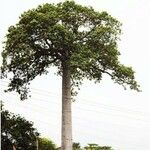
Cavanillesia platanifolia
Cuipo · Quipo
Description
Source: leafsnapCavanillesia platanifolia, commonly known as the "Árbol de la Ceiba" or "Silk Cotton Tree," is a large deciduous tree native to Central and South America. It can reach impressive heights of up to 40 meters and boasts a broad, spreading crown with large leaves that resemble those of the plane tree. The trunk is covered in sharp spines, which serve as protection from animals. The tree produces stunning white or pink flowers with a sweet fragrance, followed by large fruit pods filled with cotton-like fibers, often used to stuff pillows and mattresses. For indigenous communities, Cavanillesia platanifolia is invaluable. Its bark is used for medicinal purposes, treating ailments such as fever, diarrhea, and skin infections. Additionally, the wood is highly prized for its durability and resistance to decay. Despite its many benefits, Cavanillesia platanifolia is threatened by deforestation due to logging activities in some of its natural habitats. Various organizations have initiated conservation efforts to protect this valuable species from extinction.
Care Guide
💧 Water Every 7 days
☀️ Light Full sun
Quipo comes from open habitats, such as sunny meadows and forest margins, which offer abundant light. It thrives in Full Sun but can also tolerate Partial Sun, showing adaptability to different light conditions.
🌡️ Temperature 20–37.8°C
Quipo comes from tropical areas, where the climate is generally warm and humid. As a result, it is well adapted to high temperatures and humidity. It does not tolerate sudden temperature changes and prefers a stable thermal environment, so it is important to avoid temperature fluctuations indoors. It usually cannot withstand cold temperatures and needs higher temperatures to grow. If the environmental temperature falls too low, the plant may stop growing or even die.
💨 Humidity
🪴 Soil 6-7
🌱 Fertilizer
Fertilizing is essential for Quipo's care. Consistent feeding during the growing season preserves energy for its showy leaves and encourages overall growth. Failing to fertilize can lead to unhealthy leaves, reduced ornamental appeal, and stunted or weak growth that is more likely to break.
🪴 Pot & Repot
✂️ Pruning
Quipo thrives when pruned in early spring, before new growth begins. Ensure you use clean tools to remove dead branches and thin out crowded areas, which will improve air circulation. Regular pruning promotes growth and helps prevent disease. However, avoid heavy pruning in late winter to maintain the plant's structural integrity.
🌿 Propagating
🐛 Diseases & pets
☠️ Toxicity
Characteristics
- Plant Type
- Tree
- Life Cycle
- Perennial
- Genus
- Cavanillesia
- Family
- Malvaceae
- Hardiness Zone
- 10-12
- Mature Height
- 29.87 m to 39.93 m
- Mature Spread
- 14.94 m to 20.12 m
- Leaf Color
- Green, Dark Green
- Leaf Type
- Deciduous
- Flower Size
- 4.06 cm to 5.08 cm
- Bloom Time
- Late winter, Early spring
- Planting Time
- Spring
- Harvest Time
- Mid spring, Late spring, Early summer
- Native Area
- Colombia, Peru, Nicaragua, Ecuador, Costa Rica, Panama