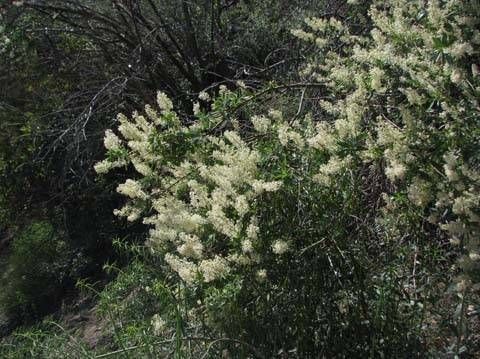
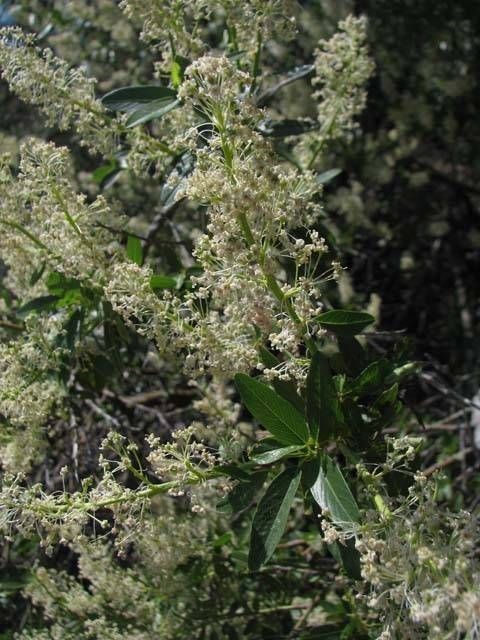
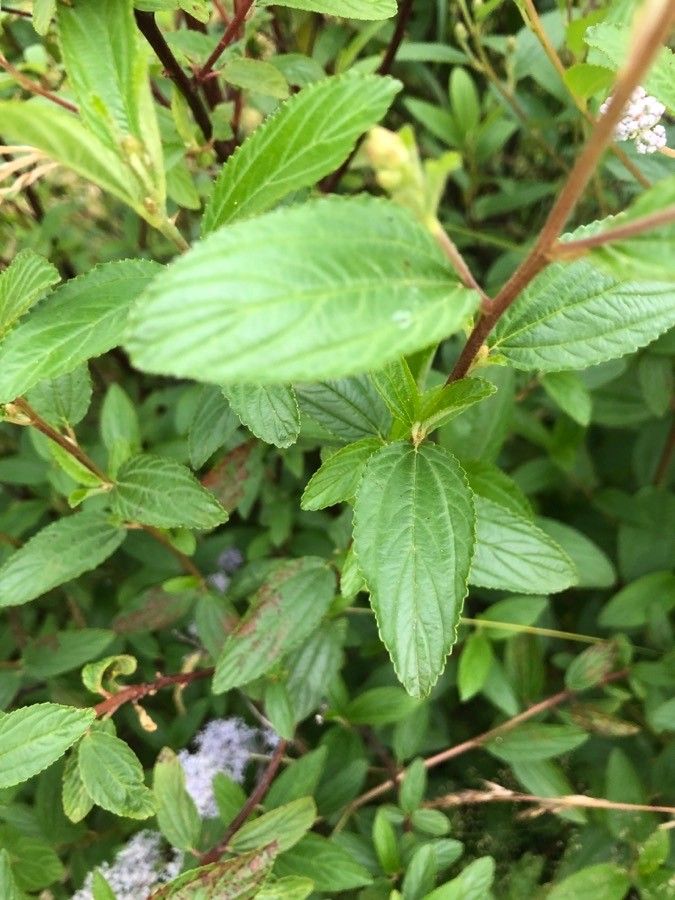
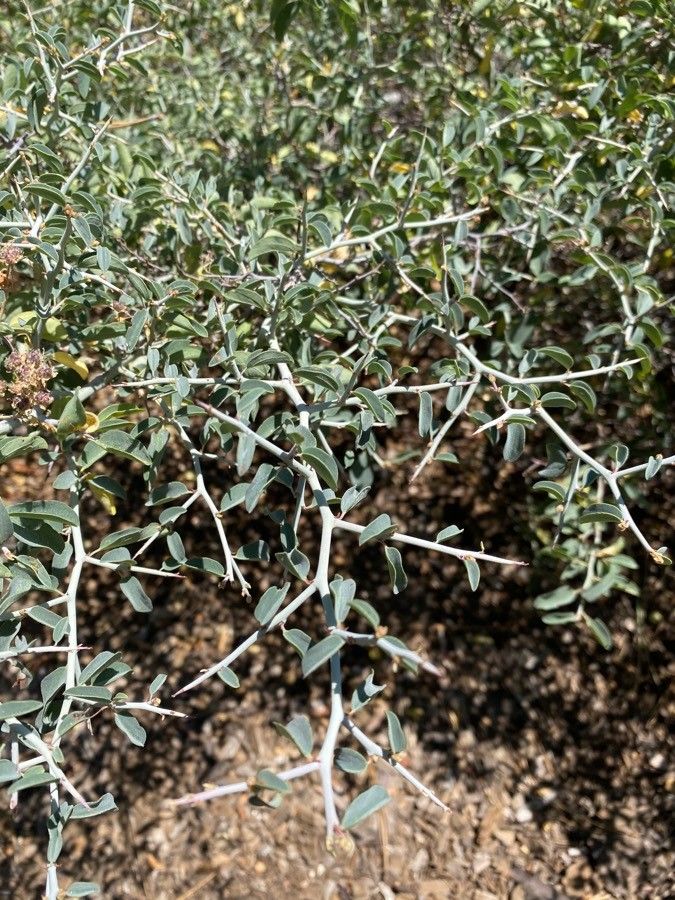
Ceanothus palmeri, commonly known as Palmer's ceanothus, is an evergreen shrub native to California and Baja California. A member of the Rhamnaceae family, it can reach up to 10 feet in height and width. The leaves are small, glossy, dark green, and have a leathery texture. The plant produces small clusters of blue or purple flowers that bloom in the spring or early summer.
Palmer's ceanothus thrives in full sun but can also tolerate partial shade. It requires well-draining soil and moderate watering during the growing season but can survive drought conditions once established. Because of its deep root system, it is an excellent choice for erosion control on slopes.
This shrub attracts pollinators such as bees and butterflies with its fragrant flowers and provides dense foliage that offers habitat for birds. Traditionally, Native Americans have used Palmer's ceanothus for medicinal purposes, such as treating colds, coughs, sore throats, and skin irritations.
Overall, Ceanothus palmeri is an attractive evergreen shrub that provides numerous ecological benefits while requiring minimal maintenance. It is an excellent addition to gardens or landscape projects in California or other Mediterranean climates, where it thrives best.
How to keep Ceanothus Palmeri.
Pruning
Palmer ceanothus features vibrant, bushy growth adorned with floral clusters. To maintain its shape and health, prune it in early spring before new growth begins. Focus on removing dead branches and lightly trimming the plant, avoiding heavy pruning to minimize stress. Be sure to clean your tools to prevent disease and promote bushier growth.
Botanical profile.
- Plant Type
- Shrub
- Genus
- Ceanothus
- Family
- Rhamnaceae
Other names.