Ceanothus sanguineus
Teatree · Buckbrush · Red-stem ceanothus · Wild lilac · Redstem ceanothus
Description
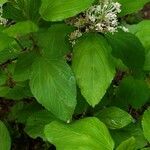
Source: leafsnapCeanothus sanguineus is a species of shrub in the family Rhamnaceae known by the common name redstem ceanothus. It is native to western North America from British Columbia to Montana to far northern California; it is also known from Michigan. It grows in temperate coniferous forest habitat in forest openings amidst the conifers. This is an erect shrub approaching 3 meters in maximum height. Its stem is red to purple in color, its woody parts green and hairless when new. The deciduous leaves are alternately arranged and up to about 10 centimeters long. They are thin, light green, oval, and generally edged with glandular teeth. The undersides are sometimes hairy. The inflorescence is a cluster of white flowers up to about 12 centimeters long. The fruit is a three-lobed smooth capsule about 4 millimeters long. This shrub is an important food plant for wild ungulates such as the Rocky Mountain Elk, it is browsed eagerly by many types of livestock, and the seed is consumed by many types of animals.Their roots have nitrogen fixing nodules.
🎭 Wealth, Bravery, Might
Care Guide
💧 Water
Redstem ceanothus flourishes in dry areas due to its ability to tolerate drought. It requires watering only every 2-3 weeks, allowing the soil to dry out between waterings. This plant prefers well-draining soil and benefits from deep watering, particularly during its active growing seasons when its water requirements align with natural weather patterns.
☀️ Light Full sun
New Jersey Tea does best with plentiful sunlight and can tolerate locations with intermittent sun. Native to areas that receive steady sunlight, New Jersey Tea may struggle when light is insufficient, which can hinder its growth. Excessive sunlight, though beneficial to a point, can also threaten the plant’s health.
🌡️ Temperature 15–35°C
New Jersey Tea tolerates a wide variety of climate conditions, from very hot summers to cold winters. That said, it does have a preferred temperature range for healthy growth. If temperatures rise too high, the plant can experience heat and humidity stress that may kill it. In places where temperatures near the lower edge of its cold tolerance, providing insulation is important to protect the plant.
💨 Humidity
🪴 Soil 5-6
🌱 Fertilizer
Timing is essential when fertilizing New Jersey Tea. Apply fertilizer in early spring and continue monthly until early summer. Fertilizer encourages attractive blooms and provides energy during both dormant and active growth periods.
🪴 Pot & Repot
✂️ Pruning
Redstem ceanothus has striking red stems and benefits from yearly pruning in early spring, just before new growth begins. Pruning helps enhance bushiness, removes dead wood, improves air circulation to prevent disease, maintains the plant's natural shape, and encourages abundant blooming. This results in a healthy, vibrant appearance throughout the growing season.
🌿 Propagating
🐛 Diseases & pets
☠️ Toxicity
Characteristics
- Plant Type
- Shrub
- Life Cycle
- Perennial
- Genus
- Ceanothus
- Family
- Rhamnaceae
- Hardiness Zone
- 6
- Mature Height
- 61 cm to 91 cm
- Mature Spread
- 0.91 m to 1.52 m
- Leaf Color
- Green
- Leaf Type
- Evergreen
- Flower Color
- White
- Flower Size
- 2.54 cm
- Bloom Time
- Late spring, Early summer, Mid summer
- Planting Time
- Spring, Autumn
- Harvest Time
- Mid summer