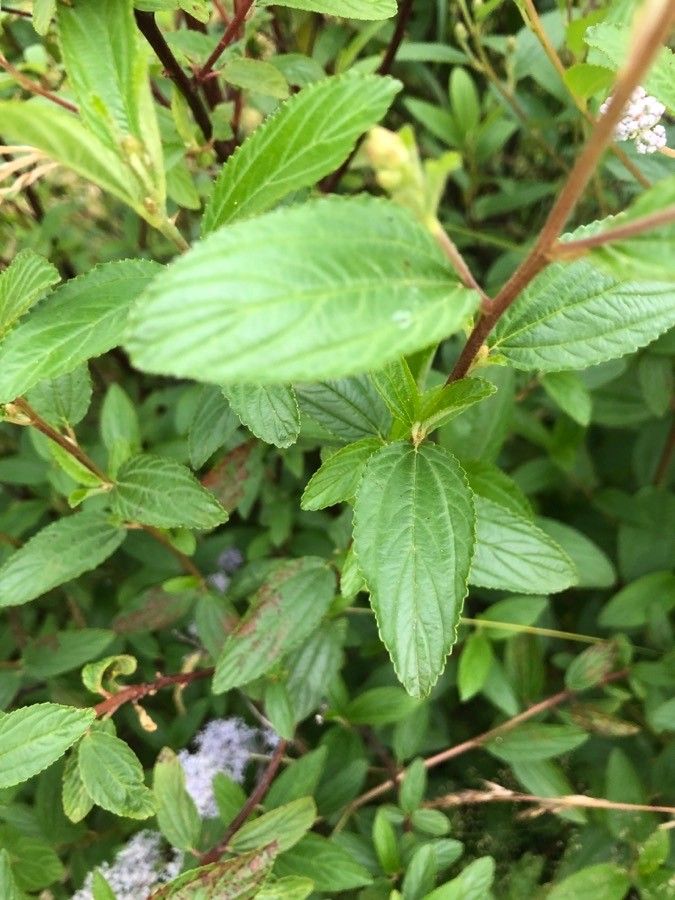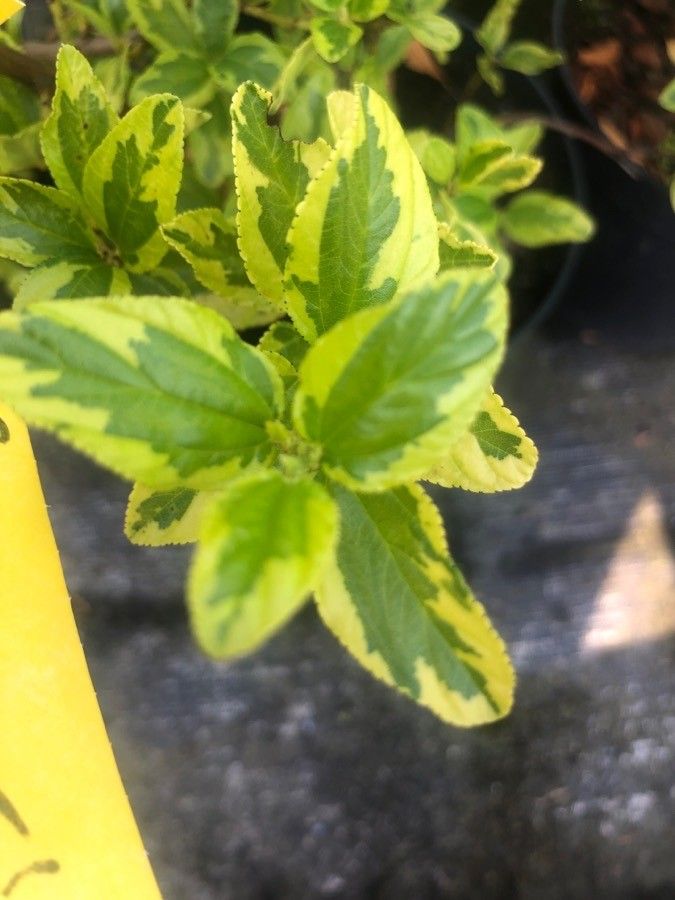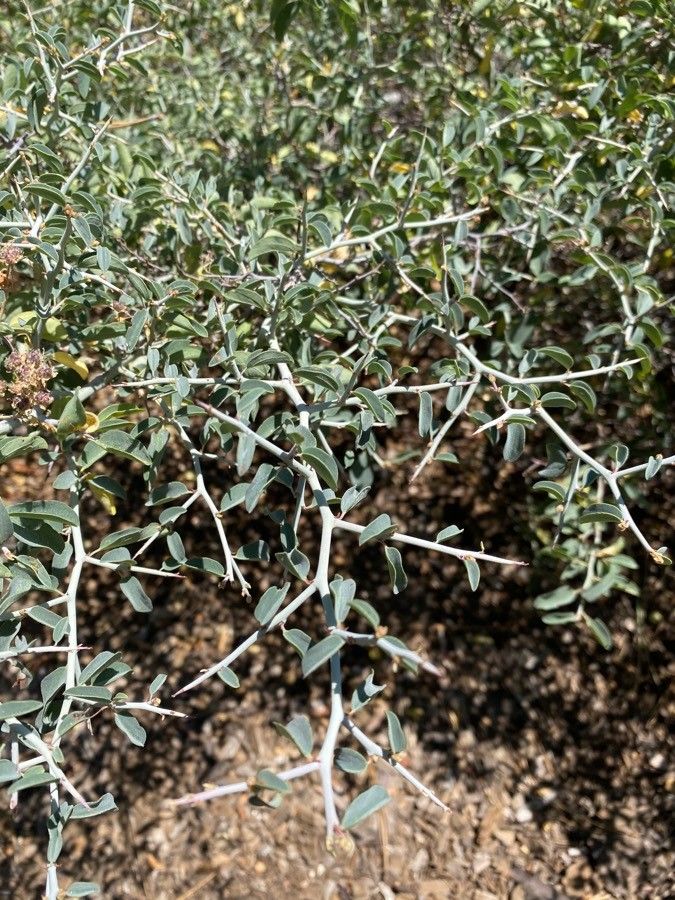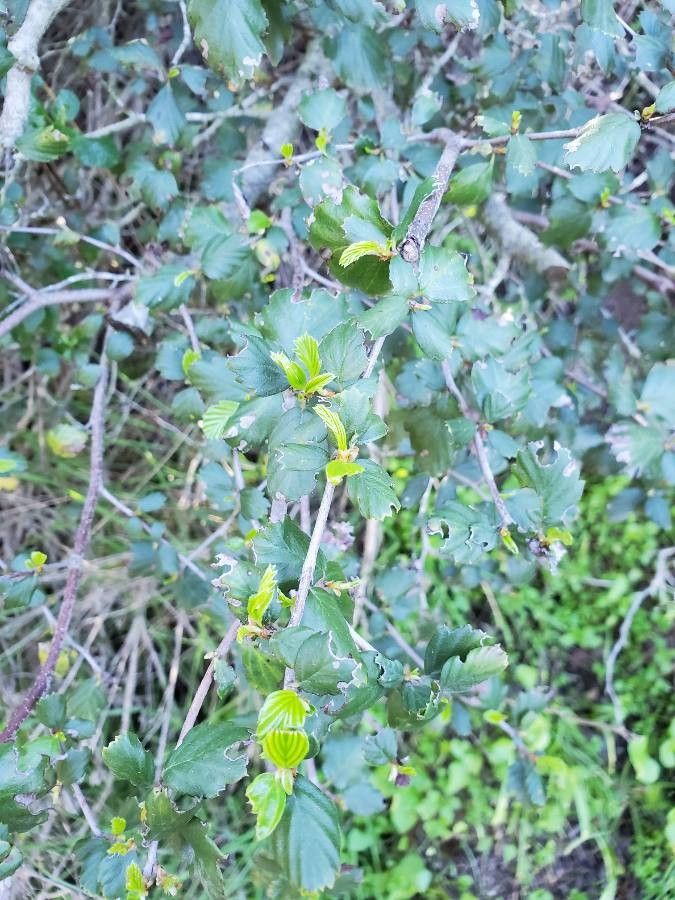
Ceanothus verrucosus is a species of shrub in the family Rhamnaceae known by the common names wart-stem ceanothus, barranca brush, coast lilac and white coast ceanothus. It is endemic to northwestern Baja California and San Diego County, where it grows in coastal sage scrub and coastal succulent scrub habitats. It is considered a rare species north of the international border, as most of the valuable coastal land that hosts this plant in the San Diego area has been claimed for development. In California, several extant populations still remain scattered around the region, such as one protected at Torrey Pines.
Barranca brush is fairly resistant to disease and typically not prone to illnesses. Regarding care, this plant is relatively low-maintenance. When grown outdoors it needs only minimal watering, and larger plants usually do not require pruning. Smaller plants, however, should be pruned after they finish blooming. Barranca brush is suitable for anyone with outdoor space, such as a garden or deck, and does not demand a lot of care experience.
How to keep Ceanothus Verrucosus.
Light
Barranca brush comes from open habitats, like sunny meadows and forest margins, which supply plenty of light. It performs best in Full Sun but can also endure Partial Sun, adjusting well to a variety of sunlight conditions.
Temperature
Barranca brush demonstrates strong temperature adaptability, tolerating higher heat and broader temperature swings. In hot weather, it is important to watch watering and provide suitable shade to avoid sunburn. On the other hand, Barranca brush is relatively sensitive to low temperatures: it can endure some cold, but excessively cold conditions can cause frost damage.
Fertilizer
The timing of fertilizing Barranca brush is important. Apply fertilizer in early spring and continue on a monthly schedule until early summer. Fertilizer encourages attractive blooms and supplies energy both during dormant periods and active growth phases.
Pruning
Prune barranca brush in early spring by removing dead or overgrown branches to improve air circulation and shape the plant. Avoid heavy pruning; instead, opt for light pruning after the plant has flowered to encourage growth and blooming. Always use clean, sharp tools to prevent damage and disease.
Botanical profile.
- Plant Type
- Shrub
- Life Cycle
- Perennial
- Genus
- Ceanothus
- Family
- Rhamnaceae
- Hardiness Zone
- 8-10
- Mature Height
- 0.91 m to 3.05 m
- Mature Spread
- 0.91 m to 2.13 m
- Leaf Color
- Dark Green
- Leaf Type
- Evergreen
- Flower Color
- White
- Flower Size
- 0.51 cm to 1.02 cm
- Bloom Time
- Late winter, Early spring, Mid spring
- Planting Time
- Spring, Summer
- Harvest Time
- Late spring, Early summer, Mid summer
- Native Area
- Mexico