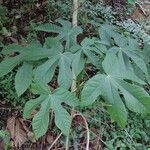
Cecropia albicans
Hand of Bakasura · Hand of Bakasura (బకాసురుని చెయ్యి)
Description
Source: leafsnapCecropia albicans, commonly known as the trumpet tree or yagrumo hembra, is a fast-growing species belonging to the Cecropiaceae family. Native to Central and South America, it thrives in tropical rainforests. This impressive tree can reach heights of up to 30 meters, with a trunk diameter of up to 1 meter. The leaves of Cecropia albicans are notably large and palmate, featuring five deeply incised lobes. They are light green and have a velvety texture on the underside. The trunk is covered with smooth, grayish-brown bark. The trumpet tree produces small flowers that grow on elongated spikes called panicles. These flowers lack petals but have long stamens, giving them a distinctive appearance. Ecologically, Cecropia albicans is vital, providing food for various animals, including birds, bats, monkeys, and insects. Its large size also offers shelter to many species. In traditional medicine, different parts of the plant, such as the bark and leaves, are used for various treatments, including alleviating fever and inflammation due to their anti-inflammatory properties. Overall, Cecropia albicans is an important plant species both ecologically and medicinally. Its unique characteristics make it an intriguing subject for further research, particularly in the context of biodiversity conservation efforts worldwide.
Care Guide
💧 Water Every 7 days
☀️ Light Partial sun
Cecropia albicans is indigenous to habitats like forest understories or rocky areas, where it grows in natural shade. It prefers partial sun but can tolerate full sun or full shade, reflecting its versatile and hardy nature.
🌡️ Temperature 20–37.8°C
Cecropia albicans comes from tropical regions, where the climate is generally warm and humid. As a result, it is adapted to high temperatures and humidity. It is sensitive to sudden temperature shifts and prefers a stable thermal environment, so avoiding temperature fluctuations indoors is important. It usually cannot tolerate cold conditions and requires warmer temperatures to grow. If the ambient temperature falls too low, the plant may stop growing or even die.
💨 Humidity
🪴 Soil 6-7
🌱 Fertilizer
Fertilizing is essential for the care of Cecropia albicans. Regular feeding during the growing season provides the energy needed for its showy leaves and supports overall growth. Failing to fertilize can lead to unhealthy foliage, reduced ornamental appeal, and stunted or weak growth that is more likely to break.
🪴 Pot & Repot
✂️ Pruning
🌿 Propagating
🐛 Diseases & pets
☠️ Toxicity
Characteristics
- Plant Type
- Tree
- Life Cycle
- Perennial
- Genus
- Cecropia
- Family
- Urticaceae
- Hardiness Zone
- 10-12
- Mature Height
- 14.94 m to 24.99 m
- Mature Spread
- 7.92 m to 11.89 m
- Leaf Color
- Dark Green, Silver
- Leaf Type
- Evergreen
- Flower Size
- 2.03 cm to 3.05 cm
- Bloom Time
- All year round
- Planting Time
- Spring, Summer, Autumn
- Harvest Time
- All year round
- Native Area
- Peru