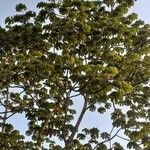
Cecropia peltata
Trumpet-tree · Pop-a-gun · Snakewood · Yagrumo Hembra · Pumpwood
Description
Source: leafsnapCecropia peltata is a fast-growing tree in the genus Cecropia. Common names include trumpet tree, trumpet-bush, bacano and snakewood. It is listed as one of the world's 100 worst invasive alien species.
Care Guide
💧 Water
The trumpet tree, native to tropical regions, thrives in environments with high humidity and consistent soil moisture, though it's important to avoid waterlogging. For the best growth outdoors, make sure to water the tree every 2-3 weeks, relying on natural rainfall when possible. During its active growing season, the trumpet tree is known for its rapid growth and broad leaves.
☀️ Light Full sun
Trumpet tree prospers in locations that receive plenty of sunlight throughout the day. Its health and growth benefit from such conditions. Either too little or too much light can lead to a decline in its vigor. This preference for sun is linked to its native habitat.
What are the sunlight requirements for a Trumpet tree?
The Trumpet tree, known botanically as Cecropia peltata, requires full sun, defined as more than 6 hours of sunlight daily, to thrive. It's essential to observe the movement of sunlight through your garden closely, selecting locations that offer a harmonious balance of light and shade to ensure the plants thrive. In its native habitat, the Trumpet tree prospers under continuous sun exposure throughout the day, which is crucial for its health and growth. Both too little and too much light can adversely affect the plant's vitality. To accommodate these needs indoors, especially in winter or less sunny spots, adequate artificial lighting is indispensable for optimal growth. LED lights, in particular, can be tailored to provide specific wavelengths needed by the plant, with varying wattage requirements based on the plant's natural sunlight needs.
What are the signs of insufficient or excessive sunlight exposure in Trumpet trees?
Trumpet trees display several symptoms when faced with insufficient or excessive sunlight. Insufficient light can lead to small leaves, leggy or sparse growth, faster leaf drop, slower or no new growth, and lighter-colored new leaves due to a lack of chlorophyll. Excessive sunlight exposure can cause chlorosis, where leaves lose their green color and turn yellow, sunscald resulting in pale, bleached, or necrotic spots on the plant, leaf curling as a defense against sunlight, wilting due to increased water loss, and leaf scorching characterized by brown, dry edges on leaves. These symptoms indicate a need to adjust the plant's light exposure to promote healthy growth and vitality.
How can I address lighting issues for my Trumpet tree?
To address lighting issues for your Trumpet tree, gradually increase sunlight exposure to at least 6 hours daily by moving the plant closer to a sunnier spot each week, using a south-facing window for indoor plants. Additionally, consider using artificial lights, such as desk lamps or professional grow lights, for at least 8 hours daily if the plant is large or not easily movable. For outdoor plants, moving them gradually to sunnier locations helps prevent sunburn. Addressing obstructions by pruning surrounding trees or transplanting smaller plants during their dormant period can also ensure ample sunlight. Keep in mind that parts of the plant affected by poor light may not recover, but new growth should be healthy once adequate light is provided.
🌡️ Temperature 20–37.8°C
The trumpet tree originates from climates with temperatures ranging from 68 to 100 °F (20 to 38 ℃). It thrives in a warm, consistent environment. Remain attentive during colder seasons and modify its surroundings to match its preferred temperature.
What is the native climate for the Trumpet tree?
The Trumpet tree is native to climates where temperatures range from 68 to 100°F (20 to 38°C). It thrives in warm, stable environments and is highly heat-loving. During colder seasons, extra care is needed to maintain its preferred temperature conditions, including moving outdoor-grown plants indoors to keep them warm and ensuring they are placed near a bright window yet at a safe distance from heaters. It is crucial to maintain temperatures above 20°C, particularly during winter months, as the Trumpet tree can be harmed by cold temperatures and even more so by temperatures approaching 0°C.
How should I care for a Trumpet tree when temperatures drop?
When temperatures fall to levels not favored by the Trumpet tree, specifically below 20°C and closer to or below 0°C, you may notice the leaves lightening in color, which can deepen to brown or black following frost damage, accompanied by wilting and drooping. To care for a Trumpet tree in such conditions, you should promptly trim off the frost-damaged parts and move the plant indoors to a warm spot, ideally near a south-facing window for sufficient sunlight. It's essential to avoid placing the plant near heaters or air conditioning vents to protect it from air that's too dry.
What measures should be taken if a Trumpet tree experiences high temperatures?
To protect a Trumpet tree during the summer when temperatures soar above its comfort zone, specifically above 38°C and up to 43°C, steps should be taken to mitigate any damage. The leaves may lighten and the plant can become prone to sunburn under such conditions. Trimming the sunburned and dry parts of the plant, moving it to a shaded location away from the intense midday and afternoon sun, and watering the plant in the morning and evening to maintain soil moisture are effective measures for safeguarding the Trumpet tree against excessive heat.
💨 Humidity dry (<40%)
This plant prefers dry conditions, so don't mist it. However, watering it less often can also thrive in higher humidity.
🪴 Soil 6-7
🌱 Fertilizer
Fertilizing is essential for the care of the Trumpet tree. Regular applications during the growing season preserve the energy required for its showy foliage and encourage overall growth. Skipping fertilization can lead to unhealthy leaves, a loss of ornamental value, and stunted or weak growth that is likely to break.
Why should I put fertilizer on my Trumpet tree?
Regular fertilization is necessary for Trumpet trees because their showy leaves require a significant amount of energy for their production and maintenance. However, this poses a challenge as the tree must also allocate enough energy for the growth of its stems, branches, roots, and other vital structures. If fertilization is neglected, two likely outcomes are expected. Firstly, the leaves will become discolored and unhealthy-looking, greatly diminishing the tree's ornamental appeal. Secondly, the overall growth of the Trumpet tree will slow down or become weak, making it more susceptible to breakage.
When should I fertilize my Trumpet tree?
To ensure the optimum growth of your Trumpet tree, occasional feedings are recommended instead of adhering to a fixed feeding schedule upon planting. A simple and effective way to fertilize the tree is by applying the fertilizer during watering sessions. Additionally, it is important to provide an adequate amount of water to the Trumpet tree during the growing season. Feeding the plant once every two to three weeks is sufficient, and this frequency should be maintained while the tree is continuously producing new growth.
When is not a good time to give fertilizer to my Trumpet tree?
You can follow a regular fertilization schedule for your Trumpet tree throughout most of the year, particularly during the active growing season of spring, summer, and early fall. However, it's important to note that during winter, the plant should not receive any fertilizer. This is because the Trumpet tree enters a dormant growth phase during this time, where it either produces no or minimal new growth. Since the plant is not actively growing, it requires less energy and therefore does not need fertilization.
What kind of plant food does my Trumpet tree need?
When fertilizing a Trumpet tree, it is important to use a specific blend of nutrients that are present in low amounts. The recommended N-P-K ratio is 3-1-2, but a general-purpose fertilizer with an even nutrient blend can also work. Regardless of the type of fertilizer used, the volume ratios of each nutrient should be 3 or lower. If using a liquid-based fertilizer, it is advisable to dilute it by half. While granular fertilizer has few disadvantages, using liquid fertilizer is often the best option, especially when watering the Trumpet tree.
How should I feed my Trumpet tree?
Fertilizing a Trumpet tree can be done in two ways. The first method involves mixing fertilizer with water and pouring it onto the soil. To do this, you'll need a water container like a watering can. Diluting the fertilizer will prevent it from being too strong. Make sure to let the water and fertilizer mixture soak down to the roots. The second method is using a granular fertilizer. Instead of mixing it with water, you simply sprinkle it on the soil where the Trumpet tree is planted. Granular fertilizers are slow-release, so you won't have to fertilize as frequently compared to using a liquid fertilizer. Regardless of the method you choose, it's a good idea to water the tree while you fertilize it.
🪴 Pot & Repot
✂️ Pruning
The trumpet tree features large, lobed leaves and grows quickly. To maintain its shape and improve airflow, prune it lightly in early spring. Avoid heavy pruning, as it can stress the tree. Regular trimming helps develop a strong structure, which can aid in preventing pests and diseases.
🌿 Propagating
🐛 Diseases & pets
☠️ Toxicity
Characteristics
- Plant Type
- Tree
- Life Cycle
- Perennial
- Genus
- Cecropia
- Family
- Urticaceae
- Hardiness Zone
- 9-12
- Mature Height
- 14.94 m to 24.99 m
- Mature Spread
- 7.92 m to 11.89 m
- Leaf Color
- Dark Green, Green
- Leaf Type
- Deciduous
- Flower Color
- Yellow, Green
- Flower Size
- 3.05 cm to 5.08 cm
- Bloom Time
- All year round
- Planting Time
- Summer, Autumn
- Harvest Time
- All year round
- Native Area
- Belize, Mexico, Guatemala, Dominican Republic, Jamaica, Cuba, Haiti, Venezuela, Brazil, Suriname, Honduras, Trinidad and Tobago, Panama, Colombia, Guyana, El Salvador, Nicaragua, Ecuador, Costa Rica