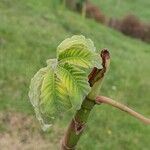
Cecropia telenitida
Care Guide
💧 Water
☀️ Light Partial sun
Cecropia telenitida is native to settings such as forest understories and rocky areas, where it grows under natural shade. It prefers partial sun but can adjust to full sun or full shade, reflecting its versatile and hardy nature.
🌡️ Temperature 20–37.8°C
Cecropia telenitida comes from tropical areas, where the climate is generally warm and humid. As a result, it is adapted to high temperatures and humidity. It is sensitive to sudden temperature shifts and prefers a steady temperature regime, so indoor temperature fluctuations should be avoided. It typically does not tolerate cold and needs higher temperatures to grow. If the ambient temperature drops too low, the plant may stop growing or even die.
💨 Humidity
🪴 Soil 6-7
🌱 Fertilizer
Fertilizing is essential for caring for Cecropia telenitida. Regular feeding during the active growing season preserves the energy needed for its attractive leaves and promotes overall development. Failing to fertilize can lead to unhealthy foliage, reduced ornamental value, and stunted or weak growth that is more susceptible to breaking.
🪴 Pot & Repot
✂️ Pruning
Pruning Cecropia telenitida in early spring helps shape the tree and remove any damaged parts. Focus on removing dead branches, thinning crowded areas to improve air circulation, and cutting back overgrown sections to enhance both the tree's health and its appearance. These techniques complement Cecropia telenitida's active growth cycle, promoting optimal development.
🌿 Propagating
🐛 Diseases & pets
☠️ Toxicity
Characteristics
- Plant Type
- Tree
- Life Cycle
- Perennial
- Genus
- Cecropia
- Family
- Urticaceae
- Hardiness Zone
- 10-12
- Mature Height
- 10.06 m to 14.94 m
- Mature Spread
- 4.88 m to 7.92 m
- Leaf Color
- Dark Green, Forest Green
- Leaf Type
- Evergreen
- Flower Size
- 5.08 cm to 10.16 cm
- Bloom Time
- All year round
- Planting Time
- Spring, Summer, Autumn
- Harvest Time
- All year round
- Native Area
- Colombia, Ecuador, Venezuela