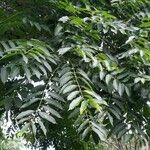
Cedrela odorata
Cigar-box-cedar · West Indian-cedar · Barbados-cedar · Spanish-cedar · Mexican-cedar
Description
Source: leafsnapCedrela odorata, commonly known as Spanish cedar or cedro, is a large tropical tree species native to Central and South America. It belongs to the Meliaceae family and can grow up to 30-40 meters tall, with a trunk diameter of up to 2 meters. The tree features a straight trunk with smooth gray bark and large, dark green pinnate leaves. The wood of Cedrela odorata is highly valued for its durability, resistance to decay, and insect-repelling properties. It is commonly used for making furniture, cabinetry, and musical instruments such as guitars and violins, as well as in the construction industry. The tree produces small, fragrant white or yellowish flowers that are not particularly showy. The fruit is a capsule containing numerous small, winged seeds that are dispersed by the wind. Traditionally, Cedrela odorata has been used in herbal medicine for its anti-inflammatory properties. Its bark extract has been found effective against malaria parasites, and its leaves have shown potential against cancer cells. Despite being widely distributed throughout tropical regions due to its commercial value as a timber species, Cedrela odorata populations have declined due to overexploitation. As a result, it has been listed on the IUCN Red List under the vulnerable category since 1998. Conservation efforts, such as sustainable forest management practices, can help protect this valuable plant species from extinction while ensuring continued economic benefits from its timber industry.
🎭 I live only for you; think of me.
Care Guide
💧 Water Every 7 days
Spanish cedar flourishes in tropical environments that offer high humidity and consistent moisture. While it can endure moderate drought, the tree benefits from regular watering every 2-3 weeks, with a slight drying of the soil in between. When grown outdoors, using mulch can help retain moisture, which is essential for meeting its stable watering needs, especially during warmer seasons.
What's the best way to water my Spanish cedar?
To ensure excellent root development, place a garden hose at the base of your plant. Avoid spraying water directly on the leaves. If your plant is outdoors and exposed to direct sunlight, the leaves may need additional watering. You can use bubblers or soaker hoses to moisten the roots of each plant. When adding or removing plants, use soaker hoses that cover the entire garden or bed to help the roots go deep. After watering, make sure to drain any excess water and wait for the soil to dry before watering again. Watering at ground level can help prevent diseases. On sunny days, consider spraying the entire bush with water. Whether your plant is in a pot or in the ground, keep in mind that Spanish cedar prefers deep watering rather than light sprinkling.
What should I do if I give Spanish cedar too much or too little water?
An overwatered Spanish cedar will show signs such as yellow, dropping, and wilting leaves. The plant will also appear dull and unhealthy, with mushy stems. When these signs appear, it's important to adjust your watering schedule. Wilting can also indicate under watering, with leaves turning crispy and dry. In this case, check the soil for dryness and water the plant thoroughly. However, excessive watering can still result in dry, yellow leaves due to root damage. Once the plant returns to normal, the yellowing of leaves will stop. When growing Spanish cedar indoors, always monitor moisture levels and avoid overwatering. Look for signs of black spots, and if present, allow the soil to dry before watering again. Overwatering can cause root rot, so if you see discolored and slimy roots, consider transferring the plant to a different pot. It's important to prevent root rot by avoiding excessively soggy soil. When planting Spanish cedar outdoors, ensure the soil is not too dry by checking with your fingers. If it is too dry, water adequately to help the plant recover.
How many times should I water my Spanish cedar plant?
The Spanish cedar prefers deep, infrequent watering. If planted in pots, it is important to soak them with a gallon of water each time, as pots have limited water storage and the soil dries out quickly. In colder regions, watering is needed every 3 to 5 days. It's best to water early in the morning when the soil is dry, both indoors and outdoors. To determine if watering is needed, check the soil. When the top 2-3 inches are dry, it is time for a full watering. During hot days, check the moisture daily as the heat can quickly dry out the soil in the pot. If you have a garden, irrigation is also required. In hot climates, watering once a week is sufficient. Only water when about 2 to 3 inches of soil are too dry, indoors or outdoors. Be mindful of rainwater on the plants and avoid adding extra water to prevent root rot. If there is ample rainfall, additional watering may not be necessary. Spanish cedar generally grows during spring and fall, so adding 3 to 4 inches of mulch when planting outdoors can help conserve water. Sandy soil drains faster and requires more frequent watering, while clay soil requires less frequent watering to avoid root rot. Keep track of watering dates on a calendar and pay attention to drooping leaves, as this may indicate that watering is needed.
How much water does my Spanish cedar need?
To properly water Spanish cedar, start by providing about a gallon of water according to a schedule. For potted plants, water them deeply until you see water dripping from the bottom of the pot. Allow the soil to dry before watering again, and use a water calculator or moisture meter to determine the amount of water given in a week. During the flowering period, provide plenty of water, but allow the moisture to evaporate to avoid root rot. If Spanish cedar is planted outdoors and receives adequate rainfall, additional watering may not be necessary. However, when the tree is young or newly planted, ensure it receives 1-2 inches of rain per week. As the tree grows, it can rely on rainfall alone. Only water during hot weather or if there has been no rainfall for 2-3 weeks. Water during cooler parts of the day to prevent heat damage. Additional watering may be needed during extended dry periods.
Do I need to change how often I water my Spanish cedar depending on the time of year or the weather?
To ensure the proper care of Spanish cedar, it is important to consider its watering needs based on the season. During the spring and fall growing seasons, the soil should be kept moist but not soggy, alternating between dry and moist conditions. In the summer, hot weather can cause water to evaporate quickly, so additional watering may be necessary if there is a lack of rainfall. Generally, less water is needed during the winter when the plant goes dormant. During this time, using a well-draining soil mixture can help with moisture retention. Spanish cedar can rely on fall and winter rains to stay hydrated during its dormant period. When the temperature becomes warmer in the spring, you can encourage its growth and blooming. Proper drainage is crucial for the plant's health throughout the year, especially in the winter. If Spanish cedar is in a pot, it has limited root growth, so it should be well-watered, especially during the summer. Avoid shallow sprinkles that reach the leaves as they can encourage fungal growth and instead focus on deep soaking of the entire root system once or twice a week, depending on the weather. It is important to prevent the plant from drying out completely in the fall or winter, even during dormancy, but also to avoid stagnant water. Additionally, applying mulch can help reduce stress, conserve water, and promote healthy blooms.
☀️ Light Full sun
Spanish cedar thrives with abundant sunlight but can also do well in somewhat lower light. Native to open forest habitats, it uses sunlight to promote vigorous growth. Its preferred light condition is similar to an exposed tree canopy. However, both too much and too little light can harm Spanish cedar's growth — insufficient light may impede healthy development, while excessive light can cause sunburn.
What are the sunlight requirements for Spanish cedar?
Spanish cedar thrives under conditions that provide an abundance of sunlight, matching its native open forest settings where it benefits from direct exposure similar to that under a tree canopy. The plant requires full sun, defined as above 6 hours of sunlight per day, but can also manage with partial sun, which means about 3-6 hours of sunlight. Despite its adaptability to varying light conditions, both excessive and insufficient sunlight can adversely affect its growth, causing issues such as inhibited development or sunburn.
How can artificial lighting support Spanish cedar growth indoors?
Artificial lighting becomes crucial for the growth of Spanish cedar indoors, especially in situations where natural sunlight is limited, like during winter or in less sunny indoor spaces. For optimal growth, it's recommended to use LED lights that can provide specific light wavelengths needed by the plant. Full sun plants require between 30-50W per square foot, partial sun plants need 20-30W per square foot, and full shade plants should get 10-20W per square foot of artificial light. The light source should be placed 12-36 inches above the plant to mimic natural sunlight conditions, ensuring the plant gets about 8-12 hours of light per day.
What symptoms indicate Spanish cedar is getting insufficient light?
Symptoms of insufficient light for Spanish cedar include smaller new leaves, leggy or sparse growth, quicker leaf drop, slower or no new growth, lighter-colored or yellowing leaves, and symptoms of sunscald such as pale or necrotic areas on the plant. Other signs include leaves curling as a defense against too much exposure, wilting due to increased water loss, and leaf scorching characterized by brown, dry edges on leaves due to excessive sunlight.
What solutions are available to address light-related issues for Spanish cedar?
To address light deficiency in Spanish cedar, gradually moving the plant to a sunnier spot is a key solution. For indoor plants, transitioning them near a south-facing window or supplementing with artificial light, like a desk lamp or grow lights for at least 8 hours a day, can help. Outdoor plants should be acclimatized by slowly exposing them to more sunlight weekly. Additionally, removing obstructions that block sunlight or transplanting the plant to a sunnier location can ensure it receives the adequate sunlight it needs for healthy growth. It's important to note that parts of the plant already affected by light deficiency may not fully recover, but new growth should be healthier following these adjustments.
🌡️ Temperature 20–37.8°C
Spanish cedar is native to areas that can sustain temperatures from 68 to 100 °F (20 to 38 °C). It grows best in warm conditions and may need help regulating its environment during certain seasons to reach its preferred temperature range.
What are the ideal temperature conditions for growing Spanish Cedar?
Spanish Cedar, or Cedrela odorata, is indigenous to regions that can maintain temperatures between 68 to 100°F (20 to 38°C), thriving best in warm conditions. It's crucial to ensure the temperature does not fall below 20°C, especially during winter, to promote healthy plant growth. In areas with cold seasons, it's recommended to bring outdoor-grown Spanish Cedar indoors to protect it from cold temperatures, placing it near a bright window but away from direct heat sources like heaters. Maintaining a warm environment is key to the well-being of Spanish Cedar.
How should I care for my Spanish Cedar in low temperatures?
In low temperatures, Spanish Cedar requires special care as it is not tolerant of cold. If the temperature drops below -5°C, you might notice the leaves lightening in color, which eventually turn brown or black after frost damage, accompanied by wilting and drooping. To protect your plant, trim off the frost-damaged parts and move it to a warm, indoor environment promptly. Placing the plant near a south-facing window provides ample sunlight while ensuring it is not too close to heaters or air conditioning vents to avoid dry air.
What should I do if my Spanish Cedar experiences high temperatures?
During the summer, when temperatures rise above optimal levels for Spanish Cedar, care should be taken to prevent the temperature from exceeding 38°C. High temperatures, especially above 43°C, can lead to lighter leaf colors and increase the risk of sunburn for the plant. To mitigate this, trim away the sunburned and dried parts of the plant. Relocate the plant to a shaded area, especially away from the harsh midday and afternoon sun. Ensure to water the plant during cooler times of the day, such as in the morning and evening, to maintain soil moisture and help cool the plant.
💨 Humidity
🪴 Soil 5-7
🌱 Fertilizer
Fertilization is essential for caring for Spanish cedar. Regular feeding during the growing season preserves the energy needed for its showy leaves and promotes overall growth. If fertilization is neglected, leaves can become unhealthy, the tree's ornamental value may decline, and growth can be stunted or weak and prone to breakage.
🪴 Pot & Repot
✂️ Pruning
Prune Spanish cedar in early spring, concentrating on removing damaged branches and thinning the tree to enhance air circulation. This process encourages healthy growth and improves the quality of the wood. Be careful not to cut too much, as excessive pruning can stress the tree. Follow horticultural guidelines to ensure the best possible care.
🌿 Propagating
🐛 Diseases & pets
☠️ Toxicity
Characteristics
- Plant Type
- Tree
- Life Cycle
- Perennial
- Genus
- Cedrela
- Family
- Meliaceae
- Hardiness Zone
- 9-12
- Mature Height
- 10.06 m to 29.87 m
- Mature Spread
- 29.87 m
- Leaf Color
- Dark Green, Forest Green
- Leaf Type
- Deciduous
- Flower Color
- White
- Flower Size
- 0.25 cm to 0.51 cm
- Bloom Time
- Early summer, Mid summer
- Planting Time
- Spring, Summer
- Harvest Time
- Late summer, Early fall, Mid fall
- Native Area
- Belize, Honduras, Mexico, Guatemala, Peru, Dominican Republic, Trinidad and Tobago, Panama, Jamaica, Colombia, Bahamas, Cuba, Paraguay, Argentina, Haiti, Bolivia, Venezuela, Brazil, Guyana, El Salvador, Nicaragua, Suriname, Costa Rica