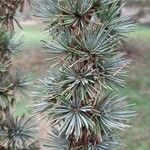
Cedrus libani
أرز لبنان · Cedar-of-Lebanon · Cyprus cedar · Cedar of Lebanon · Lebanon Cedar
Description
Source: leafsnapCedrus libani, commonly known as the Cedar of Lebanon, is a large evergreen conifer native to the mountains of the Mediterranean region. This majestic tree can grow up to 40 meters tall, featuring a broad conical crown with horizontal branches adorned with dense foliage. Its needle-like leaves can reach up to 3 centimeters in length, and its barrel-shaped cones can grow up to 12 centimeters long. The Cedar of Lebanon has been highly valued for its timber since ancient times due to its durability, and resistance to decay and insect damage. It also held religious significance for various cultures, symbolizing strength, stability, and longevity. Today, Cedrus libani is widely cultivated as an ornamental tree in parks and gardens around the world, admired for its striking appearance. Ecologically, it provides important habitats for various species of birds and mammals. However, Cedrus libani faces threats from deforestation caused by human activities such as logging for timber and land clearance for agriculture or urbanization. Conservation efforts, including reforestation programs, are being implemented to restore areas where this species once thrived. Overall, Cedrus libani remains an iconic symbol of natural beauty and cultural significance. Ongoing conservation efforts aim to preserve this majestic tree species for future generations.
💡 The cedar of Lebanon is often used as a symbol of strength and eternity in ancient literature due to its size and longevity. Cedar trees appear in some of the earliest known writings, such as The Epic of Gilgamesh, as well as the Old Testament of the Christian Bible. Additionally, this iconic tree is depicted on the flag of Lebanon.
🌳 Besides its famous strong timber, the cedar of Lebanon has been used in many lesser-known ways that influenced cultures and industries. Empires prized its wood for durability and fragrance, and it served not only in building but also in shipbuilding, especially by the Phoenicians. Outside construction, the tree’s resin — cedar oil — was employed by the Egyptians for embalming. Because its scented wood deters moths, it was valued for making storage chests for precious garments.
Care Guide
💧 Water Every 7 days
The Cedar of Lebanon thrives in well-drained soil and requires consistent watering without becoming waterlogged. Originating from mountainous regions, it prefers moderate moisture levels and can tolerate dry conditions. Ideally, it should be watered weekly to maintain its health. Typically grown outdoors, the Cedar of Lebanon is an evergreen conifer.
How should I water my Cedar of Lebanon?
Watering the Cedar of Lebanon is a simple task. To do so, you can use your garden hose to slowly soak the soil. For mature trees, a high volume of water may be needed, making the garden hose the ideal watering tool. However, for smaller trees, a watering can or other smaller tool may suffice. It is important to avoid overhead watering, as excessive moisture on the leaves can cause disease, especially in young trees.
What should I do if I give my Cedar of Lebanon too much or too little water?
Overwatering can occur when the soil doesn't drain properly for a Cedar of Lebanon plant. If this is the case, you can improve drainage by amending the soil or relocating the plant. If the plant is in a pot, repotting it with looser soil and better drainage is necessary. Overwatering can lead to disease, so it's important to treat any signs of illness promptly. To remedy underwatering, simply water the plant more frequently. You can determine if your Cedar of Lebanon is overwatered by checking the foliage, especially new growth. Discoloration and easy breakage are indications of excess moisture. Standing water or slow drainage in the growing area may also suggest overwatering. Insufficient water can cause sparse, brown leaves. Consider recent rainfall or high temperatures when assessing the plant's condition.
How often do I need to water my Cedar of Lebanon?
A mature Cedar of Lebanon doesn't require much water. It can survive mainly on rainfall and become tolerant to drought. During the hottest months, you may need to water it once a week, but in other seasons, watering may not be necessary. However, if you've recently planted a Cedar of Lebanon, regular watering is important to establish its roots. Remember that this species doesn't tolerate standing water, so it's better to avoid overwatering.
How much water does my Cedar of Lebanon require?
During the height of summer, it is necessary to water the Cedar of Lebanon, usually with about one inch of water per week. However, the amount may vary if it has rained heavily. If there has been one inch or more of rainfall in a week, watering is not required. For newly planted Cedar of Lebanon, it is crucial to water more frequently during the establishment period, generally once every one to two weeks for the first few growing seasons.
How do I water my Cedar of Lebanon throughout the year?
During the summer months, when the weather is hottest, the Cedar of Lebanon tree requires the most water. At this time, it is recommended to water the plant once a week if there is no rainfall. However, during other seasons of the year, this plant can often survive without any water at all. In spring and fall, if the weather is exceptionally hot, you may need to provide some water, although this is rare. Unlike many other plants, the Cedar of Lebanon does not fully enter dormancy in winter, so it continues to grow even during the coldest months. However, the water needs during winter are generally low because the cool temperatures do not cause the soil to dry out quickly.
☀️ Light Full sun
The cedar of lebanon grows best when it receives plenty of light during the day. Sunlight exposure is essential for its growth and overall health. In its natural environment, it is found in locations where the sun is unobstructed. A lack of sufficient light can impede its growth and cause health problems.
What are the sun requirements for Cedar of Lebanon?
Cedar of Lebanon requires full sun, meaning it thrives best with more than 6 hours of sunlight daily. However, it can also tolerate partial sun, or about 3-6 hours of sunlight. It's essential to observe how sunlight moves through your garden to find spots that offer the right balance of light and shade, ensuring the plants' well-being.
Why is sun exposure essential for Cedar of Lebanon?
Sun exposure is crucial for the Cedar of Lebanon's health and growth. In its natural habitat, it grows in areas where the sunlight is unobstructed, and ample light throughout the day is beneficial. Lack of adequate sunlight can hinder its growth and cause health issues. Additionally, when natural sunlight is not sufficient, especially in winter or less sunny spaces, artificial lighting can be a vital solution for indoor plants, providing the necessary light spectrum and intensity for healthier growth.
How can artificial lighting be used for Cedar of Lebanon indoors?
Artificial lighting is essential for Cedar of Lebanon when natural sunlight is lacking, particularly indoors during winter or in less sunny spaces. Opt for LED lights as they can be customized to provide specific wavelengths needed by the plant. Full sun plants require 30-50W/sq ft, partial sun plants need 20-30W/sq ft, and full shade plants need 10-20W/sq ft of artificial light. The light source should be placed 12-36 inches above the plant, mimicking natural sunlight, and the duration should match the natural daylight hours, typically 8-12 hours per day.
What are the symptoms of light deficiency in Cedar of Lebanon?
Inadequate lighting can lead to several symptoms in Cedar of Lebanon, including smaller new leaves, leggy or sparse growth, faster leaf drop, slower or no new growth, lighter-colored new leaves, chlorosis (yellowing leaves due to the breakdown of chlorophyll), sunscald, leaf curling, wilting, and leaf scorching. These symptoms indicate the plant's struggle with insufficient sunlight, affecting its health and growth.
How can light-related issues be resolved for Cedar of Lebanon?
To resolve light-related issues for Cedar of Lebanon, gradually move the plant to a sunnier location to receive at least 6 hours of direct sunlight daily. For indoor plants, consider using artificial light, keeping a desk or ceiling lamp on for at least 8 hours daily or investing in plant grow lights. For outdoor plants, avoid sudden changes in light intensity to prevent sunburn. Pruning trees can reduce obstructions to sunlight, and transplanting smaller plants during their dormant period can help them access more sunlight. Note that parts of the plant that have been severely affected may not recover, but new growth after adjusting light exposure will be healthy.
🌡️ Temperature 20–37.8°C
Cedar of Lebanon is native to temperate climates and prefers temperatures between 68 and 100°F (20 to 38°C). It can accommodate seasonal temperature changes. However, if temperatures drop below that range, adjustment measures should be implemented.
What is the native climate for Cedar of Lebanon?
Cedar of Lebanon is native to temperate climates and thrives best in a temperature range of 68 to 100°F (20 to 38°C). It has the ability to adapt to seasonal temperature changes, making it particularly suited for environments within this temperature range.
How does Cedar of Lebanon react to temperatures below its preferred range?
Cedar of Lebanon prefers warm temperatures and struggles with cold. When temperatures fall below its preferred range, the plant can suffer. It is extremely heat-loving, and exposure to cold temperatures can cause harm. During autumn, if grown outdoors, it's advised to bring the Cedar of Lebanon indoors to a location that's bright but away from direct heat sources, keeping indoor temperatures above 20°C to encourage growth. Temperatures approaching 0°C can be detrimental to the plant.
What are the symptoms of low temperature exposure in Cedar of Lebanon?
When Cedar of Lebanon is exposed to temperatures below its comfort zone, particularly below -5°C, the leaves might lighten in color, signaling distress. If frost damage occurs, the foliage may turn brown or black, and the plant might show signs of wilting and drooping. These symptoms indicate the plant has suffered from the cold and requires immediate attention.
How should you care for Cedar of Lebanon when it shows symptoms of frost damage?
If Cedar of Lebanon shows signs of frost damage, such as discolored or drooping leaves, it's important to act quickly. Trimming off the frost-damaged parts can help prevent further damage. Moving the plant indoors to a warm environment, preferably near a south-facing window for ample sunlight, can aid in recovery. It's also crucial to avoid placing the plant near heaters or air conditioning vents, as this can cause excessive dryness.
How does high temperature affect Cedar of Lebanon?
Cedar of Lebanon can tolerate heat well but should ideally be kept below 100°F (38°C) during the summer. When temperatures exceed 108°F (43°C), the plant may experience stress, leading to lighter colored leaves and an increased susceptibility to sunburn. This indicates the plant is struggling with the excessive heat.
💨 Humidity
🪴 Soil 6-7
🌱 Fertilizer
Cedar of lebanon has particular nutrient needs and does not require heavy fertilization. Spring is the best time to fertilize for optimal growth. Supplying nutrients improves its health, strengthens its resistance to pests and diseases, and supports its long lifespan.
Why is it important to add fertilizer to my Cedar of lebanon?
To promote healthy growth in Cedar of Lebanon, it is recommended to fertilize it during the springtime. Considering the plant's long lifespan, it requires proper support. By enriching the soil with nutrients, you can enhance the plant's overall health and strengthen its ability to fend off common pests and diseases. This, in turn, will prevent stunted growth or a shortened lifespan.
When should I fertilize my Cedar of Lebanon for the best results?
The growing medium may not provide sufficient nutrients for healthy growth, but Cedar of Lebanon is different from typical garden plants. It does not need a lot of additional nutrients. Fertilizing in the spring, before new growth emerges, is the best time for Cedar of Lebanon.
When is it not a good idea to put fertilizer on my Cedar of Lebanon?
Cedar of Lebanon is unique compared to other plants as it does not need frequent fertilization. In fact, it can be harmed by excessive nutrients. To keep it healthy, only apply fertilizer once in the spring and avoid using any in the summer, fall, and winter. Additionally, refrain from adding any organic matter to the soil during these seasons.
What kind of fertilizer should I use for my Cedar of Lebanon?
The age of your plant will determine the type of fertilizer it needs. However, Cedar of Lebanon does not require excessive nutrients. Opt for a balanced plant food to promote root development and growth, but avoid fertilizers high in nitrogen.
How should I fertilize my Cedar of Lebanon?
To ensure proper fertilization for Cedar of Lebanon, it is crucial to consider both the timing and method. In the spring, apply the fertilizer at the base of the plant, being careful to avoid any contact with the trunk. If you are using granulated fertilizer, it is advisable to cover the pellets with a thin layer of soil to aid in their absorption into the soil.
🪴 Pot & Repot 2-3 years
When repotting Cedar of lebanon, select a pot 1–2 inches (2.5–5.1 cm) larger with good drainage. Use a well-draining potting mix. Repot in spring or fall, making sure the root ball is slightly lower than the rim of the flower pot. Water thoroughly after repotting and place in a warm spot with indirect sunlight.
✂️ Pruning
The cedar of Lebanon is a coniferous evergreen that flourishes when pruned between early and late winter. Pruning during this time helps shape the tree, remove dead wood, and encourage healthy growth. When pruning, focus on thinning crowded branches to improve air circulation, but avoid excessive cutting to maintain the tree's natural form and structure.
🌿 Propagating
🐛 Diseases & pets
☠️ Toxicity
Characteristics
- Plant Type
- Tree
- Life Cycle
- Perennial
- Genus
- Cedrus
- Family
- Pinaceae
- Hardiness Zone
- 9-11
- Mature Height
- 39.93 m
- Mature Spread
- 11.89 m to 17.98 m
- Leaf Color
- Green, Silver, Blue, Gray
- Leaf Type
- Evergreen
- Flower Color
- Purple, Brown, Lavender
- Flower Size
- 7.62 cm to 15.24 cm
- Bloom Time
- Mid summer, Late summer
- Planting Time
- Winter
- Harvest Time
- Late summer, Fall
- Native Area
- Turkey, Cyprus, Syria, Lebanon