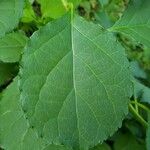
Celastrus orbiculatus
Oriental bittersweet · Japanese bittersweet · Staffvine · Asian bittersweet · Asian Staff-vine
Description
Source: leafsnapCelastrus orbiculatus, commonly known as Oriental bittersweet, is a woody vine native to East Asia. This fast-growing plant can climb up to 60 feet in height and spread up to 30 feet wide. The leaves are glossy, oval-shaped, and have serrated edges. The flowers are small and greenish-yellow, while the plant produces bright orange-red berries that split open to reveal yellow seeds. Oriental bittersweet is considered an invasive species in North America because it can quickly overtake native plants by smothering them with its dense growth. It spreads through seeds dispersed by birds and animals. Despite its invasive nature, Oriental bittersweet has been used in traditional Chinese medicine for centuries. The roots have been used as a laxative, and the fruit has been used to treat rheumatism. Efforts have been made to control the spread of this plant through manual removal or herbicide application, but it remains a significant threat to native ecosystems across North America today.
🌳 Although Oriental bittersweet is well known as an invasive species, it has lesser-known uses in natural dyeing and craftwork. The plant’s fruit yields a strong yellow dye that has been used in traditional fabric coloring. Additionally, its attractive, brightly colored berries and flexible vines are often collected to make decorative wreaths and other crafts.
🎭 Safeguarding, Recovery, Veracity, persistence
Care Guide
💧 Water Every 7 days
Originating from East Asia, oriental bittersweet flourishes in moderately humid environments with consistent moisture levels. It thrives in soil that stays evenly moist, necessitating weekly watering. While it can withstand different weather conditions, this plant requires well-drained soil to avoid root rot during periods of heavy rain.
When should I water my Oriental Bittersweet?
Watering your Oriental Bittersweet is essential for its growth, vibrant flower production, and disease resistance. Key indicators for watering include dry soil, observed by checking the top 1 to 2 inches which should be dry to the touch, and the plant's leaves, which may appear wilted, lackluster, or start to lose their vibrant color. It's crucial to water during the pre-flowering stage to prevent bud drop and ensure proper blooming. Oriental Bittersweet requires more water during warm temperatures and when exposed to full sunlight. Avoid watering too early or late to prevent risks such as root rot or plant dehydration, respectively. Timely watering based on these signals supports the plant's health and longevity.
How should I water my Oriental Bittersweet?
Oriental Bittersweet has specific watering needs due to its sensitive root system. The plant thrives when watered thoroughly but infrequently, allowing the soil to completely dry out before watering again. A recommended technique is bottom-watering, where water is poured into the saucer or drip tray, letting the plant absorb moisture as needed. Using a long-spout watering can ensures water is directed to the base of the plant, preventing foliage from getting wet. To check soil moisture, a simple method is to use a gloved finger or a chopstick. Focus on watering the base of the plant and avoid getting the leaves and stems wet to reduce the risk of fungal diseases. Equipment like a moisture meter can assist in maintaining the right watering balance.
How much water does Oriental Bittersweet really need?
The required amount of water for a fully grown Oriental Bittersweet, situated in a 10-inch pot, generally ranges around 1-2 quarts. This amount can vary depending on the size of the pot, the depth of the roots, and the overall size of the plant. It's vital that your Oriental Bittersweet is potted in well-draining soil to avoid issues like root rot. Properly watered plants will display vibrant green foliage and plump berries. Signs of over-watering include yellowing leaves and a wilted appearance, while under-watered plants might drop leaves or have shriveled berries.
What kind of water is best for Oriental Bittersweet?
Oriental Bittersweet is best watered with distilled water, which is pure and free from contaminants or minerals. Rainwater is a suitable alternative, provided it's collected in a clean container. Filtered water is also acceptable but should be purified to remove harmful chemicals or impurities. Tap water can be used in the absence of other options, but it's important to note that Oriental Bittersweet is sensitive to chlorine, which can stress the plant. Letting tap water sit out for 24 hours before use allows chlorine to evaporate. Water temperature should be moderate, around 68-72°F (20-22°C), to avoid shocking the plant.
How do Oriental Bittersweet's watering needs change with the seasons?
Oriental Bittersweet's watering needs vary through the seasons. In spring, as the plant enters its growth phase, increase watering to support new shoots and leaves. During summer's peak growth period, maintain consistent soil moisture, adjusting for increased evaporation. As autumn approaches and the plant prepares for dormancy, reduce watering frequency, allowing the top soil layer to dry out between sessions. Winter demands minimal watering, focusing on preventing the soil from becoming too dry, but being wary of overwatering due to reduced evaporation.
☀️ Light Partial sun
Oriental bittersweet does best in moderate, filtered sunlight but can tolerate both bright, intense light and very low light levels. The plant comes from habitats with varied sun exposure. Too little or too much light can cause stress, yet it is able to survive those conditions.
What are the sunlight requirements for Oriental Bittersweet?
Oriental bittersweet grows best in moderate sunlight with filtered rays, thriving in both intense light and minimal sunlight conditions. It is versatile, originating from diverse sun exposure levels. Partial sun involves about 3-6 hours of sunlight, while full sun and full shade require above 6 hours. It's important to watch how sunlight moves through your garden to provide the perfect balance for the plant's needs, ensuring its happiness.
How does artificial lighting benefit indoor plants?
Indoor plants require adequate lighting for optimal growth, especially when natural sunlight is insufficient, such as in winter or less sunny spaces. Artificial lights, such as LED lights, are crucial for promoting healthier growth. They can be customized to provide specific wavelengths needed by plants. Full sun plants need 30-50W/sq ft, partial sun plants 20-30W/sq ft, and full shade plants 10-20W/sq ft of artificial light. Placing the light source 12-36 inches above the plant and ensuring 8-12 hours of light per day can mimic natural sunlight conditions effectively.
What are the signs of inadequate light for Oriental Bittersweet?
Inadequate light exposure can cause several symptoms in Oriental Bittersweet, including smaller new leaves, leggy or sparse growth, faster leaf drop, halted new growth, and chlorosis, where leaves lose their green color and turn yellow. There can also be symptoms like sunscald, leaf curling, wilting, and leaf scorching when the plant receives excessive sunlight. These changes indicate stress from insufficient or excessive light, affecting its photosynthesis and overall health.
What solutions can help improve light conditions for Oriental Bittersweet?
To optimize growth under varying light conditions, gradually moving Oriental Bittersweet to sunnier spots each week can help it adapt. Indoors, if the plant is large or immovable, consider using artificial lights or keeping a desk or ceiling lamp on for at least 8 hours daily. Outdoors, gradual relocation to sunnier areas prevents sunburn. Additionally, reducing obstructions or transplanting smaller plants during their dormant period (late winter or early spring) to a location with ample sunlight and good drainage can be beneficial. It’s crucial to note that parts of the plant affected by insufficient light may not recover, but new growth should be healthy once light conditions improve.
🌡️ Temperature 5–32.2°C
Oriental bittersweet's native habitat is temperate regions. The plant does best at temperatures from 41 to 90 ℉ (5 to 32 ℃) and can endure very cold winter temperatures. In hot summers it may need some shade or additional watering to prevent drying out. Adjust watering and fertilization in response to seasonal temperature changes.
What temperature is best for Oriental bittersweet?
The Oriental bittersweet thrives best in temperatures ranging from 65 to 80 degrees Fahrenheit (18 to 27 degrees Celsius). During the main growing period, it can tolerate temperatures as high as 95 degrees Fahrenheit (35 degrees Celsius), and as low as 15 degrees Fahrenheit (-10 degrees Celsius). This species is capable of surviving freezing winters due to its tolerance for cold temperatures. For optimal growth, the perfect temperature range is 65 to 80 degrees Fahrenheit (18 to 27 degrees Celsius). The highest tolerable temperature range is 85 to 95 degrees Fahrenheit (30 to 35 degrees Celsius), while the lowest tolerable temperature range is -5 to 15 degrees Fahrenheit (-20 to -10 degrees Celsius) or below.
Do I need to change the temperature for Oriental bittersweet as it grows?
According to research, Oriental bittersweet experiences stunted growth when faced with extended periods of higher temperatures, particularly during the growth of axillary buds and main shoots. To promote healthy growth after germination or transplanting, it is recommended to maintain consistent and cooler temperatures of approximately 65℉ (18℃).
How can I make sure Oriental bittersweet stays warm during cold seasons?
When oriental bittersweet is planted in the ground, it can tolerate freezing temperatures as long as the area doesn't drop below 15℉ (-10℃) in winter. However, if it's planted in pots or containers, the roots need protection from the cold. To do this, wrap the container in a blanket or bring it indoors for full protection from the elements.
What will happen to Oriental bittersweet if it gets too hot/cold?
Oriental bittersweet is more harmed by consistently high temperatures than by consistently low temperatures. When it gets too hot, the plant's seed germination and photosynthesis efficiency decrease due to heat stress hormone triggers. This is evident through wilting, leaf browning, and potential death. In contrast, when it gets too cold, the plant's nutrient uptake and photosynthesis cease, potentially leading to its death. If a freezing event happens during the growing season, it may cause a membrane phase transition that halts plant functions and leads to the plant's death.
What should I remember about temperature for Oriental bittersweet?
One of the most important strategies for keeping Oriental bittersweet healthy is to maintain a consistent soil temperature. This will result in successful budding, flowering, and new growth. To achieve this, make sure to water consistently, add mulch to any bare soil, and plant the bittersweet in a shaded area.
💨 Humidity
🪴 Soil 6-7
🌱 Fertilizer
To encourage healthy growth, fertilize your Oriental bittersweet in early spring. Consistent fertilization improves its overall health, leading to strong growth, better tolerance of difficult conditions, and increased resistance to pests and diseases. Keep a regular fertilizing schedule for your Oriental bittersweet to preserve vivid, deeply colored foliage and a lush appearance.
🪴 Pot & Repot
✂️ Pruning
This plant does not need to be pruned regularly. If trimming is required, it is best to do it in late winter or early in the spring.
🌿 Propagating
🐛 Diseases & pets
☠️ Toxicity
Although this plant is not considered toxic, consuming the berries has been known to result in intestinal upset, nausea, and vomiting.
Characteristics
- Plant Type
- Vine
- Life Cycle
- Perennial
- Genus
- Celastrus
- Family
- Celastraceae
- Hardiness Zone
- 5-8
- Mature Height
- 11.89 m
- Mature Spread
- 1.52 m to 3.05 m
- Leaf Color
- Green, Yellow
- Leaf Type
- Deciduous
- Flower Color
- Green, Yellow
- Flower Size
- 0.20 cm to 0.25 cm
- Bloom Time
- Late spring, Early summer
- Planting Time
- Spring, Summer, Winter
- Harvest Time
- Mid summer, Late summer, Fall, Winter
- Native Area
- Russia, Vietnam, Japan, Mongolia, Koppen, South Korea, Thailand, China