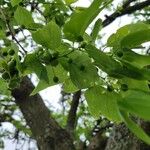
Celtis laevigata
Southern hackberry · Sugar hackberry · Sugarberry · Texan Hackberry · Texan sugarberry
Description
Source: leafsnapCeltis laevigata, commonly known as the sugarberry or southern hackberry, is a deciduous tree native to the southeastern United States. It can grow up to 80 feet tall with a rounded crown that spreads up to 50 feet. The tree's bark is gray and smooth when young but becomes rough and scaly as it ages. The leaves of Celtis laevigata are simple, alternate, and ovate with serrated edges. They are dark green during the summer but turn yellow in autumn before falling off. The sugarberry produces small greenish-white flowers that bloom from March to May. These flowers are followed by small, berry-like fruits that ripen from August through October. While the fruits are edible, they are not commonly consumed by humans due to their bitter taste. Celtis laevigata is an important plant for wildlife, offering its fruits as food for birds such as cedar waxwings, robins, and mockingbirds. It also serves as a host plant for several butterfly species, including the hackberry emperor butterfly. In addition to its ecological importance, Celtis laevigata has been utilized by humans throughout history. Native Americans used its wood to make bows, and early settlers employed it for medicinal purposes. Overall, Celtis laevigata is an attractive tree with significant ecological and historical importance, playing a crucial role in southeastern ecosystems.
💡 In Texas, the sugarberry tree is somewhat disliked and commonly referred to as a "trash tree." Many Texans have a negative view of sugarberry because its wood is considered brittle and weak. Furthermore, the tree is prone to parasites and unsightly deformities, such as Nipple Leaf Gall and Witches' Broom. Despite these issues, many companies still use sugarberry wood to make furniture, and the tree remains widespread throughout Texas.
🌳 The sugarberry, or Sugarberry tree, plays an important role beyond nature: its timber is prized for making furniture that brings warmth to living spaces. Although the name "Sugarberry" suggests sweetness, the berries are not used to sweeten dishes. Local birds do eat these fruits, contributing their songs to the natural soundscape. In spring, bees visit its flowers for nectar, which boosts honey yields.
🎭 Capacity for deductive reasoning, a positive outlook, impulsiveness, nobility of character, resilience, a sense of pride, the commitment required to accomplish one's goals
Care Guide
💧 Water Every 7 days
Sugarberry flourishes in the warm regions of North America and prefers well-draining soil with moderate drought tolerance. It should be watered every 1-2 weeks, allowing the soil to dry slightly between waterings. Best suited for outdoor growth, sugarberry benefits from rainwater, which mimics the precipitation patterns of its natural habitat.
When Should I Water My Sugarberry?
Watering your sugarberry effectively is vital for its wellbeing. Look for signs like dryness in the top 1-2 inches of soil, leaf drooping, wilting, and changes in leaf color to dull green or yellow, which indicate the need for watering. Premature leaf dropping is another sign of dehydration. However, it's crucial to balance watering; overwatering can lead to root rot, while underwatering can cause stunted growth and make the plant vulnerable to pests and diseases.
How Should I Water My Sugarberry?
Sugarberry requires specific watering care. Opt for deep watering to reach the root zone, avoiding shallow sprinklings that foster weak roots. Use a watering can with a narrow spout for targeted watering at the base, minimizing moisture on leaves to prevent fungal diseases. A moisture meter can guide the watering schedule by showing when the soil at root level is dry. Ensure the soil is well-draining to prevent waterlogging and adjust watering based on weather conditions, aiming for soil that's moist but not waterlogged.
How Much Water Does Sugarberry Really Need?
Sugarberry's watering needs depend on factors like plant size, pot size, and environmental conditions. Typically, it requires 1 to 2 gallons per session, ensuring the watering reaches the root depth of about 12-18 inches. Observing the plant's health is key; evenly moist soil and vibrant leaves indicate proper hydration. Avoid extremes; both over and under-watering can harm the plant. Sugarberry tolerates occasional saturation but avoid constant waterlogged conditions.
What Kind of Water is Best for Sugarberry?
Rainwater is ideal for sugarberry owing to its natural purity and lack of chemicals. Filtered water is a good second choice, ensuring it's free from harmful contaminants. Tap water can be used if necessary, but be cautious as sugarberry may be sensitive to chlorine which can stress the plant. Dechlorinate tap water by letting it sit for 24 hours before use and aim for room temperature water to avoid shocking the plant.
How Do Sugarberry's Watering Needs Change with the Seasons?
Seasonal changes affect sugarberry's watering needs. In spring, during active growth, keep the soil evenly moist. Summer may see reduced watering frequency due to drought conditions, allowing the top layer to dry between sessions. In autumn, as dormancy approaches, reduce water but ensure the soil remains lightly moist. Winter demands minimal watering, letting the topsoil dry out as the plant's growth slows.
☀️ Light Full sun
Sugarberry prefers abundant sunlight and can thrive when exposed to generous rays. Coming from habitats with plentiful light, it requires a high level of illumination. Too little light can stunt its growth, though it tolerates moderately reduced exposure. Excess light, however, can scorch its leaves.
What are the requirements for full sun and partial sun for plants?
Plants categorized as needing full sun require above 6 hours of sunlight daily, while those needing partial sun should receive about 3-6 hours of sunlight each day. It's essential to observe how sunlight moves through your garden over the day to find the ideal locations that provide a suitable balance of light and shade. This ensures your plants grow healthily by receiving the right amount of sunlight they need.
What are the sunlight and lighting essentials for Sugarberry?
Sugarberry thrives best with a large amount of sunlight, favoring conditions reminiscent of its native environments characterized by generous sunlight. Although it prefers substantial sunlight and can suffer growth issues if light is insufficient, it's somewhat tolerant of lesser sunlight exposure. However, excessive light may result in foliage damage. For indoor plants, artificial lighting becomes crucial when natural light is inadequate, especially during winter or in less sunny spaces. LED lights are recommended for their ability to be customized to the plants' needs, with suggested wattage varying based on the plant's sunlight requirements: 30-50W/sq ft for full sun plants, 20-30W/sq ft for partial sun plants, and 10-20W/sq ft for full shade plants. The lights should be placed 12-36 inches above the plant for 8-12 hours a day to mimic natural sunlight.
What are the symptoms of insufficient sunlight in Sugarberry plants?
Sugarberry, being accustomed to abundant sunlight, can exhibit various symptoms when it doesn't receive enough light. These include smaller new leaves, leggy or sparse growth, earlier shedding of old leaves to conserve resources, halted growth indicating a survival response to low light, pale or irregularly colored new leaves suggesting chlorophyll and nutrient deficiencies, chlorosis or yellowing of leaves, sunscald, which is damage from intense sunlight exposure, leaf curling as a defense against overexposure, wilting from excessive water loss, and leaf scorching seen as brown, dry edges on leaves. Each symptom indicates the plant's struggle with its light conditions, either from lack or excess of sunlight.
What solutions are recommended for Sugarberry plants suffering from light deficiency?
To counteract light deficiency in Sugarberry plants, consider gradually moving them to locations with more sunlight, ensuring they receive at least 6 hours of sunlight daily. For indoor plants, using south-facing windows or artificial grow lights for at least 8 hours a day can help. For outdoor relocation, ensure the change is gradual to avoid sunburn. Removing obstructions like tree branches might be necessary to ensure enough light reaches the plants. If necessary, transplant smaller plants during their dormant phase to better-lit locations. Note that while parts of the plant previously affected by light deficiency might not recover, new growth post-adjustment should be healthy.
🌡️ Temperature 10–35°C
The native thermal environment for sugarberry, regarding its temperature needs, is temperate climates with average temperatures of 10 to 35 ℃ (50 to 95 ℉). It prefers the warmer end of that range and may drop leaves when it is cooler. In the fall, it is recommended to gradually lower the temperature to encourage dormancy.
What are the temperature requirements for growing sugarberry?
Sugarberry thrives in temperate climates with an average temperature range of 10 to 35°C (50 to 95°F), preferring warmer temperatures. It demonstrates strong cold resistance, allowing it to withstand cooler temperatures without special frost protection measures in most cases. However, if temperatures are expected to drop below -25°C, it's important to provide cold protection by wrapping the trunk and branches. Additionally, maintaining moist soil before the first freeze of autumn helps the plant during winter and early spring.
How does low temperature affect sugarberry and how can it be managed?
Sugarberry is cold-tolerant and best thrives when temperatures remain above 10°C. During winter, temperatures should be kept above -15°C, and protection is advisable if temperatures fall below -25°C to prevent branches from becoming brittle and dry by spring, which prevents new shoots from emerging. In spring, it's recommended to prune away any dead branches to encourage healthy new growth.
How does high temperature affect sugarberry and what are the solutions?
During summer, sugarberry plants should be kept below 35°C. Exceeding 38°C can cause leaves to lighten in color, tips to become dry and withered, and increases the plant's susceptibility to sunburn. Managing these conditions involves trimming away the sunburned and dried areas, relocating the plant to a shaded area or using a shade cloth to protect it from midday and afternoon sun, and watering in the morning and evening to keep the soil moist.
💨 Humidity normal (40-60%)
This plant will thrive in moderate humidity, which is probably the level in your home. However, misting it a few times a week can be very beneficial. Make sure the room has good ventilation.
🪴 Soil 6-7
🌱 Fertilizer
Fertilize your Sugarberry in early spring to encourage healthy growth. Regular feeding improves its overall condition, producing strong growth, better tolerance of harsh conditions, and greater resistance to pests and diseases. Follow a consistent fertilization routine for your Sugarberry to maintain vibrant, deeply colored foliage and a lush appearance.
Why should I put fertilizer on my Sugarberry plant?
No matter what type of Sugarberry plant you have, regular fertilization is important for its overall health. Providing the right nutrients helps the plant grow vigorously and become more resistant to tough growing conditions, as well as better able to fight diseases and pests. The foliage of the Sugarberry is its most attractive feature, so it's important to maintain it. This can be achieved by following a regular fertilization schedule specific to your Sugarberry, which will result in deep colored leaves and a lush appearance.
When should I fertilize my Sugarberry tree?
To ensure healthy growth, it is recommended to fertilize your Sugarberry tree for the first time in late winter or early spring. This provides the necessary nutrients for the tree to thrive once the weather warms up. Additionally, if you live in a warm climate region, it is beneficial to give your Sugarberry tree another round of fertilizer in early fall. This not only adds nutrients for the upcoming growing season but also helps the tree withstand winter cold and prevent foliage damage. Fertilizing earlier in the fall ensures that the new branches have enough time to develop and withstand the cold weather.
When shouldn't I use fertilizer on my Sugarberry?
There are specific times throughout the year when it is best to avoid fertilizing your Sugarberry plant. The first of these times is during the winter months, when your Sugarberry is in a dormant state and does not require any additional nutrients. It is also not recommended to fertilize the plant in late spring and throughout the summer. This is because the weather tends to be hotter and drier during these months, which can have a detrimental effect on your Sugarberry if it is fertilized. To prevent any negative consequences, it is advisable to follow a fertilization schedule that only involves feeding the plant in early spring and early fall.
What kind of fertilizer does my Sugarberry tree need?
For optimal growth of a Sugarberry tree, nitrogen is generally the most important nutrient, although phosphorus and potassium are also necessary. It is recommended to use a balanced fertilizer, like a 10-10-10 mix, to provide a good amount of all three nutrients. However, a more specific nutrient ratio, such as 10-6-4, with a higher nitrogen content, may provide even better results. When fertilizing, you have the option of using either granular or liquid-based fertilizers.
How can I provide nutrients to my Sugarberry plant?
To fertilize your Sugarberry tree, you have two options: granular fertilizer or liquid fertilizer. If you choose the granular fertilizer, simply sprinkle it on the soil at the right time. The nutrients will be released slowly into the soil over time. It's a good idea to lightly water your Sugarberry before applying the fertilizer. Alternatively, you can use liquid fertilizer, although this is less common. Mix the fertilizer with water and pour it around the base of the tree. Before fertilizing, it may be helpful to conduct a soil test to determine if any pH adjustments are needed.
🪴 Pot & Repot
✂️ Pruning
To help sugarberry thrive, it's best to prune it in early spring. Focus on removing dead or damaged branches, as well as any limbs that cross each other, to improve growth, air circulation, and light access. Aim for minimal pruning to maintain the tree's natural shape, which helps prevent disease and encourages strong regrowth. This approach will enhance both the longevity and visual appeal of the tree.
🌿 Propagating
🐛 Diseases & pets
☠️ Toxicity
Characteristics
- Plant Type
- Tree
- Life Cycle
- Perennial
- Genus
- Celtis
- Family
- Cannabaceae
- Hardiness Zone
- 6-9
- Mature Height
- 18.29 m to 24.38 m
- Mature Spread
- 14.94 m to 17.98 m
- Leaf Color
- Green
- Leaf Type
- Deciduous
- Flower Color
- White, Green, Yellow
- Flower Size
- 2.54 cm
- Bloom Time
- Mid spring, Late spring
- Planting Time
- Spring, Summer
- Harvest Time
- Mid summer, Late summer, Early fall
- Native Area
- Mexico