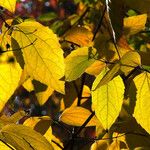
Celtis occidentalis
Hackberry · Common hackberry · Northern hackberry · Sugarberry · Nettletree
Description
Source: leafsnapCeltis occidentalis, commonly known as the common hackberry, is a deciduous tree native to North America. It can grow up to 20-30 meters tall and features a rounded crown with a trunk diameter of up to 60 cm. The tree's bark is grayish-brown with corky ridges that give it a distinctive appearance. The leaves of Celtis occidentalis are simple and alternate with serrated edges. They are dark green with an asymmetrical base, and can grow up to 10 cm long. The flowers are small, greenish-yellow, and appear in early spring before the leaves emerge. The fruit of Celtis occidentalis is a small, round or oval-shaped drupe, about 1 cm in size, that turns from green to orange-red when ripe. It contains one seed, which is edible for birds but not commonly consumed by humans. Celtis occidentalis prefers moist soils but can tolerate drought conditions once established. It grows well in full sun or partial shade, making it an ideal choice for urban landscapes as well as natural areas. In addition to its ornamental value, Celtis occidentalis has several practical uses. Its wood is used for furniture making or fuelwood production, while its bark was traditionally used by Native Americans for medicinal purposes, such as treating sore throats or skin irritations. Overall, Celtis occidentalis is an attractive tree species with ecological significance due to its ability to provide habitat and food sources for wildlife. Its practical uses for humans make it a valuable addition to any landscape design plan or natural area restoration project in North America.
💡 The Hackberry Emperor, a North American butterfly scientifically known as Asterocampa celtis, lays its eggs on trees belonging to the Celtis genus, such as Celtis occidentalis. The butterfly is named after this genus because these are the only host plants for its caterpillars.
🌳 The unassuming common hackberry might look like an ordinary tree, yet it carries important value in Native American traditions. Its wood is strong but flexible and has been used to craft durable bows. The tree's berries, while not a regular part of human diets, supply essential nutrients to animals and have untapped nutraceutical potential because of their rich antioxidant content.
🎭 Dignity, self-respect, intellect, hopefulness
Care Guide
💧 Water Every 7 days
The common hackberry thrives in temperate climates and prefers well-drained soil. It needs moderate moisture, with watering recommended every 1-2 weeks. Water uptake is highest during the spring and summer and decreases as the plant approaches dormancy in the fall. The common hackberry is also resilient to short periods of drought.
When Should I Water My Common Hackberry?
Proper and timely watering is critical for the health and development of the common hackberry, aiding in optimal growth and disease resistance. To determine when to water, check the soil moisture by inserting your finger 2 inches deep into the soil; if it feels dry, it's time to water. Look for signs such as leaf wilting, yellowing, or browning, and droopy texture, which indicate the plant needs water. Be cautious of watering too early or too late, as this can lead to root rot or dehydration. Higher temperatures and low humidity increase water requirements, so adjust watering accordingly.
How Should I Water My Common Hackberry?
Watering your common hackberry properly involves deep and infrequent watering, ensuring the water reaches all parts of the root system without waterlogging. A watering can with a rose attachment helps provide a gentle and even flow, directed towards the base to minimize foliage wetness and disease risk. Utilize a moisture meter for precise soil moisture levels, and adjust your watering schedule to meet the tree's needs, factoring in soil moisture but aiming to avoid both over and underwatering.
How Much Water Does Common Hackberry Really Need?
The water requirement for common hackberry is significant due to its potential size, thriving in a consistently moist environment akin to its natural habitat in North America. For potted common hackberries, 3-5 gallons (11-19 liters) per watering is essential for thorough root system hydration. Monitor the soil and water only when the top few inches feel dry, using the leaves' appearance as a hydration indicator. Over or under-watering can lead to various growth and health issues.
What Kind of Water is Best for Common Hackberry?
Common hackberry prefers rainwater due to its chemical-free and balanced pH qualities. Though tap water is acceptable, it contains chlorine which can stress the plant. Let tap water sit for 24 hours for chlorine evaporation before use. No specific preferences regarding water temperature have been mentioned, but moderate sensitivity to chlorine suggests a need for slight water treatment to ensure optimal plant health.
How Do Common Hackberry's Watering Needs Change with the Seasons?
The watering needs of common hackberry vary throughout the year. In spring, increased water supports new growth, while summer's peak growth phase may require more frequent watering. Autumn calls for reduced watering as the tree prepares for dormancy, and winter watering should be minimal due to the plant's dormant state. Adjusting watering practices according to seasonal needs and weather conditions is vital for maintaining plant health.
☀️ Light Full sun
The common hackberry requires ample light to grow well, preferring spots where it gets sun for most of the day. However, it can tolerate locations with a mix of sun and shade. Both too much and too little light can harm the plant, impacting its growth and overall health.
What are the sunlight requirements for common hackberry?
The common hackberry (Celtis occidentalis) thrives best in locations that offer full sun exposure, defined as above 6 hours of sunlight per day. It also has the resilience to grow under conditions of partial sun, which means about 3-6 hours of sunlight. This substantial need for light ensures healthy growth and development. However, the plant is adaptable enough to survive in areas where sunlight is mixed with periods of shade throughout the day. It's important to monitor the movement of sunlight through your garden to find the optimal balance of light and shade to keep your plants healthy.
How can artificial lighting be used for common hackberry indoors?
When natural sunlight is not sufficient, especially during winter or in less sunny spaces, artificial lights can be a key solution for indoor plants like the common hackberry. For optimal growth, indoor plants may require specific types of artificial lighting. LED lights are recommended because they can be customized to provide the wavelengths necessary for plant growth. The requirements vary depending on the plant's natural sunlight needs: full sun plants need 30-50W/sq ft, partial sun plants need 20-30W/sq ft, and full shade plants need 10-20W/sq ft of artificial light. The light source should be placed 12-36 inches above the plant to mimic natural conditions, and the duration of light exposure should match the natural daylight hours the plant species is accustomed to, typically between 8-12 hours per day.
What are the symptoms of light deficiency in common hackberry?
Common hackberry may exhibit several signs when exposed to suboptimal lighting conditions. Symptoms include the growth of smaller new leaves, leggy or sparse growth due to elongated spaces between leaves or stems, faster leaf drop as older leaves are shed to conserve resources, slower or halted growth as the plant enters survival mode, and lighter-colored new leaves indicating a lack of chlorophyll and essential nutrients. Chlorosis, or the yellowing of leaves due to chlorophyll breakdown from excessive sunlight, can affect the plant's ability to photosynthesize. Other symptoms of too much light include sunscald, which manifests as pale or necrotic areas on plant tissue, leaf curling to minimize surface exposure, wilting from increased water loss, and leaf scorching characterized by brown, dry edges or patches on leaves.
How can you address inadequate sunlight for common hackberry?
To counteract inadequate sunlight for common hackberry, a gradual adaptation to more sunlight is recommended. For indoor plants, moving them weekly to sunnier locations until they receive at least 6 hours of direct sunlight daily is advisable. Utilizing south-facing windows and keeping curtains open can enhance sunlight exposure. For plants that are large or difficult to move, consider supplementary artificial lighting, such as desk lamps or professional grow lights, for at least 8 hours daily. For outdoor plants, a gradual relocation to sunnier spots can prevent sunburn from sudden exposure changes. If sunlight is blocked by obstructions like trees, consider pruning to allow more light through. For smaller plants, transplanting during their dormant period, usually late winter or early spring, to a location with ample sunlight and good drainage is beneficial. Note that parts of the plant affected by insufficient light may not recover, but new growth will be healthy post-adjustment.
🌡️ Temperature 0–35°C
The common hackberry originates from temperate regions and needs temperatures between 32 to 95 ℉ (0 to 35 ℃) to thrive. In colder periods, temperatures below 32 ℉ (0 ℃) should be avoided and the plant must be protected from frost. During warmer months, it can tolerate temperatures up to 95 ℉ (35 ℃).
What is the common hackberry and where is it native to?
The common hackberry, botanically known as Celtis occidentalis, is native to regions with temperate climates. This resilient tree thrives in temperatures ranging from 32 to 95 °F (0 to 35 °C), showcasing its adaptability to various weather conditions within these temperature ranges.
What temperatures can the common hackberry tolerate?
The common hackberry can tolerate a wide range of temperatures, from as low as 32 °F (0 °C) to as high as 95 °F (35 °C). While it has strong cold resistance, it's important to protect the plant from temperatures below -35°C, which requires additional cold protection measures such as wrapping the trunk and branches with non-woven fabric or cloth during extreme winter conditions. Additionally, keeping the soil moist before the first freeze in autumn helps the plant through winter and early spring by preventing drought and water scarcity.
How does low temperature affect common hackberry, and what are the solutions?
Common hackberry is quite cold-tolerant, thriving best when the temperature remains above 0°C. However, when temperatures plummet below -35°C, the branches may become brittle and dry by springtime, and no new shoots will emerge. The solution to this problem is to prune away any dead branches in the spring that have failed to produce new leaves, helping to rejuvenate the tree and promote new growth.
What impact does high temperature have on common hackberry, and how can it be mitigated?
During the summer, common hackberry should ideally be kept below 35°C. Exposure to temperatures above 38°C can cause the leaves to lighten in color, and their tips may become dry and withered, increasing the plant's susceptibility to sunburn. To mitigate these effects, trim away the sunburned and dried parts of the plant. Moving the plant to a shaded location or using a shade cloth can protect it from the intense midday and afternoon sun. Ensuring the soil remains moist by watering the plant in the morning and evening can also help counteract the stress of high temperatures.
💨 Humidity
🪴 Soil 5-8
🌱 Fertilizer
Fertilize your Common hackberry in early spring to encourage healthy growth. Regular fertilization enhances its overall health, producing vigorous growth, greater resilience to difficult conditions, and improved resistance to diseases and pests. Keep to a specific fertilization schedule for your Common hackberry to ensure foliage that is vibrant, richly colored, and lush in appearance.
Why should I put fertilizer on my Common hackberry tree?
No matter which kind of Common hackberry you have, regular fertilization is key for overall plant health. Providing the proper nutrients leads to stronger growth and helps the Common hackberry better withstand tough conditions, diseases, and pests. The foliage of the Common hackberry is attractive, so it's important to maintain it. To achieve this, follow a regular fertilization schedule tailored to your specific Common hackberry. This will encourage the development of deep-colored and lush leaves.
When should I add fertilizer to my Common hackberry tree?
To ensure healthy growth of your Common hackberry, it is recommended to fertilize it in late winter or early spring. This will provide the necessary nutrients for growth once the weather gets warmer. Additionally, if you live in a warm climate region, an extra fertilization in early fall can be beneficial. This not only adds nutrients for the following growing season but also helps the tree withstand winter cold without leaf damage. Early fertilization allows the new branches to develop and endure the cold winter conditions.
When is it not a good idea to put fertilizer on my Common hackberry?
There are a few specific times of the year when you should avoid fertilizing your Common hackberry plant. The first period is in the early and mid-winter months when the plant is dormant and doesn't require any feeding. Additionally, it's not recommended to fertilize the plant in late spring and throughout the summer due to hotter and drier weather conditions. Fertilizing during this time can have a negative impact on the plant. To prevent any issues, it's best to follow a fertilization schedule that involves feeding only in early spring and early fall.
Which kind of fertilizer does my Common hackberry tree require?
Common hackberry trees require nitrogen as their most essential nutrient. However, this does not diminish the importance of phosphorus and potassium. In fact, a balanced fertilizer with equal proportions of all three nutrients, like a 10-10-10 blend, can be beneficial for your Common hackberry's overall health. Nonetheless, it is worth noting that a more refined nutrient ratio often leads to optimal growth. Generally, fertilizers with slightly higher nitrogen levels, such as a 10-6-4 ratio, tend to yield better results. When fertilizing, both granular and liquid fertilizers can be used.
How can I make my Common hackberry tree healthier by adding fertilizer?
To fertilize your Common hackberry, there are two options: granular fertilizer and liquid fertilizer. With granular fertilizer, simply sprinkle it on the soil at the appropriate time. This type of fertilizer releases nutrients slowly over time. It's recommended to lightly water your Common hackberry before applying it. Alternatively, you can use liquid fertilizer, although this is less common. To use this method, mix the fertilizer with water and pour it around the base of the tree. Before fertilizing, it can be helpful to conduct a soil test to determine if any pH adjustments are necessary.
🪴 Pot & Repot Every 12 months
✂️ Pruning
The common hackberry is a versatile tree known for its distinctive warty bark. To maintain its health, it's best to prune this tree in early spring. Start by removing any dead branches and thinning out crowded areas to improve air circulation. Be careful not to prune too heavily, as this can stress the tree. Instead, opt for regular, light pruning to promote healthy growth and lower the risk of disease. Additionally, always ensure that you use clean tools when pruning.
🌿 Propagating
🐛 Diseases & pets
☠️ Toxicity
Characteristics
- Plant Type
- Tree
- Life Cycle
- Perennial
- Genus
- Celtis
- Family
- Cannabaceae
- Hardiness Zone
- 3-9
- Mature Height
- 9.14 m to 39.93 m
- Mature Spread
- 11.89 m to 14.94 m
- Leaf Color
- Green, Yellow
- Leaf Type
- Deciduous
- Flower Color
- Green
- Flower Size
- 0.76 cm
- Bloom Time
- Mid spring, Late spring
- Planting Time
- Spring, Autumn
- Harvest Time
- Mid summer, Late summer, Early fall
- Native Area
- North Dakota