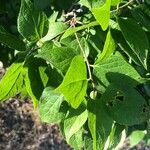
Celtis tenuifolia
Georgia hackberry · Dwarf hackberry · Upland hackberry
Description
Source: leafsnapCeltis tenuifolia, commonly known as the dwarf hackberry, is a small deciduous tree or shrub that belongs to the family Cannabaceae. Native to North America, it thrives in a variety of habitats, including woodlands, prairies, and savannas. Typically, the plant reaches a height of 10-20 feet with a spread of 10-15 feet. The leaves of Celtis tenuifolia are simple, alternate, and elliptical, measuring about 1-3 inches long. They are dark green with serrated edges and have a glossy appearance. In spring, the plant produces small greenish-white flowers, which are followed by small, edible fruits that turn from green to orange-red when ripe. Celtis tenuifolia is known for its hardiness and adaptability, tolerating various soil types, including clay soils, as well as drought conditions, heat stress, and pollution. It provides food for wildlife, with birds feeding on its fruits and deer browsing on its leaves. In traditional medicine, Native American tribes such as the Cherokee used Celtis tenuifolia bark tea to treat coughs, while other tribes used it to address diarrhea or dysentery. Overall, Celtis tenuifolia is an attractive ornamental tree or shrub that offers ecological benefits by providing food sources for wildlife. Its hardiness and low maintenance requirements make it an ideal choice for gardeners seeking durable, ecologically beneficial plants.
🌳 The unassuming common hackberry might look like an ordinary tree, yet it carries important value in Native American traditions. Its wood is strong but flexible and has been used to craft durable bows. The tree's berries, while not a regular part of human diets, supply essential nutrients to animals and have untapped nutraceutical potential because of their rich antioxidant content.
🎭 Dignity, self-respect, intellect, hopefulness
Care Guide
💧 Water Every 7 days
☀️ Light Full sun
The common hackberry requires ample light to grow well, preferring spots where it gets sun for most of the day. However, it can tolerate locations with a mix of sun and shade. Both too much and too little light can harm the plant, impacting its growth and overall health.
🌡️ Temperature 0–35°C
The common hackberry originates from temperate regions and needs temperatures between 32 to 95 ℉ (0 to 35 ℃) to thrive. In colder periods, temperatures below 32 ℉ (0 ℃) should be avoided and the plant must be protected from frost. During warmer months, it can tolerate temperatures up to 95 ℉ (35 ℃).
💨 Humidity
🪴 Soil 5-8
🌱 Fertilizer
Fertilize your Common hackberry in early spring to encourage healthy growth. Regular fertilization enhances its overall health, producing vigorous growth, greater resilience to difficult conditions, and improved resistance to diseases and pests. Keep to a specific fertilization schedule for your Common hackberry to ensure foliage that is vibrant, richly colored, and lush in appearance.
🪴 Pot & Repot
✂️ Pruning
Dwarf hackberry, celebrated for its compact size and resilience, benefits greatly from pruning in early spring. Begin by removing any dead wood and crowded branches to improve airflow. Trimming branches that have grown too long helps maintain the plant's shape, encourages vigor, and boosts fruit production. With regular care, you can also reduce pests and keep the plant looking attractive.
🌿 Propagating
🐛 Diseases & pets
☠️ Toxicity
Characteristics
- Plant Type
- Tree
- Life Cycle
- Perennial
- Genus
- Celtis
- Family
- Cannabaceae
- Hardiness Zone
- 3-9
- Mature Height
- 9.14 m to 39.93 m
- Mature Spread
- 11.89 m to 14.94 m
- Leaf Color
- Green, Yellow
- Leaf Type
- Deciduous
- Flower Color
- Green
- Flower Size
- 0.76 cm
- Bloom Time
- Mid spring, Late spring
- Planting Time
- Spring, Autumn
- Harvest Time
- Mid summer, Late summer, Early fall