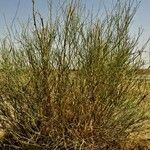
Cenchrus americanus
Pearl-Millet · Bulrush millet · Cat-tail millet · Pokograss · Ornamental millet
Description
Source: leafsnapCenchrus americanus, commonly known as pearl millet, is a warm-season annual grass from the Poaceae family. Native to Africa, it has been widely cultivated across various regions, including Asia and North America. Pearl millet is a highly nutritious crop capable of thriving in harsh environments with low rainfall and poor soil conditions. The plant features a deep root system, enabling it to access water from deeper soil layers. It can grow up to 3 meters tall, with long leaves and stems covered in fine hairs. The flowers are arranged in spikes at the top of the stems, producing small seeds. Pearl millet is a crucial food source for many people around the world, particularly in arid regions where other crops cannot flourish. The seeds are ground into flour, which can be used to make bread or porridge. Beyond its nutritional value, pearl millet serves other purposes, such as providing animal feed and fuel. Its deep root system is also advantageous for controlling erosion on steep slopes or areas susceptible to soil degradation. Overall, Cenchrus americanus (pearl millet) is a vital plant species with significant economic importance. Its nutritional benefits and ability to grow in extreme environmental conditions make it invaluable, especially in regions where other crops cannot survive.
🌳 Pearl millet is more than a cereal grown for its grain; it also contains untapped potential in gluten-free nutrition. Moving beyond customary uses, its grain serves as an innovative ingredient in the gluten-free market. This new application responds to the rising demand for substitutes to traditional wheat-based products and supplies a considerable source of protein.
Care Guide
💧 Water Every 7 days
Pearl millet, which comes from sunny environments, flourishes with moderate moisture and does best when it receives water consistently, ideally twice a week. Its deep root system allows it to efficiently access water, making it less dependent on rainfall during the growing season.
How should I water my Pearl millet plant?
To water Pearl millet, you have various options such as using a garden hose with a spray nozzle, a watering can, or any common watering tool. Pearl millet is not too particular about how it gets water, as it can survive on rainwater, tap water, or filtered water. It is generally advised not to water this plant from above to prevent damage to the leaves and flowers and reduce the risk of disease. A drip irrigation system is often the best choice for watering Pearl millet as it provides even and direct water supply to the soil. If you are growing Pearl millet in a container, you can use a similar watering technique but with tools like a cup, watering can, or tap to directly water the soil.
What should I do if I give too much or too little water to my Pearl millet?
The solution for underwatering Pearl millet is simple. When you notice that the plant is lacking moisture, start watering it more regularly. On the other hand, overwatering can be a more serious problem if not addressed early. When Pearl millet is overwatered, it becomes prone to diseases that can cause its decline and death. To prevent this, choose a suitable location with ample sunlight to dry the soil and good drainage to prevent waterlogging. If you have overwatered Pearl millet in a pot, consider transferring it to a new pot. The previous container may not have had proper drainage or enough holes. When repotting the overwatered plant, ensure loose soil and use a pot that drains efficiently.
How frequently should I give water to my Pearl millet?
Pearl millet requires regular watering throughout the growing season. Initially, aim to water the plant once a week beginning in spring. As the season progresses and temperatures rise, you may need to increase the frequency to two or three times per week. However, be cautious not to exceed this rate as it can harm the plant. Additionally, it is important to maintain relatively moist soil for your Pearl millet, without making it excessively wet, regardless of how often you water. When watering Pearl millet grown in a pot, keep in mind that the soil in containers tends to heat up and dry out faster than ground soil. Therefore, you should water potted Pearl millet more frequently, usually a few times per week, compared to just once per week for an in-ground plant.
How much water does my Pearl millet require?
Determining how much water to give to your Pearl millet can be approached in a few different ways. Some gardeners base their water volume on the moistness of the soil by feeling it. In this method, you would water until the first six inches of soil feel moist. Another approach is to use a fixed measurement, such as giving your Pearl millet approximately two gallons of water per week. However, it is important to consider factors like temperature and soil dryness, as strictly following these guidelines could result in overwatering if the plant actually needs less. When growing Pearl millet in a container, a separate method is needed to determine watering amounts. Generally, you should water until all layers of dry soil are moist. You can check this by inserting your finger into the soil to feel for moisture or by watering until you notice excess water trickling out of the pot's drainage holes.
How do I know if I'm giving enough water to my Pearl millet?
Avoiding overwatering your Pearl millet can be challenging due to the plant's deep roots that require weekly soil moisture. However, Pearl millet is highly susceptible to root rot and overwatering can lead to browning. Underwatering is less of a concern as the plants can survive without supplemental watering for a while. However, prolonged lack of water can cause wilting and dry leaves.
☀️ Light Full sun
Pearl millet does best when fully exposed to sunlight. An environment that provides plentiful light supports its healthy development. Adequate light benefits every stage of its growth. However, either excessive or insufficient light can harm the plant's vigor.
What are the sunlight requirements for pearl millet?
Pearl millet requires a considerable amount of sunlight for optimal growth. The term 'full sun' refers to areas that receive more than 6 hours of sunlight per day, while 'partial sun' pertains to spots with about 3-6 hours of sunlight. Observing how sunlight moves through your garden can help you find the perfect balance of light and shade for your plants, thereby ensuring their well-being.
How essential is sunlight for the growth of pearl millet?
Sunlight is crucial for the healthy growth of pearl millet, as it thrives under full exposure to the sun. Adequate sunlight is beneficial at all stages of its development. However, an imbalance, either too much or too little light, could adversely affect the plant's vitality.
Are artificial lights beneficial for growing pearl millet indoors?
Yes, artificial lights are beneficial for growing pearl millet indoors, especially when natural sunlight is insufficient, such as during winter or in less sunny spaces. Artificial lighting, like LED lights, can be tailored to provide specific wavelengths needed by your plants. Depending on the natural sunlight availability, full sun plants require 30-50W/sq ft of artificial light, partial sun plants need 20-30W/sq ft, and full shade plants need 10-20W/sq ft. The appropriate distance for these lights is 12-36 inches above the plant to mimic natural sunlight, and most plants will need 8-12 hours of light per day.
What are some common symptoms of inadequate light in pearl millet?
Common symptoms of inadequate light in pearl millet include smaller new leaves, leggy or sparse growth, faster leaf drop, slower or halted new growth, lighter-colored new leaves, and conditions such as chlorosis, sunscald, leaf curling, wilting, and leaf scorching. Each symptom indicates an aspect of light deficiency or excessive light exposure, affecting the plant's overall health and development.
What solutions exist for pearl millet suffering from inadequate light exposure?
For pearl millet facing inadequate light exposure, several solutions are available. Indoors, gradually move the plants to sunnier locations or use artificial lights to ensure at least 6 hours of direct sunlight daily. Outdoor plants should also be moved gradually to avoid shock. Minimizing obstructions by pruning trees or transplanting to better locations can also improve sunlight access. While parts of the plant already affected may not recover, new growth will be healthier with improved light exposure.
🌡️ Temperature 15–37.8°C
Pearl millet is native to areas whose climates range from 68 to 100 °F (20 to 38 ℃). It favors warm temperate regions and needs to acclimate to lower temperatures during cooler seasons to achieve optimal growth.
What is the ideal climate for growing Pearl millet?
Pearl millet, botanically known as Cenchrus americanus, is indigenous to regions with a climate ranging from 68 to 100 °F (20 to 38 °C). It thrives in warm temperate zones and adjusts to lower temperatures in cooler seasons for optimal growth. Although Pearl millet exhibits strong cold resistance, it generally does not require special frost protection measures during winter. However, if winter temperatures are expected to drop below -15°C, it is crucial to provide cold protection, which can be done by covering the plant with soil or straw. Additionally, it is recommended to water the plant abundantly before the first freeze in autumn to ensure the soil remains moist and enters a frozen state, helping prevent drought and water scarcity for the plant during winter and early spring.
How does Pearl millet respond to low temperatures?
Pearl millet is notably cold-tolerant and performs best when the temperature remains above 20°C (68°F). During winter, it is advisable to maintain temperatures above 0°C to ensure the plant's health. If temperatures fall below -15°C, Pearl millet may not exhibit noticeable changes during the winter; however, there may be a decrease in sprouting or even a lack of sprouting in springtime. In such cases, the best course of action in spring is to remove any parts of the plant that have failed to sprout, promoting healthier growth for the remainder of the plant.
What should be done if Pearl millet is exposed to high temperatures?
During the summer months, it is important to keep Pearl millet below 38°C (100°F). Exposure to temperatures exceeding 43°C (109°F) can result in the plant's leaves becoming lighter in color, curling, becoming susceptible to sunburn, and, in severe cases, the entire plant may wilt and become dry. To manage these symptoms, trim away the sunburned and dried-up parts of the plant. Moving the plant to a location that provides shade during the midday and afternoon sun, or utilizing a shade cloth, can offer necessary protection. Furthermore, watering the plant in the morning and evening helps to keep the soil moist and supports the plant's overall health during high temperatures.
💨 Humidity
🪴 Soil 5-7
🌱 Fertilizer
For best growth, Pearl millet needs three fertilizer applications: one before planting, another one month after the seedlings emerge, and a final application 1 to 1.5 months after the second. Some Pearl millet varieties also benefit from extra fertilizer at planting to promote rapid growth.
🪴 Pot & Repot
✂️ Pruning
Pearl millet is a tall, annual grass that is well-known for its drought resistance. To promote its growth, perform light pruning from early to late spring. During this time, remove any dead stems and thin out the plant to improve air circulation. Be careful to avoid heavy pruning, as it can stunt the plant's growth. Regular, gentle pruning helps increase yield and maintain the overall health of the plant.
🌿 Propagating
🐛 Diseases & pets
☠️ Toxicity
Characteristics
- Plant Type
- Herb
- Life Cycle
- Annual, Perennial
- Genus
- Cenchrus
- Family
- Poaceae
- Hardiness Zone
- 7-11
- Mature Height
- 91 cm
- Mature Spread
- 91 cm
- Leaf Color
- Green, Red, Brown
- Leaf Type
- Semi-evergreen
- Flower Color
- Yellow, Purple, Brown, Black
- Flower Size
- 15.24 cm to 25.40 cm
- Bloom Time
- Early summer, Mid summer
- Planting Time
- Spring
- Harvest Time
- Mid summer
- Native Area
- Nepal, Sri Lanka, Saudi Arabia, Egypt, Turkey, Malaysia, India, Cyprus, Bangladesh, Pakistan, Yemen, Fiji, Lebanon, Russia, Iraq, Syria, Indonesia, Myanmar, Mongolia, Japan, Oman, Iran, Kuwait, Thailand