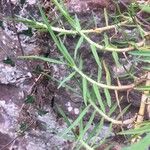
Cenchrus clandestinus
Kikuyu Grass · Sandbur · Kikuyo Grass · West African pennisetum · Kikuyo
Description
Source: leafsnapCenchrus clandestinus, commonly known as African foxtail grass or buffel grass, is a perennial species native to Africa but has spread to many other parts of the world. This grass, belonging to the family Poaceae, can grow up to 1.5 meters tall. Thanks to its deep root system, the plant thrives in arid and semi-arid regions with low rainfall. It is highly drought-tolerant and can adapt to a variety of soil types, including sandy soils. Cenchrus clandestinus produces long, cylindrical spikes with bristly hairs that resemble foxtails, giving rise to its common name, African foxtail grass. These spikes are green when young but turn brown as they mature. This grass is often used for livestock grazing due to its high nutritional value and palatability. Additionally, it provides cover for wildlife in arid regions where other vegetation may be sparse. However, in areas where it has been introduced outside of its native range, Cenchrus clandestinus can become invasive. Its ability to outcompete native vegetation can alter ecosystem structure and function. In summary, while Cenchrus clandestinus is a valuable resource for grazing livestock, it requires careful management when introduced to new environments to mitigate potential invasiveness.
💡 Kikuyu grass is popular in Australia, New Zealand, Africa, and California because it grows quickly and tolerates drought. However, in some regions, it is considered a noxious and invasive weed that forms dense mats and is hard to control. Despite this, kikuyu grass serves as valuable pasture for livestock and is an important food source for several bird species.
🌳 Kikuyu grass has often been neglected for purposes beyond ornamental planting and ground cover. Yet it has clear value in livestock production as a sturdy source of fodder. The grass is highly nutritious for herbivorous animals, grows well in a range of climates, and provides feed all year long. Its fast growth and nutrient-rich composition, including protein, make it a strong option for sustainable animal husbandry.
Care Guide
💧 Water Every 7 days
Kikuyu grass thrives in tropical savannahs and is known for its strong drought tolerance, thanks to its efficient water conservation abilities in its leaves. For optimal growth, it is best to water it weekly, ensuring the soil remains slightly moist during its peak growing season. Often used for lawns, Kikuyu grass stays lush with minimal irrigation.
What should I do if I give my Kikuyu grass too much or too little water?
If your Kikuyu grass is becoming yellow or pale green, it may be due to overwatering. This type of grass can handle different soil types, but it doesn't thrive in soil that doesn't drain well. To prevent this issue, avoid planting Kikuyu grass in marshy areas or areas with spongy ground. When irrigating your lawn, it's better to slightly under-water rather than over-water, as Kikuyu grass does better if it is allowed to dry out between waterings. Excessive moisture in the soil can lead to the growth of fungus, as well as attract insect pests and weeds. While rainfall generally won't cause problems for Zoysia grass, long-term overwatering can harm the plant and even cause it to die off. On the other hand, one of the benefits of growing Kikuyu grass is that it can survive with minimal water due to its water conservation adaptations. It has a deep root system, allowing it to use groundwater when it hasn't been watered for a while. During drought conditions, the grass may turn yellow and become crispy, but it can recover once the dry spell is over. This resilience is one of the reasons why Kikuyu grass is a popular choice for lawns.
How do I water Kikuyu grass?
Grasses used in landscaping usually do well with natural rainfall and don't need extra watering. However, if you plant Kikuyu grass in a very dry place or during a drought, it might not survive without watering. During winter, the grass goes dormant but still needs some moisture to avoid drying out completely. It starts growing again in the spring when the weather gets warmer. For Kikuyu grass, it's best to water it with about an inch of water every week. It's better to give it a good soak instead of a slow drip, as this helps develop stronger and deeper roots. When you first plant the grass, you need to keep it moist for the first 3 to 4 weeks until it establishes itself. Late spring to early summer is the ideal time for planting Kikuyu grass because there is typically enough rainfall. However, if your area experiences a dry period after planting the grass, it's a good idea to cover it to prevent water from evaporating or to water the lawn to keep the soil moist.
What should I think about when watering my Kikuyu grass?
The frequency of watering for Kikuyu grass depends on the environmental conditions, soil type, and drainage. Sandy soil, which doesn't hold moisture well, may require irrigation to maintain the grass's appearance. On the other hand, clay soils, which retain water and drain slowly, are less likely to need extra watering, but excessive moisture can be detrimental to Kikuyu grass due to its sensitivity.
☀️ Light Full sun
Kikuyu grass requires substantial sunlight for much of the day to do well, though it can tolerate lower light levels. Native to areas with abundant sunshine, it naturally occurred in open, sunlit habitats. Too little light can restrict its growth, while excessive exposure can sometimes cause damage.
What are the sunlight requirements for Kikuyu grass?
Kikuyu grass requires significant sunlight exposure to thrive, ideally in full sun conditions for large parts of the day, which means above 6 hours of direct sunlight. It can also tolerate partial sun, about 3-6 hours of sunlight, but may not grow as vigorously. Originating in sunny regions, it's naturally accustomed to open, sunny habitats. Insufficient light can hinder its growth, while too much direct exposure can be damaging. It's crucial to observe how sunlight moves through your garden to ensure the perfect balance for your plants' needs.
How do artificial lights help in growing Kikuyu grass indoors?
When natural sunlight is not sufficient for indoor Kikuyu grass, especially during winter or in less sunny spaces, artificial lighting serves as an essential alternative to promote healthy growth. Opting for LED lights is beneficial as you can adjust them to provide specific wavelengths that your plants need. The general guideline for artificial light is 30-50W per square foot for full sun plants, 20-30W per square foot for partial sun plants, and 10-20W per square foot for full shade plants. It's important to place the light source 12-36 inches above the plant and ensure it receives 8-12 hours of light a day to mimic natural sunlight conditions effectively.
What are the symptoms of light deficiency in Kikuyu grass?
Symptoms of light deficiency in Kikuyu grass include smaller new leaves, leggy or sparse growth, faster leaf drop, slower or no new growth, and lighter-colored or pale new leaves. These signs indicate the plant is struggling to photosynthesize due to inadequate sunlight. Additionally, excessive sunlight can lead to chlorosis (leaves turning yellow), sunscald, leaf curling, wilting, and leaf scorching. Monitoring these symptoms closely can help in diagnosing and rectifying light-related issues for Kikuyu grass.
How can I address sunlight-related issues for my Kikuyu grass?
To address sunlight-related issues in Kikuyu grass, gradually increase sunlight exposure for outdoor plants by moving them to a sunnier location each week until they receive at least 6 hours of direct sunlight daily. For indoor plants, consider using artificial lighting if the plant is large or difficult to move, keeping a lamp on for at least 8 hours daily or investing in professional grow lights. For ground-planted Kikuyu grass, minimize obstructions by pruning or transplanting during dormant periods to locations with ample sunlight. It's crucial to avoid sudden changes in light exposure to prevent sunburn and ensure new growth is healthy.
🌡️ Temperature 20–41.1°C
Kikuyu grass can tolerate a wide range of temperatures, though its distribution may still be restricted by particular combinations of moisture and heat. It grows best in warm summer climates with adequate rainfall or irrigation. Long periods of cloudy, rainy weather, as well as extended high temperatures, can increase the risk of Kikuyu grass dying. In winter, protecting the plants from cold can improve their survival.
What is Kikuyu grass?
Kikuyu grass, scientifically known as Cenchrus clandestinus, is a type of grass known for its vigorous growth and ability to spread. It's commonly found in various regions and is often used for turf due to its hardy nature.
💨 Humidity
🪴 Soil 6-7
🌱 Fertilizer
Kikuyu grass is a warm-season turf that performs well in summer and goes dormant in winter. Fertilizing is essential for thick growth, a bright green color, and better tolerance of stresses like heat, drought, and cold. Lawns that are neglected become weak and thin and are more prone to invasion by other grasses, weeds, insects, and diseases.
🪴 Pot & Repot
✂️ Pruning
🌿 Propagating
🐛 Diseases & pets
☠️ Toxicity
Characteristics
- Plant Type
- Grass
- Life Cycle
- Perennial
- Genus
- Cenchrus
- Family
- Poaceae
- Hardiness Zone
- 8-12
- Mature Height
- 91 cm
- Mature Spread
- 30 cm to 61 cm
- Leaf Color
- Light Green, Forest Green
- Leaf Type
- Evergreen
- Flower Size
- 0.15 cm to 0.20 cm
- Bloom Time
- All year round
- Planting Time
- Summer, Autumn
- Harvest Time
- All year round
- Native Area
- Burundi, Eritrea, Ethiopia, Nigeria, Congo (DRC)