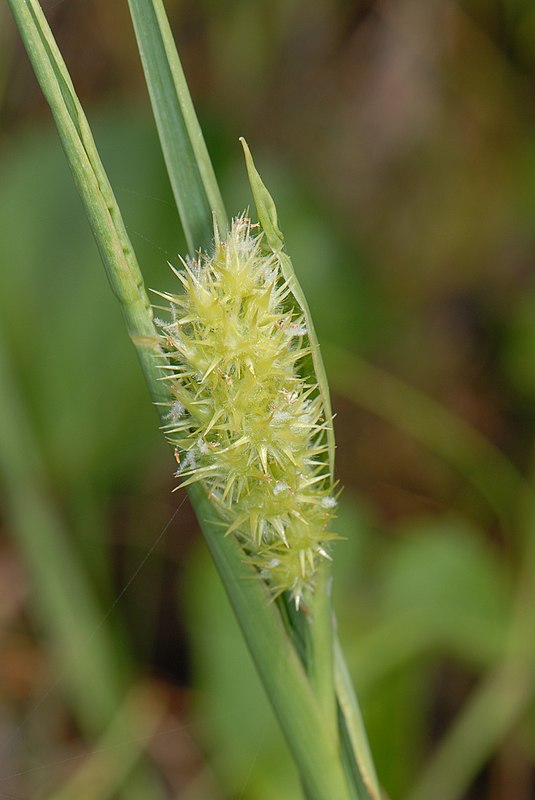
Cenchrus tribuloides
Dune sandbur · Long-spine sandbur · Sand-dune sandbur · Sand-Dune Sandburr · Sanddune sandbur
Description
Source: leafsnapCenchrus tribuloides, the dune sandbur, is a grass common along the east coast of the mainland United States as well as Hawaii. It is also known as the sanddune sandbur, long-spine sandbur or sand-dune sandspur and is common in sandy, marshy, or loosely forested areas. It differs from C. spinifex in its larger spikelets and smaller number of spikelets per fascicle, and from C. longispinus in its densely pubescent fascicles, fewer bristles, and wider inner bristles.
Care Guide
💧 Water
☀️ Light Full sun
The plant known as sanddune sandbur is native to clear, unobstructed surroundings where it grows best in complete sunlight. It can withstand semi-shade but is more suited to direct sun for the best development. Recognized for its preference for sunlight, this plant grows annually and biennially.
🌡️ Temperature 15–37.8°C
Sanddune sandbur possesses the capacity to adjust to a broad spectrum of thermal conditions, yet its spread may still be constrained by varying mixtures of heat and water circumstances. It tends to flourish optimally in hot weather conditions during the summertime, provided there is sufficient rain or irrigation. Extended bouts of overcast and wet weather, along with sustained high temperatures, may heighten the risk of the Sanddune sandbur's demise. During the winter, appropriate protection against the cold can enhance the plant's chances of survival.
💨 Humidity
🪴 Soil 6-8
🌱 Fertilizer
🪴 Pot & Repot
✂️ Pruning
🌿 Propagating
🐛 Diseases & pets
☠️ Toxicity
Characteristics
- Plant Type
- Grass
- Life Cycle
- Annual
- Genus
- Cenchrus
- Family
- Poaceae
- Hardiness Zone
- 8-11
- Mature Height
- 30 cm to 61 cm
- Mature Spread
- 30 cm to 61 cm
- Leaf Color
- Green
- Leaf Type
- Semi-evergreen
- Bloom Time
- Summer
- Planting Time
- Spring, Summer
- Harvest Time
- Late summer, Early fall, Mid fall
- Native Area
- Bahamas, Cuba, Honduras, Brazil, Jamaica