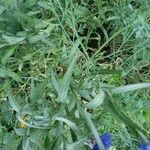
Centaurea cyanus
Cornflower · Bachelor's Button · Hurtsickle · Thimbles · Corn-pinks
Description
Source: leafsnapCentaurea cyanus, commonly known as cornflower or bachelor's button, is a flowering plant in the Asteraceae family. Native to Europe, it has since been naturalized in various parts of the world. The plant can grow up to 90 cm tall and features blue, pink, or white flowers that bloom from June to September. The leaves of Centaurea cyanus are lance-shaped and grayish-green. The flowers consist of a central disk surrounded by blue or purple petals with distinct fringed edges, attracting bees and butterflies with their nectar. Centaurea cyanus is often cultivated as an ornamental plant in gardens due to its attractive flowers and ease of growth. It prefers full sun exposure but can also tolerate partial shade. While it can grow in various soil types, it thrives best in well-drained soil. In addition to its ornamental value, Centaurea cyanus has medicinal properties owing to the presence of flavonoids and other compounds with anti-inflammatory effects. Traditionally, it has been used to treat eye infections, digestive disorders, fever, and skin conditions. In conclusion, Centaurea cyanus is a visually appealing flowering plant with medicinal benefits, making it popular among gardeners worldwide for both its beauty and health advantages.
💡 The cornflower is the national flower of Estonia and symbolizes certain political parties in Estonia, Finland, and Sweden. It was also a favorite among many European royalty figures, which is why it frequently appears in historical regalia.
🌳 Besides its aesthetic appeal, the cornflower also has a scientific role as an indicator of copper levels in soil. It can tolerate and grow in soils with elevated copper concentrations that may be harmful to other plants. This trait enables botanists and environmental scientists to evaluate soil health and identify areas that might be affected by copper pollution, signaling when an ecosystem could be under stress from heavy metal contamination.
🎭 Single life, Hope for love, Sophistication
Care Guide
💧 Water Every 3 days
Cornflower flourishes in European fields, favoring environments with moderate moisture and consistent soil hydration, as long as there is no waterlogging. To maintain the right balance, it's important to water them weekly. Outdoors, natural rainfall generally supports their growth cycle.
When Should I Water My Cornflower?
Timely watering is essential for the health and growth of cornflower. To determine when to water, check the soil dryness by inserting a finger or a stick up to 2 inches deep. If dry, it's time to water, especially when the top 1 to 2 inches of soil are dry. Wilting leaves, a sign of water need, should prompt immediate watering. Leaf color change to yellow or brown, particularly at the bottom, signals dehydration. However, be cautious of watering too early or late, as it could hinder growth or cause disease. Balanced watering is key, avoiding both over-watering, which can suffocate roots, and under-watering, which can dehydrate the plant.
How Should I Water My Cornflower?
Cornflower requires specific watering techniques for optimal health. The bottom-watering method is preferred, allowing roots to absorb water from the bottom up, preventing over-saturation of the surface and foliage, thereby reducing fungal disease risks. Using a watering can with a narrow spout directs water to the base, minimizing leaf wetness. Employing a moisture meter can accurately measure soil moisture levels, indicating when watering is needed. Focus the water at the plant's base to avoid wetting foliage and stems excessively. Be aware that overwatering can harm cornflower, necessitating well-drained soil and allowing the top inch to dry before watering again. Though misting can aid in hydration in dry environments, ensure leaves aren't oversaturated to prevent fungal diseases.
How Much Water Does Cornflower Really Need?
Cornflower's water needs vary based on factors such as pot size and plant size, with a 12-inch pot generally requiring 1.5 to 2 quarts of water per session for deep soaking. While cornflower does not need constant moisture, it thrives on regular, deep watering allowing the soil to dry out in between. Signs of sufficient watering include vigorous growth and vibrant blue flowers, while yellowing leaves or limp foliage may indicate over or under-watering, respectively. Overwatering can lead to root rot, pests, and potential plant death, whereas underwatering might cause drought stress and leaf drop, emphasizing the importance of providing an optimal water amount.
What Kind of Water is Best for Cornflower?
Cornflower thrives best with rainwater, but distilled or filtered water is also suitable. While tap water is an option, letting it sit out to evaporate chlorine or fluoride is advised, as cornflower can be sensitive to high levels of these chemicals. The plant prefers water with balanced minerals; excessive salts can impede water absorption. Using water that has sat for 24 hours reduces calcium and chlorine levels, beneficial for the plant's nutrient uptake. Room temperature water is ideal, avoiding shocks that could result from extreme temperature variations.
How Do Cornflower's Watering Needs Change with the Seasons?
Cornflower's watering needs vary seasonally. In spring, during active growth, maintain consistent soil moisture without causing waterlogging. As temperatures and daylight hours increase, so does the need for water. In the hot summer months, despite cornflower's drought-tolerance, ensure deep, regular watering during dry spells. Autumn's reduced evaporation rates mean less frequent watering, though soil should not dry out completely. In winter, watering is minimal due to dormancy, but occasional watering might be needed in dry conditions. Adjusting watering practices according to these seasonal demands supports health and flowering.
☀️ Light Full sun
Cornflower does best in areas that receive abundant sunlight for much of the day. It can also tolerate locations with moderate sunlight. Excessive or insufficient light can hinder the plant’s growth. In its natural habitat, it usually grows in open areas exposed to plentiful sunshine.
What are the sunlight requirements for growing cornflowers?
Cornflowers require a significant amount of sunlight to thrive successfully. They do best in full sun conditions, which means they need more than 6 hours of sunlight each day. However, they can also tolerate partial sun, receiving about 3-6 hours of sunlight daily. It's crucial to observe the movement of sunlight through your garden to identify spots that offer an ideal balance of light and shade, as this ensures the plants grow healthy and happy.
What essentials do I need to know about cornflower's growth in relation to sunlight?
Cornflower thrives when it receives ample exposure to sunlight for a considerable part of the day. It is capable of growing in moderately sunny conditions as well. Excessive or insufficient light can negatively affect the plant's growth. In its native habitat, cornflower usually grows under open skies, benefiting from generous sunlight. For indoor plants lacking in natural sunlight, artificial lighting, such as LED lights, can be a great alternative, providing the necessary wavelengths required for growth. It's recommended to adjust the artificial light's intensity based on the plant's needs, placing the source 12-36 inches above the plant and ensuring it receives 8-12 hours of light per day.
What symptoms indicate a cornflower is getting inadequate light?
When a cornflower isn't receiving enough light, several symptoms may appear, including smaller new leaves compared to older ones, leggy or sparse growth, faster leaf drop, a slowdown or halt in new growth, and lighter-colored or irregularly patterned new leaves. Conditions like chlorosis, where leaves lose their green color and turn yellow, sunscald, which results in damaged leaves or stems from too much direct sunlight, leaf curling as a defense against excessive sunlight, wilting from loss of water through transpiration, and leaf scorching characterized by brown, dry patches on the leaves, may also manifest, indicating either insufficient or excessive exposure to sunlight.
How can I address cornflower's lighting needs, both indoors and outdoors, to ensure healthy growth?
To promote healthy growth of cornflowers, gradually adjust their exposure to sunlight, especially when dealing with indoor plants. Increase sunlight exposure by moving plants to sunnier locations progressively until they receive at least 6 hours of direct sunlight daily. Utilize south-facing windows and keep curtains open during the day. If the plant is too large or immovable, consider supplemental artificial light, ensuring it's on for at least 8 hours daily. For outdoor plants, similarly adjust them to sunnier spots gradually to prevent sunburn. If sunlight is obstructed by elements like trees, consider pruning to improve light penetration. When dealing with smaller plants that require relocation for better sunlight, choose their dormant period for transplanting to ensure minimal stress and optimal growth in the new location with ample sunlight and good drainage.
🌡️ Temperature 5–32.2°C
Cornflower's natural habitat thrives in temperate climates. It particularly prefers a temperature range of 68 to 95 °F (20 to 35 ℃). Be aware of seasonal changes and adjust temperatures accordingly.
What is the natural habitat and temperature preference of cornflower?
Cornflower, or Centaurea cyanus, thrives in temperate climates, favoring a temperature range between 68 to 95°F (20 to 35°C). It adapts well to seasonal changes, benefiting from its strong cold resistance. Special frost protection measures are typically unnecessary, but in very cold winters with temperatures dropping below -30°C, it's crucial to provide cold protection by covering the plant with soil or straw. It's also advised to water the plant generously before the first freeze of autumn to keep the soil moist, preventing drought and water scarcity during winter and early spring.
How does low temperature affect cornflower and what are the solutions?
Cornflower is cold-tolerant and ideally should experience temperatures above 20°C. Keeping it above 0°C during winter is important, but temperatures below -30°C may not cause noticeable changes unexpectedly; however, they can lead to decreased sprouting or even no sprouting in spring. In such cases, removing parts of the plant that have not sprouted by spring is a suitable solution.
What impact does high temperature have on cornflower and how can it be mitigated?
In summer, it is critical to ensure that the cornflower's surrounding temperature remains below 35°C. Should the temperature rise above 38°C, the leaves may turn lighter, curl, become more susceptible to sunburn, and, in extreme scenarios, the entire plant may wilt and dry out. To mitigate these effects, sunburned and dried-up parts of the plant should be trimmed away. Moving the plant to a shaded area or employing a shade cloth to protect it from midday and afternoon sun is advisable, alongside watering the plant in the morning and evening to maintain soil moisture.
💨 Humidity normal (40-60%)
This plant will thrive in moderate humidity, which is probably the level in your home. However, misting it a few times a week can be very beneficial. Make sure the room has good ventilation.
🪴 Soil 6-7
🌱 Fertilizer
When Cornflower has opened most of its blooms to full size, resume fertilizing. At about the time blooms are at their peak, fertilize once every three to four weeks, as weather permits. Then, when Cornflower begins producing fewer new blooms, stop fertilizing; there’s no need to fertilize when the plant can no longer produce more blooms.
Why should I add fertilizer to my Cornflower plant?
Plants like Cornflower need nutrients to survive. All gardeners, regardless of their experience, understand this. Without the right nutrients, Cornflowers will die soon after they are pollinated. To keep Cornflowers thriving and producing beautiful flowers throughout the blooming season, it is crucial to provide them with the right type and amount of nutrients. Fertilizer is especially beneficial for Cornflowers because it helps them develop a strong and healthy root system. These plants have thin roots that can easily be damaged, so fertilizing them when planting is important for establishing a solid root structure. This not only gives the plant stability but also sets the stage for an impressive flowering display. If timed correctly, fertilization can significantly prolong the period in which the Cornflowers bloom.
What is the best time to put fertilizer on my Cornflower?
Cornflower experiences rapid growth early in the growing season, after the risk of frost has passed. It is recommended to fertilize Cornflower during this period, specifically during planting. The fertilizer should be applied when the plant is first placed in the ground or in planters. This initial application will be the only dose of fertilizer until later in the year when the blooms are abundant. Once the growing season is in full swing and Cornflower has produced most of its blooms in full size, it is time to resume fertilizing. This should be done when the blooms are at their peak output, typically every three to four weeks as weather permits. However, once Cornflower starts producing fewer new blooms, fertilizing should be discontinued. There is no need to continue fertilizing when the plant is unable to produce any more blooms.
When is it not a good time to fertilize my Cornflower plant?
Regular fertilizing is important for Cornflower, but it can be detrimental if applied at the wrong time. There are certain situations, mostly related to climate and controllable factors, where it is better to hold back on fertilizing. When there is an issue with the plant, soil, or climate, it is best to wait until things have improved and the plant has recovered. For example, if there are sudden extreme weather changes, like a cold snap in the middle of summer, it is advisable to wait until the temperature has warmed up before fertilizing. Similarly, if the soil is too dry or compacted, fertilizing will not be effective as it will bypass the roots. Therefore, it is important to wait until the soil conditions are suitable for absorption. Additionally, during the hottest parts of the day when temperatures reach 90 degrees Fahrenheit, it is not recommended to apply fertilizer as high temperatures can break it down too quickly. It is also important to address any pests or diseases before re-fertilizing.
What kind of fertilizer does my Cornflower plant need?
Most types of Cornflower require a consistent nutrient balance from fertilizer, specifically one formulated for high-yield blooming plants. The best option is a fertilizer with a higher phosphorus level, indicated by a higher P number in its NPK ratio (e.g. 10-30-10). Many fertilizer brands offer suitable options for blooming plants like Cornflower, making it easy to provide the necessary nutrients. If you opt for a pre-mixed fertilizer, it is important to follow the package instructions to avoid over or under fertilizing the Cornflower. Failure to do so can result in poor growth or even complete wilting of the plant.
How can I help my Cornflower grow healthier?
Applying fertilizer to Cornflower can vary based on the type of fertilizer you have. Here are some general tips to follow. When planting Cornflower for the first time, mix the recommended amount of fertilizer into the soil before planting and water in the Cornflower. For subsequent fertilizing, the process may be a bit different depending on the type of fertilizer. If you're using pellet fertilizers, mix them into the top inch of soil around the outer edge of the plant, where the roots are. Make sure to water them in thoroughly at first, and then water regularly afterwards. Other fertilizers can be mixed into a watering can and applied like regular watering. Follow the instructions on the fertilizer packaging for consistency, but if you prefer a regular schedule, aim for every three to four weeks.
🪴 Pot & Repot
When repotting Cornflower, choose a pot that's 1–2 inches (2.5–5.1 cm) larger in diameter and make sure it has good drainage. Use a well-draining potting mix and consider adding perlite for extra drainage. Repot in spring or early summer, water thoroughly afterward, and place the plant in a shady spot at first.
✂️ Pruning
Cornflower plants are known for their vibrant blue flowers and feathery foliage. To keep them thriving, it's essential to prune them annually in early spring. Removing spent blooms, or deadheading, helps extend their flowering period, and cutting back stems encourages bushier growth. Pruning also prevents the plants from becoming leggy and supports their overall health. Always use clean, sharp tools for pruning to minimize the risk of damage and disease.
🌿 Propagating
🐛 Diseases & pets
☠️ Toxicity
Aside from being low-maintenance, bachelor buttons are also non-toxic. They are found to be completely safe on birds, cats, dogs, horses, livestock, and humans.
Characteristics
- Plant Type
- Herb
- Life Cycle
- Annual, Perennial, Biennial
- Genus
- Centaurea
- Family
- Asteraceae
- Hardiness Zone
- 4-8
- Mature Height
- 20 cm to 91 cm
- Mature Spread
- 15 cm to 30 cm
- Leaf Color
- Green
- Leaf Type
- Deciduous
- Flower Color
- Blue
- Flower Size
- 3.56 cm
- Bloom Time
- Late spring, Early summer, Mid summer
- Planting Time
- Spring, Summer
- Harvest Time
- Mid summer
- Native Area
- Turkey, Sweden, Austria, Slovakia, Montenegro, Pakistan, Slovenia, Croatia, Belarus, Uzbekistan, Russia, Iraq, Germany, Estonia, Romania, Latvia, Belgium, Moldova, Portugal, Netherlands, France, Tajikistan, Czech Republic, Bulgaria, Armenia, Poland, Greece, Ukraine, Serbia, Lebanon, Lithuania, Norway, Syria, Italy, Kazakhstan, Spain, Switzerland, Denmark, Finland, Iran, Albania, Ireland, United Kingdom, Hungary, Azerbaijan, Turkmenistan