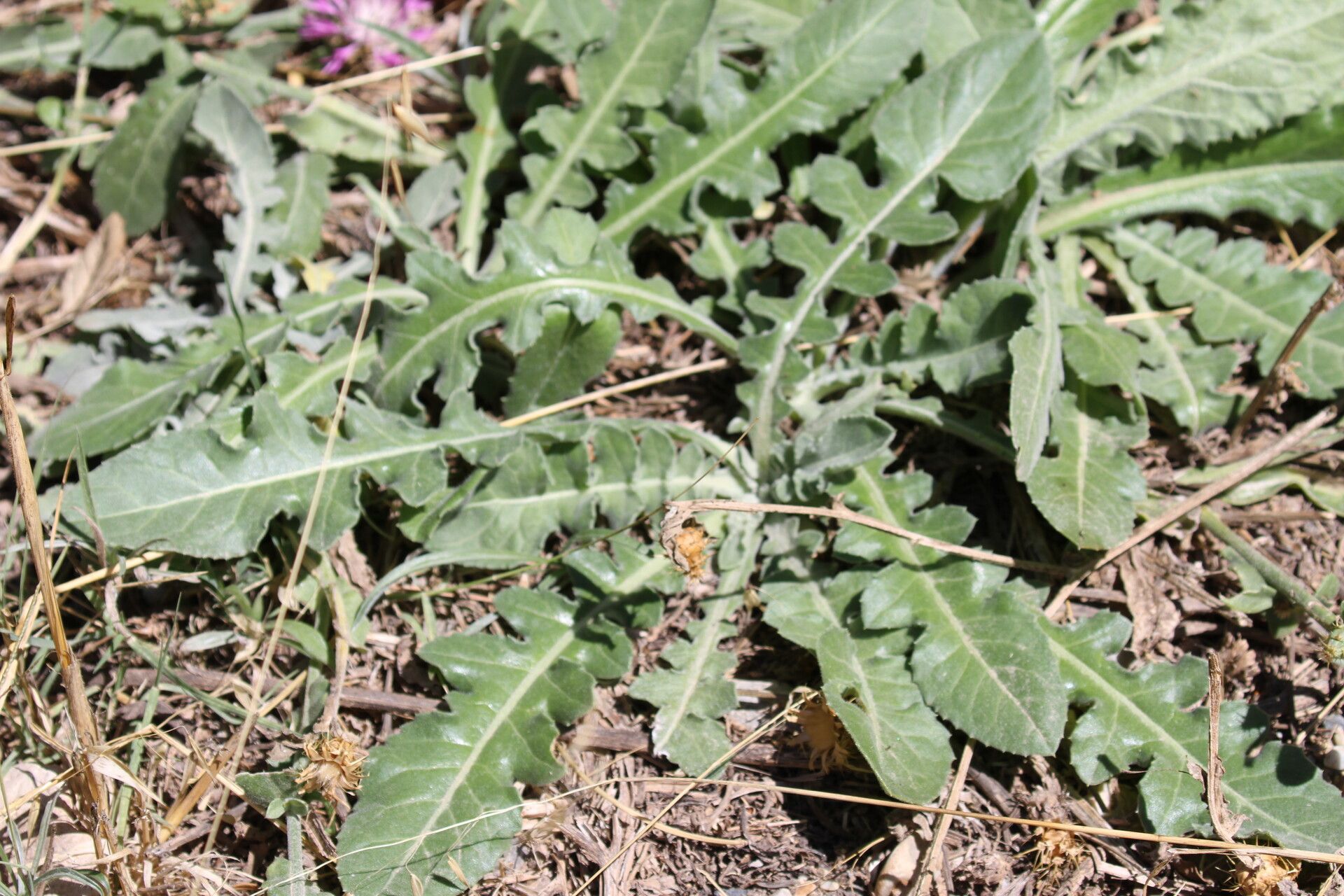
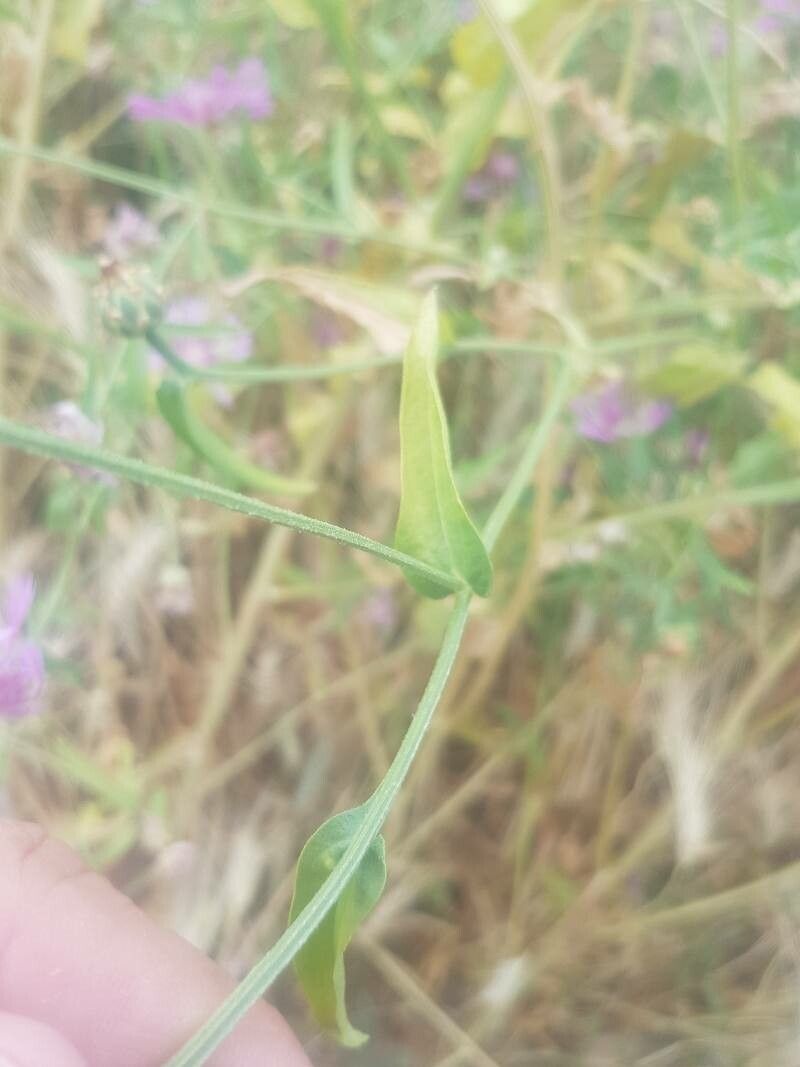
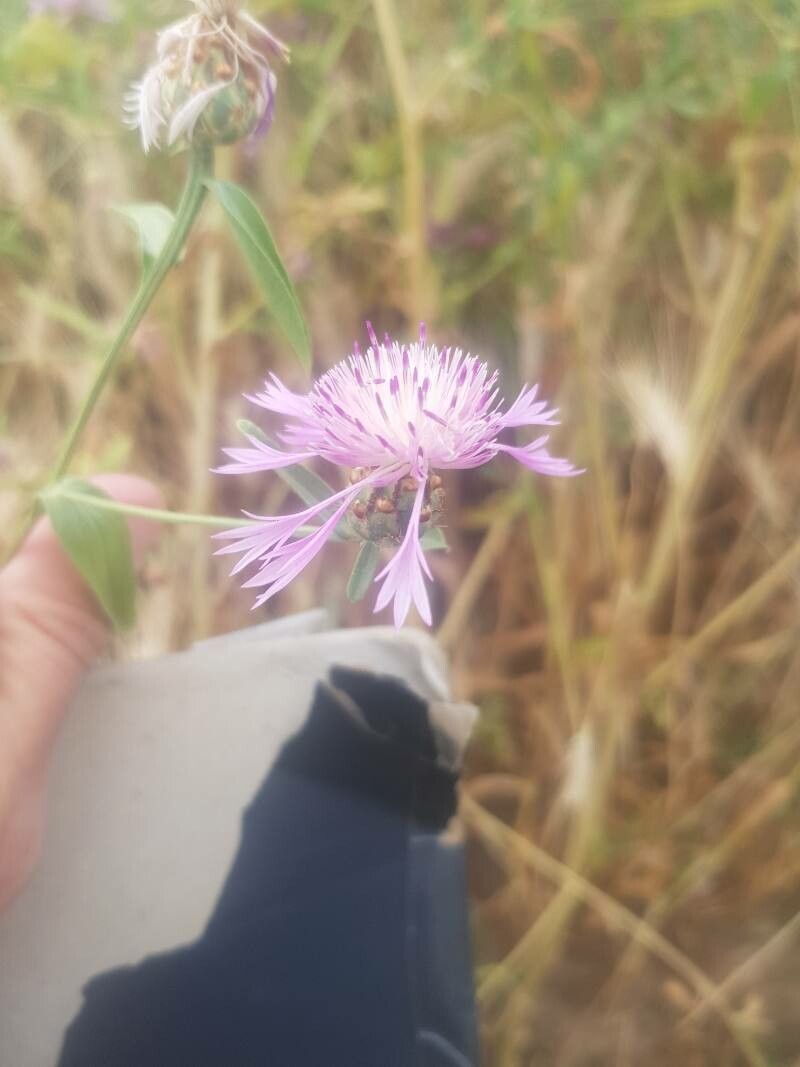
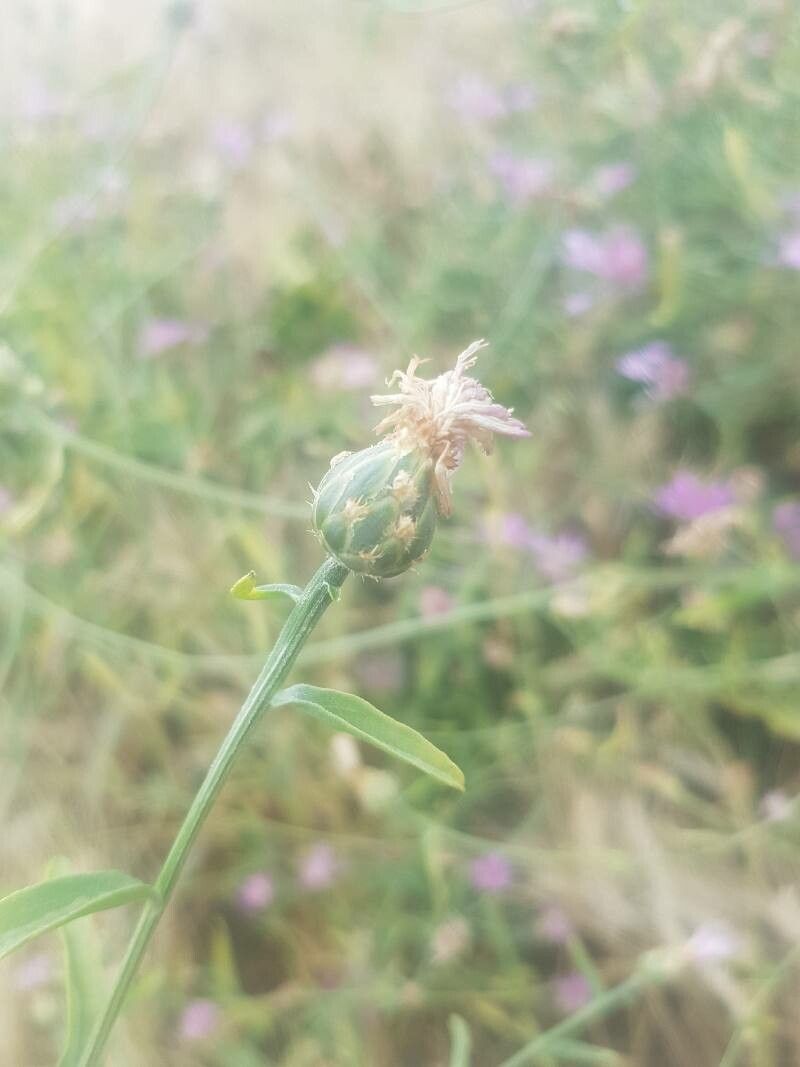
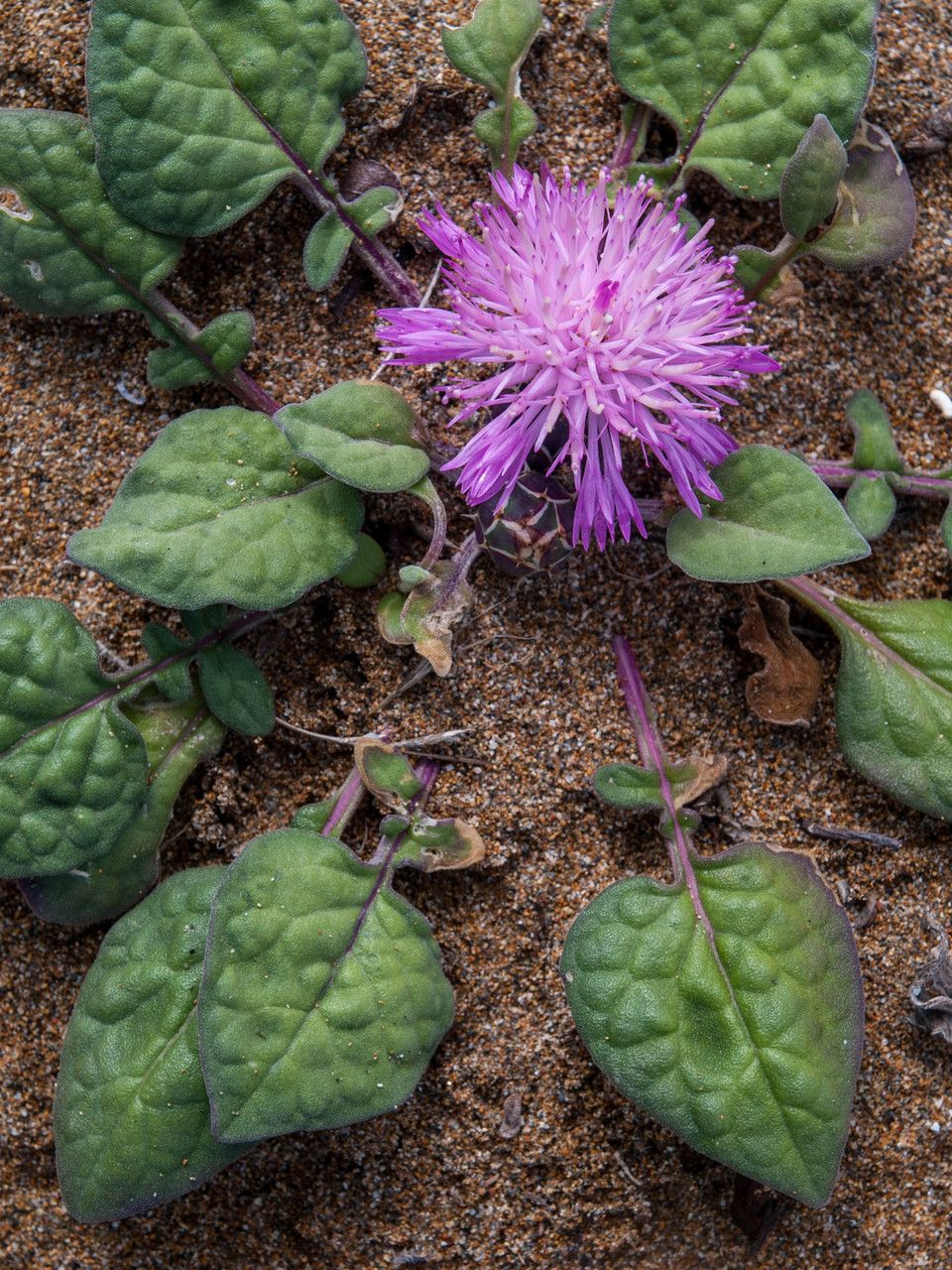
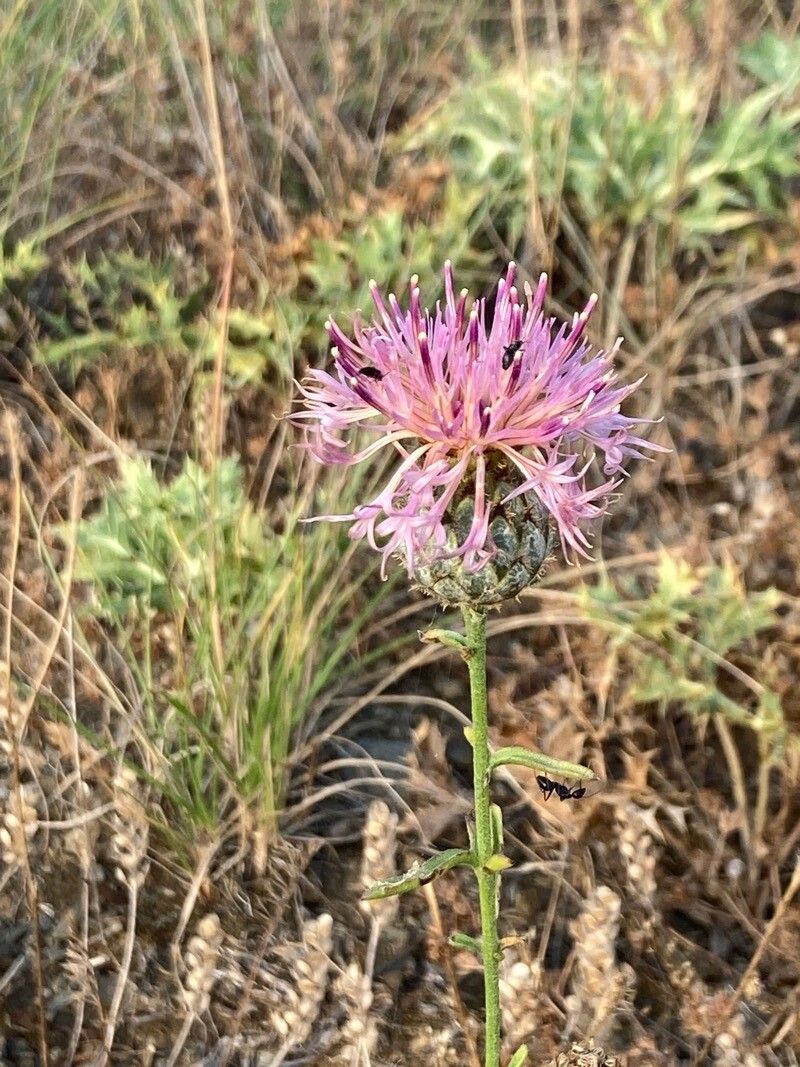
Centaurea diluta, commonly known as diluted knapweed, is a perennial herbaceous plant belonging to the Asteraceae family. Native to Europe and western Asia, it has been introduced to North America as an ornamental plant. The plant reaches a height of up to 60 cm and features a basal rosette of lance-shaped leaves with toothed margins. Its stem is erect, branched, and covered with fine hairs. The flowers of Centaurea diluta are pinkish-purple and have a diameter of 2-3 cm. They bloom from June to September and are found atop long stems that arise from the axils of the upper leaves. Surrounding the flowers are bracts with distinctive black tips. Centaurea diluta thrives in well-drained soils under full sun or partial shade, but it can tolerate various soil types, including sandy or clay soils. It often grows on roadsides, meadows, pastures, and other disturbed areas. The diluted knapweed has been used medicinally to treat digestive disorders and skin conditions due to its anti-inflammatory properties. However, it should only be used under medical supervision because of its potential toxicity. In some regions where it has been introduced outside its native range, such as North America, it can become invasive. It outcompetes native plants for resources, leading some states, like Montana, to declare it a noxious weed species requiring control measures when found growing outside cultivated areas.
North african knapweed has strong disease resistance and is usually not susceptible to illnesses. However, it can be vulnerable to pests and diseases present in its environment. These problems are typically mild. Regarding care, this plant needs a moderate amount of attention. It should be pruned regularly to keep a tidy appearance and support healthy growth. Fertilizing can also help encourage flowering. North african knapweed is suitable for anyone with outdoor space, such as a garden or patio, and does not require extensive care experience. It may need more attention when grown indoors.
How to keep Centaurea Diluta.
Fertilizer
North african knapweed responds well to regular, dilute applications of fertilizer to encourage healthy leaf development. You should feed North african knapweed roughly once a month during the summer. Nitrogen is important for foliage, and providing nitrogen-rich sources helps North african knapweed thrive.
Botanical profile.
- Plant Type
- Herb
- Life Cycle
- Annual
- Genus
- Centaurea
- Family
- Asteraceae
- Hardiness Zone
- 3-9
- Leaf Type
- Semi-evergreen
Other names.