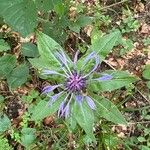
Centaurea graminifolia
Care Guide
💧 Water
☀️ Light Full sun
Perennial cornflower grows best with abundant sunlight and tolerates moderate sun, reflecting its origins in wide open native fields. Too much or too little light can cause reduced growth or bleaching. Its requirement for ample sunlight remains the same at all stages of growth.
🌡️ Temperature 5–35°C
The perennial cornflower originates from temperate regions and thrives at temperatures of 68 to 95 °F (20 to 35 ℃). It may be necessary to alter conditions to reproduce this temperature range as the seasons change.
💨 Humidity
🪴 Soil 6-7
🌱 Fertilizer
The best time to fertilize a Perennial cornflower is in early spring, as it comes out of dormancy and begins active growth. Fertilization supplies essential nutrients for healthy development. Although a Perennial cornflower has relatively low fertilizer needs, annual feeding can improve its survival and encourage better, longer-lasting flowers.
🪴 Pot & Repot
✂️ Pruning
🌿 Propagating
🐛 Diseases & pets
☠️ Toxicity
Characteristics
- Plant Type
- Herb
- Life Cycle
- Perennial, Annual
- Genus
- Centaurea
- Family
- Asteraceae
- Hardiness Zone
- 5-9
- Mature Height
- 30 cm to 61 cm
- Mature Spread
- 30 cm to 61 cm
- Leaf Color
- Green, Gray
- Leaf Type
- Deciduous
- Flower Color
- Blue, Purple
- Flower Size
- 5.08 cm
- Bloom Time
- Late spring, Early summer
- Planting Time
- Spring, Summer
- Harvest Time
- Mid summer
- Native Area
- Russia, Norway, Germany, Austria, Italy, Spain, Switzerland, Czech Republic, Slovakia, Netherlands, France, Poland, Ireland, United Kingdom, Croatia, Slovenia, Belgium, Serbia