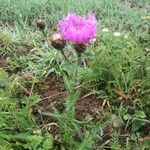
Centaurea nigra
Common Knapweed · Lesser knapweed · Spanish-buttons · Black knapweed · Black Starthistle
Description
Source: leafsnapCentaurea nigra, commonly known as black knapweed, is a perennial plant in the Asteraceae family. Native to Europe and western Asia, it has also been introduced to North America. The plant can grow up to 1 meter tall and features branched stems and lance-shaped leaves that are hairy on both sides. The flowers of Centaurea nigra are dark purple or blackish-red, surrounded by spiky bracts. They bloom from June through September, attracting bees, butterflies, and other pollinators. Black knapweed thrives in well-drained soils and can tolerate full sun or partial shade. It is commonly found in meadows, pastures, roadsides, and disturbed areas such as abandoned fields or construction sites. Historically, Centaurea nigra has been used for medicinal purposes due to its anti-inflammatory properties, which can help alleviate pain from arthritis or other inflammatory conditions. Additionally, it has been applied topically for wound healing because of its antibacterial properties. The plant is also an important food source for wildlife, including birds and small mammals that feed on its seeds during the fall months when food is scarce. Despite being considered an invasive species in some areas of North America, where it was accidentally introduced through contaminated seed mixes from Europe, Centaurea nigra remains an important part of many ecosystems. It provides valuable ecological services, such as soil stabilization and erosion control, while also supporting biodiversity by providing habitat for pollinators like bees, which are crucial for maintaining healthy ecosystems worldwide.
Care Guide
💧 Water Every 7 days
Lesser knapweed flourishes in temperate meadows and shows a moderate tolerance to drought. To encourage flowering and keep the soil moist, it's best to water it weekly during its active growing season. Consistent watering is essential for optimal growth and overall health.
How should I water my Lesser knapweed plants in the best way?
When watering the Lesser knapweed, it is best to use filtered water at room temperature. Tap water may contain harmful particles for this plant. It is important to use room temperature or slightly warmer water because the Lesser knapweed is used to warm environments, and cold water can be shocking to it. It is also important to avoid overhead watering, as it can cause foliage issues. Instead, apply filtered room temperature water directly to the soil until it is completely soaked. This will benefit the plant by moisturizing the roots and helping them spread and collect nutrients in the soil.
What should I do if I give my Lesser knapweed too much or too little water?
Overwatering is a more common issue than underwatering for Lesser knapweed. Too much water can cause wilting, yellowing, and diseases like root rot, mold, and mildew. Underwatering is less common due to the plant's drought tolerance, but it can cause brittle, brown leaves. It is important to notice signs of overwatering promptly. Diseases like root rot are difficult to correct if left unchecked for too long. Reduce watering immediately if you see early signs of overwatering. Assess the soil's drainage quality and replace it with a well-draining potting mix if it drains poorly. If the signs indicate inadequate watering, increase your watering schedule until the signs disappear.
How frequently should I give water to my Lesser knapweed plant?
If your Lesser knapweed plant is in a pot, the best way to determine if it needs water is to check the moisture of the soil. Stick your finger into the soil and if the top two to three inches are dry, it's time to water it. Similarly, if you're growing Lesser knapweed outdoors in the ground, you can use the same method. Once the top few inches of soil have dried out, it's time to give it water. Usually, during spring and early fall, you'll need to water this plant about once a week using this method. However, in extremely hot weather, you might need to water it twice or more per week. It's worth noting that mature and well-established Lesser knapweed plants have a great ability to tolerate drought.
How much water does my Lesser knapweed require?
To properly water your Lesser knapweed, you should be generous with the amount of water you provide. Make sure the top two to three inches of soil are dry before watering thoroughly. The goal is to saturate the soil completely, allowing excess water to flow out of the drainage holes at the bottom of the pot. If there is no excess water draining, you may not have given enough water. However, be careful not to let water accumulate inside the soil, as this can harm the plant. Conversely, if water is not draining properly, it could be a sign of poorly draining soil, which is not good for the health of the plant. If the plant is outside, around 1 inch of rain per week should be sufficient.
How do I water my Lesser knapweed at different stages of growth?
The water needs of the Lesser knapweed can vary depending on different growth stages. When the plant is in its early years or has just been transplanted, it will require more water than usual. This is because it is focusing on developing new roots that will support future growth. To ensure optimal root performance, a slightly higher level of moisture is necessary during these stages. However, as the Lesser knapweed matures over a few seasons, it will require less water. Another stage in which the plant may need additional watering is during its bloom period. The process of flower development requires a significant amount of moisture, so you may need to provide extra water to support this growth.
☀️ Light Full sun
Native to open habitats, the lesser knapweed does best with abundant sunlight. Its parts rely heavily on plentiful sun for photosynthesis and vigorous growth, especially during the flowering period. However, too much exposure can scorch the plants, while too little can stunt both growth and fertility.
What are the sunlight requirements for Lesser Knapweed?
Lesser knapweed thrives best with plentiful exposure to sunlight, being native to open areas. It requires full sun, defined as more than 6 hours of sunlight per day, for robust growth and successful photosynthesis, especially during its flowering stage. Partial sunlight, about 3-6 hours of sunlight daily, is also acceptable, but both excessive exposure and insufficient sunlight can have negative effects. Excessive sun can scorch the plants, while insufficient sunlight can stunt growth and reduce fertility. Observing your garden to understand how sunlight moves through it and choosing the right balance of light for your plants is essential for their well-being.
How can artificial lighting be used for Lesser Knapweed?
When natural sunlight is not sufficient, especially in less sunny locations or during winter, artificial lighting can be a vital solution for growing Lesser Knapweed indoors. Adequate lighting ensures optimal growth, with LED lights being a popular choice due to their efficiency and the ability to customize the specific wavelengths needed by plants. Full sun plants require 30-50W/sq ft, partial sun plants need 20-30W/sq ft, and full shade plants require 10-20W/sq ft of artificial light. The artificial light source should be placed 12-36 inches above the plant, mimicking natural sunlight as closely as possible, and the plants should be exposed to artificial light for 8-12 hours per day to replicate natural daylight hours.
What are signs of insufficient sunlight in Lesser Knapweed?
Signs of insufficient sunlight in Lesser Knapweed include smaller new leaves, leggy or sparse growth, faster leaf drop, slower or halted new growth, and the development of lighter-colored or irregularly patterned new leaves. These symptoms point towards a deficiency in light exposure, necessary for the plant's photosynthesis and overall health. Conversely, too much sunlight can cause chlorosis, sunscald, leaf curling, wilting, and leaf scorching, indicating damage from excessive direct sunlight exposure.
How can I address sunlight-related issues in Lesser Knapweed?
To address sunlight-related issues in Lesser Knapweed, gradually acclimate your plant to receive at least 6 hours of direct sunlight daily if they are indoors; this might involve moving the plant to a sunnier location each week or using artificial lighting, such as keeping a desk or ceiling lamp on for at least 8 hours daily or investing in professional plant grow lights. For outdoor plants, similarly, gradually moving them to sunnier spots and avoiding sudden changes in light intensity is key to preventing sunburn. Minimize obstructions to sunlight by pruning trees or moving plants to locations with better sunlight exposure. Note that parts of the plant affected by insufficient sunlight may not recover, but new growth will be healthy with improved lighting conditions.
🌡️ Temperature 5–35°C
Lesser knapweed originates in temperate regions, where temperatures are ideally between 41 and 95 °F (5 and 35 ℃). Although it can tolerate varying conditions, significant temperature fluctuations should be avoided to ensure healthy growth.
What are the ideal temperature conditions for Lesser Knapweed?
Lesser Knapweed thrives in temperate environments, with ideal temperatures ranging from 41 to 95 °F (5 to 35 °C). It possesses strong cold resistance and typically does not require special frost protection during winter. However, it's important to avoid significant temperature fluctuations to ensure healthy growth. If winter temperatures are expected to drop below -25°C, protective measures such as covering the plant with soil or straw are recommended. Additionally, watering the plant abundantly before the first freeze in autumn helps keep the soil moist, preventing drought and water scarcity during the colder months.
How does Lesser Knapweed respond to low temperatures?
Lesser Knapweed is cold-tolerant and flourishes best when temperatures remain above 5°C. While it shows remarkable resilience during winter, maintaining temperatures above -20°C is preferable. Exposure to temperatures below -25°C may not result in noticeable changes during the winter; however, it could lead to decreased sprouting or even no sprouting at all in the spring. In such cases, removing parts of the plant that have failed to sprout in the spring is advised.
How should Lesser Knapweed be cared for in high temperatures?
In high temperatures, specifically during summer, it is crucial to ensure that Lesser Knapweed's environment stays below 35°C. Temperatures exceeding 38°C can cause the leaves to lighten in color, curl, become prone to sunburn, and in severe cases, cause the entire plant to wilt and dry out. To mitigate these effects, trim away the sunburned and dried parts, move the plant to a shaded location, or use a shade cloth to protect it from the midday and afternoon sun. Additionally, watering the plant in the morning and evening will help keep the soil moist, providing further relief from high temperatures.
💨 Humidity
🪴 Soil 6-7
🌱 Fertilizer
The best time to fertilize a Lesser knapweed is in early spring, as it comes out of dormancy and begins active growth. Fertilizing supplies essential nutrients needed for healthy development. Although Lesser knapweed has fairly low fertilizer requirements, applying fertilizer annually can help its survival and produce better, longer-lasting flowers.
🪴 Pot & Repot 2-3 years
When repotting Lesser knapweed, select a pot 1-2 inches (2.5–5.1 cm) larger with good drainage. Use a well-draining potting mix. Repot in spring or fall, making sure the root ball sits slightly lower than the rim of the flower pot. Water thoroughly after repotting and place in a warm spot with indirect sunlight.
✂️ Pruning
Lesser knapweed is a robust perennial wildflower known for its delicate foliage and striking purple blooms. To promote denser growth and abundant flowering, prune the plant in the spring. Remove any spent flowers to encourage continuous blooming and prevent it from self-seeding. Regular pruning also improves air circulation, which helps reduce the risk of disease.
🌿 Propagating
🐛 Diseases & pets
☠️ Toxicity
Centaurea nigra contains a substance known as pyrrolizidine alkaloids, which degrades under heat or dry conditions to produce toxic products. These alkaloids can cause liver damage and is thought to cause some types of cancer. When handling knapweed, be sure to wear gloves.
Characteristics
- Plant Type
- Herb
- Life Cycle
- Perennial
- Genus
- Centaurea
- Family
- Asteraceae
- Hardiness Zone
- 5-9
- Mature Height
- 91 cm
- Mature Spread
- 49 cm
- Leaf Color
- Green
- Leaf Type
- Deciduous
- Flower Color
- Purple, Lavender
- Flower Size
- 2.03 cm to 3.05 cm
- Bloom Time
- Early summer, Mid summer
- Planting Time
- Spring, Summer, Autumn
- Harvest Time
- Mid summer