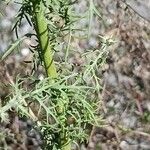
Centaurea stoebe
Spotted knapweed · Panicled Knapweed
Description
Source: leafsnapCentaurea stoebe, the spotted knapweed or panicled knapweed, is a species of Centaurea native to eastern Europe, although it has spread to North America, where it is considered an invasive species. It forms a tumbleweed, helping to increase the species' reach, and the seeds are also enabled by a feathery pappus.
🌳 Outside its typical habitat, spotted knapweed plays an ecological role that often goes unnoticed. Its deep root system may help stabilize soil and decrease erosion. Some studies also indicate that spotted knapweed could serve as a bioindicator for certain soil metals, exposing hidden aspects of environmental pollution. These unconventional roles suggest potential applications for spotted knapweed in ecological monitoring and land-management practices.
🎭 Aspiration, memory, dedication, gentleness, expectation, togetherness, fruitfulness and affection, riches, well-being and the future
Care Guide
💧 Water
Spotted knapweed, a plant native to dry grasslands, thrives in low-water environments and prefers arid conditions. This drought-tolerant species requires only weekly watering to simulate its natural habitat, though it benefits from any natural rainfall during the growing season. This aligns well with its minimal irrigation needs.
How should I properly water my Spotted knapweed?
To properly water the Spotted knapweed, it's best to use filtered water at room temperature. Tap water may have harmful particles that can affect the plant's health. Since the Spotted knapweed is accustomed to a warm environment, it's important to avoid using cold water, which can shock its system. It's also recommended to avoid overhead watering as it can cause issues with the foliage. Instead, apply the filtered room temperature water directly to the soil until it is completely soaked. This helps to nurture the roots, allowing them to spread and collect the necessary nutrients.
What should I do if I give my Spotted knapweed too much or too little water?
Spotted knapweed can be negatively affected by both overwatering and underwatering, but overwatering is more common and can cause various issues. Excessive water can cause wilting and yellowing of stems and leaves, as well as diseases like root rot, mold, and mildew that can be fatal to the plant. While underwatering is less frequent due to the plant's ability to tolerate drought, it can still occur and result in brittle, brown leaves. It is important to pay attention to the signs of overwatering to prevent long-term damage. Some diseases like root rot cannot be reversed if not addressed promptly. If you notice early signs of overwatering, reduce your watering schedule and evaluate the soil's drainage. If the soil drains poorly, replace it with a loose, well-draining potting mix. On the other hand, if you observe signs of underwatering, simply increase the frequency of watering until the symptoms improve.
How often do I need to water my Spotted knapweed plant?
If your Spotted knapweed is in a pot, you can determine if it needs water by checking the moisture level in the soil. Simply stick your finger into the soil and if the top two to three inches feel dry, it's time to water it. The same method can be used if you are growing Spotted knapweed outdoors in the ground. When the top few inches of soil have dried out, it's a sign that you need to water the plant. Typically, during spring and early fall, watering once a week should suffice. However, in extremely hot weather, you may need to water the plant two or more times per week. It's worth noting that mature and well-established Spotted knapweed has a remarkable ability to withstand drought.
How much water does my Spotted knapweed require?
When watering your Spotted knapweed, don't hold back on the water. Make sure the top two to three inches of soil are dry before giving it a good, thorough watering. You want to soak the soil completely, enough so that excess water flows out through the drainage holes at the bottom of the pot. If you don't see any excess water draining, then you probably didn't give enough water. However, be careful not to let water accumulate in the soil as that can harm the plant. On the other hand, if you notice that water isn't draining well through the pot, it could be a sign of poorly draining soil, which is bad for the plant's health. If the plant is outside, around 1 inch of rain per week should be enough.
How do I water my Spotted knapweed during different stages of growth?
The water needs of the Spotted knapweed can vary depending on its growth stages. During the first few years of its life or after transplanting, it will require more water than usual. This is because the plant is focused on developing new roots to support future growth, and these roots perform best with slightly more moisture. As the Spotted knapweed becomes more mature, it will require less water. Additionally, during the bloom period, the plant may need extra water as flower development uses a significant amount of moisture.
☀️ Light Full sun
Spotted knapweed develops best in full sunlight, although it can endure moderate shade. Native to well-lit habitats, even its earliest stages thrive under the same conditions. Too much or too little light can impair growth, causing distortion or stunting, respectively.
What are the sunlight requirements for spotted knapweed?
Spotted knapweed requires full sun for optimal growth, benefiting from more than 6 hours of sunlight daily. It can also tolerate partial sun conditions of about 3-6 hours of sunlight. Observing how sunlight moves through your garden can help in choosing spots that provide the perfect balance of light and shade, ensuring the plants' happiness. Spotted knapweed, originating from environments with ample light, thrives even from its juvenile stages under full daylight conditions but can withstand moderate shadows. However, over or underexposure to sunlight may distort growth or stunt the plant, respectively.
How does artificial lighting support plant growth?
Indoor plants, including spotted knapweed, require adequate lighting for optimal growth. When natural sunlight is insufficient, especially during winter or in less sunny spaces, artificial lights provide a crucial solution. LEDs are a popular choice because they can be customized to deliver specific wavelengths of light needed by plants. The recommended artificial light intensity depends on the plant's natural sunlight needs: 30-50W/sq ft for full sun, 20-30W/sq ft for partial sun, and 10-20W/sq ft for full shade. The light source should be placed 12-36 inches above the plant, mimicking natural sunlight as much as possible. Most plants benefit from 8-12 hours of artificial light per day.
What are the symptoms of improper light exposure in spotted knapweed?
Spotted knapweed shows various symptoms when exposed to inappropriate light levels. Inadequate light can lead to smaller new leaves, leggy or sparse growth, faster leaf drop, and either slower or no new growth at all, indicating the plant may enter survival mode. Leaves may also develop irregular color patterns or appear pale due to a lack of chlorophyll. Conversely, excessive light can cause chlorosis, sunscald, leaf curling, wilting, and leaf scorching. These conditions reflect the plant's struggle with too much or too little light, impacting its ability to photosynthesize and maintain health.
How can you manage light exposure for spotted knapweed to ensure healthy growth?
To optimize growth and health for spotted knapweed, gradually acclimatizing the plant to the desired light conditions is essential. Indoor plants can be moved closer to sunny windows or supplemented with artificial light for at least 8 hours daily. For outdoor plants, finding the best sunlight spot is crucial, and you should aim to move them gradually. If the sunlight is blocked by obstructions like trees, consider pruning to enhance light penetration. Also, transplanting smaller plants during their dormant period to a location with ample sunlight and good drainage can be beneficial. Note that while parts of the plant already affected by improper light exposure may not recover, new growth should be healthy once appropriate light levels are achieved.
🌡️ Temperature 5–35°C
Spotted knapweed is native to habitats with temperatures ranging from 68 to 95 °F (20 to 35 °C). It favors warmer conditions. Seasonal changes may require adjustments to keep temperatures optimal for healthy growth.
What is the native temperature range for Spotted Knapweed?
Spotted Knapweed is native to environments where the temperature ranges between 68 to 95 °F (20 to 35 °C). It thrives better in warmer conditions, although it can adjust to seasonal variations to maintain an optimum temperature for healthy growth.
How does Spotted Knapweed handle cold temperatures?
Spotted Knapweed has strong cold resistance; therefore, special frost protection measures are often not necessary. However, to protect the plant in winters expected to drop below its growth limit temperature, it's beneficial to cover it with soil or straw. Abundantly watering the plant before the first freeze in autumn helps keep the soil moist, which is crucial for the plant's survival through winter and early spring.
What should be done if Spotted Knapweed is exposed to temperatures below its tolerance in winter?
If Spotted Knapweed is exposed to temperatures below its growth limit during winter, you might not notice immediate changes, but there could be a decrease or absence of sprouting come spring. To address this, remove any parts that have failed to sprout in spring.
How does high temperature affect Spotted Knapweed and what are the solutions?
Spotted Knapweed should ideally be kept below a certain maximum temperature during summer. Exceeding this can lead to the leaves becoming lighter in color, curling, being prone to sunburn, and in severe cases, the plant might wilt and dry out. To help the plant recover, trim away sunburned and dried-up parts. Relocate the plant to a shaded area or use a shade cloth to protect it from midday and afternoon sun. Ensuring the plant is watered in the morning and evening will keep the soil moist and help prevent further stress.
💨 Humidity
🪴 Soil 6-7
🌱 Fertilizer
Spotted knapweed are considered heavy feeders in terms of nutrients. They require frequent, low doses of nitrogen and potassium fertilizers and periodic applications of phosphorus, micronutrients, sulfur, and magnesium to sustain good growth and bright coloration. Continuous fertilization throughout the growing season is necessary to prevent deficiency symptoms and maintain optimal growth.
🪴 Pot & Repot
✂️ Pruning
To encourage larger flowers in spotted knapweed, remove any excess terminal buds. During mid-summer, the plant may experience wilting leaves; in this case, prune it to one-third or half of its height to help it recover. In winter, trim the perennial roots to protect the plant from cold and frost damage.
🌿 Propagating
🐛 Diseases & pets
☠️ Toxicity
Characteristics
- Plant Type
- Herb
- Life Cycle
- Biennial, Perennial
- Genus
- Centaurea
- Family
- Asteraceae
- Hardiness Zone
- 4-9
- Mature Height
- 30 cm to 61 cm
- Mature Spread
- 61 cm to 76 cm
- Leaf Color
- Green, Gray
- Leaf Type
- Deciduous
- Flower Color
- Pink, Purple, Red, Violet
- Flower Size
- 0.51 cm
- Bloom Time
- Early summer, Mid summer
- Planting Time
- Spring, Summer, Autumn
- Harvest Time
- Mid summer