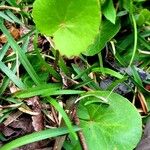
Centella erecta
Erect centella
Description
Source: leafsnapCentella erecta, commonly known as Erect Centella or Upright Pennywort, is a perennial herb belonging to the Apiaceae family. It is native to tropical and subtropical regions of Asia, Africa, and Australia. The plant exhibits a creeping growth habit with erect stems that can reach heights of up to 30 cm. Its small, rounded leaves feature scalloped edges and are arranged in opposite pairs along the stem. Centella erecta produces small white or pink flowers from summer through fall. The plant thrives in moist soil and can grow in either full sun or partial shade. In traditional medicine, Centella erecta has been utilized for its medicinal properties, particularly in treating skin disorders such as eczema and psoriasis, thanks to its anti-inflammatory attributes. It is also reputed to enhance memory function by improving blood circulation. Overall, Centella erecta is a fascinating herb with potential medicinal benefits, making it a valuable component of traditional medicine practices worldwide.
Care Guide
💧 Water Every 7 days
Erect centella naturally grows in moist environments and thrives with consistent moisture and high humidity. To maintain its lush growth, it needs to be watered weekly and benefits greatly from rainwater. This aligns with its natural preference for damp habitats, which supports its growth cycles.
☀️ Light Full sun
Erect centella is native to habitats with abundant sunlight, such as open fields and sunny meadows. It prefers full sun but can also tolerate partial sun.
What are the sunlight requirements for Erect centella?
Erect centella is a sun-loving plant that thrives in full sun conditions, requiring more than 6 hours of sunlight daily. It can also tolerate partial sun conditions, needing about 3-6 hours of sunlight. It's important to observe your garden's sunlight exposure and choose spots that provide the ideal balance of light and shade for the plant, ensuring its growth and health.
How can artificial lighting support Erect centella indoors?
When natural sunlight is insufficient, especially during winter or in less sunny spaces, artificial lighting can be a valuable solution for indoor Erect centella plants. LED lights are recommended due to their customization capability to meet specific plant needs. Full sun plants require 30-50W/sq ft, partial sun plants need 20-30W/sq ft, and full shade plants require 10-20W/sq ft of artificial light. The light source should be placed 12-36 inches above the plant and turned on for 8-12 hours per day to emulate natural daylight hours and support optimal growth.
What are some symptoms of Erect centella not receiving enough light?
Inadequate lighting can lead to several issues for Erect centella, including smaller new leaves, leggy or sparse growth, faster leaf drop, slower or no new growth, lighter-colored new leaves, and symptoms of overexposure like chlorosis, sunscald, leaf curling, wilting, and leaf scorching. These symptoms indicate either insufficient sunlight or too much exposure, impacting the plant's ability to photosynthesize and maintain health.
How can I improve the lighting conditions for Erect centella?
To ensure Erect centella receives adequate sunlight, gradually move the plants to sunnier locations, aiming for at least 6 hours of direct sunlight when indoors, using a south-facing window and keeping curtains open. If the plant is large or hard to move, consider using artificial light, like plant grow lights, for at least 8 hours a day. Outdoors, adapt plants gradually to sunnier spots to avoid sunburn. Prune any obstructions like tree branches to increase sunlight and consider transplanting smaller plants to sunnier locations with good drainage during their dormant period, usually late winter or early spring.
🌡️ Temperature 20–37.8°C
Erect centella prefers moderate temperatures — about the same range people usually find comfortable. It grows best in conditions that are neither too warm nor too cold. The main concern with high temperatures is the increased risk of sunburn, so providing some shade in summer is recommended to prevent excessive heat. When temperatures fall, Erect centella goes dormant. If you want it to keep growing year-round, you need to maintain warmer conditions through the winter. Frost can damage the plant and should be avoided.
What is Erect centella?
Erect centella, scientifically known as Centella erecta, is a plant species. Details about its essentials, such as uses or characteristics, haven't been provided. Similarly, information regarding its symptoms, presumably in the context of plant health issues or effects on humans, is also missing. As such, more specific aspects of Erect centella remain unspecified in this overview.
💨 Humidity
🪴 Soil 6-7
🌱 Fertilizer
To maximize the yield and flavor of Erect centella, provide plenty of nitrogen throughout the growth cycle, including before planting and at harvest. Well-watered, well-fertilized plants produce abundant, healthy leaves and reduce bitterness. Before planting, enrich the soil with organic matter such as compost or manure, ideally 2 to 8 weeks beforehand.
🪴 Pot & Repot
✂️ Pruning
Erect centella benefits from pruning between early and late spring. Focus on removing dead or damaged stems and trimming overgrown areas to promote bushiness and overall health. Be sure to prune just above the nodes to encourage new growth. Avoid over-pruning, as this can cause stress, affect the plant's appearance, and increase the risk of disease.
🌿 Propagating
🐛 Diseases & pets
☠️ Toxicity
Characteristics
- Plant Type
- Herb
- Life Cycle
- Perennial
- Genus
- Centella
- Family
- Apiaceae
- Hardiness Zone
- 9-11
- Mature Height
- 10 cm to 40 cm
- Mature Spread
- 20 cm to 30 cm
- Leaf Color
- Light Green, Forest Green
- Leaf Type
- Semi-evergreen
- Flower Size
- 0.20 cm to 0.25 cm
- Bloom Time
- Late spring, Summer, Early fall
- Planting Time
- Spring, Summer, Autumn
- Harvest Time
- Mid summer, Late summer, Fall
- Native Area
- Colombia, Bahamas, Belize, Cuba, Honduras, Mexico, Bolivia, Venezuela, Nicaragua, Ecuador, Costa Rica, Panama