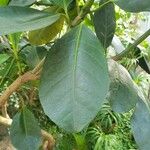
Ceodes umbellifera
Umbrella Catchbirdtree · Birdcatcher Tree · Bird-lime Tree
Description
Source: wikipedia (CC BY-SA)Ceodes umbellifera, synonym Pisonia umbellifera, commonly known as the birdlime tree or bird catcher tree, is a species of plant in the Nyctaginaceae family. The evergreen shrub has soft wood, small pink or yellow flowers, and produces cavate brown fruit throughout the period March to April. The species has been categorized under different genera in its documented lifetime, being reallocated between Pisonia and Ceodes. Its former genus, Pisonia, is named after a Dutch scientist, Willem Piso, and umbellifera is derived from Latin umbelliferum, denoting the species' big, 'shade-carrying' foliage.
Care Guide
💧 Water
☀️ Light Full sun
The birdlime tree grows best in direct, unshaded sunlight but can also tolerate moderate sun exposure. Its native habitats receive abundant sunlight, which supports its healthy growth. Both excessive and insufficient sunlight can negatively affect the birdlime tree, altering its overall condition and diminishing its vitality.
🌡️ Temperature 20–37.8°C
The birdlime tree is native to areas where temperatures range from 68 to 100 ℉ (20 to 38 ℃). Although it grows best in warmer climates, attentive care during cooler months can help maintain its health. Seasonal adjustments may be necessary.
💨 Humidity
🪴 Soil 6-7
🌱 Fertilizer
The optimal period to apply fertilizer to a Birdlime tree is during the initial stages of spring, when it's exiting its dormant state. This helps to stimulate overall growth as well as the development of flowers. The act of fertilizing not only aids in the enhancement of leaves, stems, and branches, but also fosters the growth of big, colorful, and durable blossoms. Moreover, it assists in the transportation of nutrients from the roots to the flowers, subsequently strengthening the plant's overall wellbeing and its ability to resist diseases.
🪴 Pot & Repot
✂️ Pruning
🌿 Propagating
🐛 Diseases & pets
☠️ Toxicity
Characteristics
- Plant Type
- Tree, Shrub
- Life Cycle
- Perennial
- Genus
- Ceodes
- Family
- Nyctaginaceae
- Hardiness Zone
- 10-11
- Mature Height
- 10.06 m
- Mature Spread
- 3.05 m
- Leaf Color
- Green
- Leaf Type
- Evergreen
- Flower Color
- White, Pink
- Flower Size
- 5.08 cm to 11.43 cm
- Bloom Time
- Late spring, Summer
- Planting Time
- Autumn
- Harvest Time
- Late summer, Fall