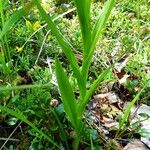
Cephalanthera longifolia
Narrow-leaf helleborine · Sword-leaf-helleborine · White lady · Narrow-leaved Helleborine · Sword-leaf helleborine
Description
Source: leafsnapCephalanthera longifolia, the narrow-leaved helleborine, sword-leaved helleborine or long-leaved helleborine, is a rhizomatous herbaceous perennial plant in the family Orchidaceae. It is native to light woodland, and widespread across Europe, Asia and North Africa from Ireland and Morocco to China. This includes the United Kingdom, Iran, Russia, Kazakhstan, Turkey, Algeria, India, Pakistan, Germany, Italy, France, Spain, Portugal and many other countries.
Care Guide
💧 Water
Sword-leaved helleborine thrives in the understories of temperate forests where moisture is consistently present. This plant prefers soil that is evenly moist, so it should be watered once a week. As an herbaceous perennial, mulching is beneficial because it helps retain moisture and simulates the leaf litter commonly found in its natural habitat.
How should I water my Sword-leaved helleborine plant?
The way you water your Sword-leaved helleborine depends on whether it is actively growing or not. If it is, water the soil and occasionally spray water on the leaves when the weather is warm. In winter or when it's cool and wet, only water the soil. If the roots and leaves of your plant become dry or discolored, it needs more water. Overwatered Sword-leaved helleborine will appear mushy and limp. Use a well-draining potting mix when growing this plant. Water it multiple times per week during the growing season, making sure each watering drains quickly. The pot size determines how much water to give, with larger pots needing less frequent watering. Rainwater or distilled water is best, and try to match the temperature of the water with the air.
What should I do if I give my Sword-leaved helleborine plant too much or too little water?
One of the most common ways to kill Sword-leaved helleborine is by keeping it in overly moist soil for too long. While this plant needs frequent watering during growth, it also requires well-draining soil. Overwatering can cause the plant to become mushy and develop root rot. If this happens, use sterile pruning shears to remove any rotted roots and then repot the plant in a container with good drainage, using a fast-draining potting mix. However, too much repotting may not be beneficial for Sword-leaved helleborine, so it's important to find the right watering rate. If the plant starts to shrivel and feel dry to the touch, it may be underwatered. In that case, increase the watering frequency as the soil might be drying out faster than expected.
How frequently should I give water to my Sword-leaved helleborine?
To ensure your Sword-leaved helleborine thrives, remember these watering guidelines: - During the active growth stage (spring and summer), water once or twice per week. If it's hot and dry for an extended period, increase watering to three times per week or more. - In winter, watering is necessary but not as frequent. Aim for two to three times per month to keep your plant alive during the coldest months. - Indoors, the soil may dry out faster, so adjust your watering schedule accordingly. You may need to increase the number of monthly waterings. - Use the fall season to gradually reduce watering frequency from multiple times per week to your reduced winter schedule.
What do I need to think about when watering my Sword-leaved helleborine at different times of the year and during different stages of growth?
When planning the watering schedule for your Sword-leaved helleborine, it is important to consider two growth phases. The first phase is the active growth period which occurs in spring and summer. During this time, the plant requires watering multiple times per week. The second phase is the rest period which occurs during winter, lasting two to three months. During this period, the Sword-leaved helleborine needs much less water and fertilization compared to normal. Watering the plant once or twice per month is sufficient. As fall approaches, gradually decrease the watering frequency from multiple times per week to once or twice per month, in line with the appropriate winter rate.
What's the best way to water my Sword-leaved helleborine if I keep it inside?
The Sword-leaved helleborine thrives in a humid growing environment. Unfortunately, most indoor locations lack the necessary moisture, causing the plant and soil to dry out quickly. To remedy this, consider using a humidifier in the room where you grow the plant and watering it more frequently. However, it's important to note that while humidity is important, adequate air circulation is also necessary to prevent excessive moisture and diseases. To ensure proper air circulation, consider adding a fan to the room.
☀️ Light Partial sun
Sword-leaved helleborine benefits from sunlight but not in large amounts. It does best in dappled light, so spots sheltered from strong midday sun are ideal. Because it comes from habitats beneath tree canopies, its growth may suffer if it gets either too much light or too little.
What amount of sunlight is required for Sword-leaved helleborine?
Sword-leaved helleborine requires partial sun, meaning it thrives best in about 3-6 hours of sunlight each day. It's crucial to observe the movement of sunlight through your garden to find the ideal spot that provides a balanced mix of light and shade. This plant naturally grows under the canopy of trees, so places sheltered from intense noonday sun, mimicking its native environment, would be perfect. Ensuring the plant is not exposed to too much light or too little is essential for its growth.
How can artificial lighting be used for Sword-leaved helleborine indoors?
Indoor Sword-leaved helleborine plants may require artificial lighting to achieve optimal growth, especially when natural sunlight is insufficient. LED lights are recommended for indoor plant lighting, as they can provide specific light wavelengths needed by the plants. Full sun plants need 30-50W per square foot, partial sun plants require 20-30W per square foot, and full shade plants need 10-20W per square foot of artificial light. The light source should be placed 12-36 inches above the plant to mimic natural sunlight, and plants generally need 8-12 hours of light per day.
What symptoms indicate insufficient light for Sword-leaved helleborine?
Symptoms of insufficient light in Sword-leaved helleborine include smaller new leaves, leggy or sparse growth, faster leaf drop, slower or no new growth, and paler or irregularly colored new leaves. Overexposure to sunlight can cause symptoms like chlorosis, where leaves turn yellow, sunscald, leaf curling, wilting, and leaf scorching, which are characterized by brown, dry patches on leaves. These symptoms reflect the plant's struggle in adapting to inappropriate light conditions.
What are the solutions for Sword-leaved helleborine struggling with light conditions?
For Sword-leaved helleborine struggling with light conditions, gradual adaptation is key. Indoor plants can be moved to sunnier spots each week until reaching 3-6 hours of direct sunlight daily or supplemented with artificial light such as a desk or ceiling lamp for at least 8 hours daily. Outdoors, plants should be moved gradually to sunnier spots to avoid sunburn. If necessary, pruning obstructions like tree branches can help increase sunlight exposure. For smaller plants, transplanting during their dormant period to a sunnier location can also improve light access. It's important to note that parts of the plant already affected by inappropriate lighting may not recover, but new growth should be healthy under improved conditions.
🌡️ Temperature 5–25°C
Sword-leaved helleborine comes from temperate areas and does best in temperatures of 41 to 77 °F (5 to 25 °C). It is adaptable but favors cooler conditions, so consider lowering the temperature during warmer seasons.
What is the native climate for Sword-leaved helleborine?
Sword-leaved helleborine, scientifically known as Cephalanthera longifolia, is native to temperate regions. It thrives in temperatures ranging from 41 to 77 °F (5 to 25 °C). This plant prefers cooler conditions and is highly cold-tolerant, hence it is recommended to decrease the temperature during warmer seasons to mimic its native environment. During the winter, no additional frost protection measures are required. However, to prepare for the first freeze of autumn, it's beneficial to water the plant generously to ensure the soil remains moist as it enters a frozen state. This technique helps prevent drought and water scarcity for the plant during the winter and early spring.
How should you care for Sword-leaved helleborine in extremely low temperatures?
Sword-leaved helleborine exhibits extreme cold tolerance, capable of withstanding winter temperatures above -25°C. However, if temperatures fall below this threshold, the plant might not show any immediate damage during winter but could experience a decrease in sprouting, or in some cases, fail to sprout at all come spring. The recommended solution for managing these issues in spring includes removing any parts of the plant that have failed to sprout, ensuring the healthy growth of the remaining plant.
What care does Sword-leaved helleborine require in high temperatures?
In conditions where the temperature exceeds 25°C, Sword-leaved helleborine becomes susceptible to halting growth and developing rot due to its low tolerance to high temperatures. To maintain plant health during such conditions, it's advisable to trim any sunburned and dried-up parts, relocate the plant to a shaded area during the midday and afternoon sun or utilize a shade cloth to protect it. Additionally, watering the plant in the morning and evening can help keep the soil moist, mitigating the adverse effects of high temperatures.
💨 Humidity normal (40-60%)
This plant will thrive in moderate humidity, which is probably the level in your home. However, misting it a few times a week can be very beneficial. Make sure the room has good ventilation.
🪴 Soil 6-7
🌱 Fertilizer
The best time to fertilize a Sword-leaved helleborine is in early spring, when it is coming out of dormancy and starting active growth. Fertilizing supplies essential nutrients for healthy development. Although Sword-leaved helleborine has fairly low fertilization requirements, applying fertilizer annually can boost its survival and encourage better, longer-lasting flowers.
🪴 Pot & Repot
✂️ Pruning
The sword-leaved helleborine features long, narrow leaves and beautiful white flowers. To keep the plant healthy, prune it from early to late spring. This will help remove dead stems and encourage new growth. Regular trimming also helps maintain the plant's shape and ensures good airflow, which reduces the risk of disease. Always use clean, sharp tools for pruning to prevent infections and improve the plant's overall health and appearance.
🌿 Propagating
🐛 Diseases & pets
☠️ Toxicity
Cephalanthera longifolia has no toxic effects reported.
Characteristics
- Plant Type
- Herb
- Life Cycle
- Perennial
- Genus
- Cephalanthera
- Family
- Orchidaceae
- Hardiness Zone
- 5
- Mature Height
- 20 cm to 61 cm
- Mature Spread
- 40 cm
- Leaf Color
- Green, Blue
- Leaf Type
- Deciduous
- Flower Color
- White
- Flower Size
- 0.51 cm
- Bloom Time
- Mid spring, Late spring
- Planting Time
- Spring, Summer
- Harvest Time
- Early summer, Mid summer
- Native Area
- Turkey, Sweden, India, Austria, Slovakia, Montenegro, Pakistan, Slovenia, Morocco, Croatia, Belarus, Uzbekistan, Russia, Germany, Estonia, Romania, Latvia, Belgium, Moldova, Portugal, Nepal, Netherlands, France, Tunisia, Czech Republic, Cyprus, Bulgaria, Poland, Armenia, Greece, Ukraine, Serbia, Lebanon, Lithuania, Norway, China, Afghanistan, Syria, Kyrgyzstan, Italy, Spain, Switzerland, Denmark, Finland, Bhutan, Iran, Albania, Ireland, United Kingdom, Hungary, Algeria, Azerbaijan