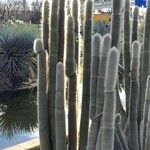
Cephalocereus senilis
Old Man Cactus · Bunny cactus
Description
Source: leafsnapCephalocereus senilis, the old man cactus, is a species of cactus native to Hidalgo and Veracruz in central Mexico. It is threatened in the wild, but widespread propagation and popularity in cultivation have reduced the demand on wild populations.
🌳 Old man cactus, often passed over for practical uses such as oil extraction or drink production unlike its relatives, has found a role in a symbiotic relationship by attracting bats. The plant’s feathery white appendages not only camouflage these nocturnal animals, but the nectar in its flowers also provides an appealing meal. As a result, these flying mammals help pollinate the flowering cactus.
🎭 A mother's love and care
Care Guide
💧 Water Every 3 weeks
The old man cactus thrives in arid environments, effectively storing water and enduring long dry spells. With its high tolerance for drought, it only needs to be watered once every three weeks. Ideal for xeriscaping or rock gardens, this cactus excels in rocky terrains with minimal rainfall.
☀️ Light Full sun
The old man cactus prospers in places that get abundant sunlight all day, though it can tolerate locations with less sun. Excessive exposure can bleach the plant, while too little light can slow its growth. This species originally evolved in habitats with plentiful sunshine.
What are the sunlight requirements for Old Man Cactus?
Old Man Cactus requires full sun, which means it needs above 6 hours of sunlight to thrive optimally. However, it can also tolerate partial sun conditions, receiving about 3-6 hours of sunlight. It's crucial to observe how sunlight moves through your garden, selecting spots that provide a balance of light and shade. This ensures your Old Man Cactus remains healthy and happy.
Can Old Man Cactus grow in artificial lighting?
Yes, Old Man Cactus can grow under artificial lighting, making it suitable for indoor environments where natural sunlight might be insufficient. Artificial lights such as LED, which can be tuned to provide specific wavelengths, can support the plant's growth, promoting faster and healthier development. The light intensity required varies with plants needing 30-50W/sq ft for full sun plants, 20-30W/sq ft for partial sun, and 10-20W/sq ft for full shade conditions. Lights should be placed 12-36 inches above the plant for 8-12 hours per day to mimic natural sunlight conditions.
What are the symptoms of insufficient light in Old Man Cactus?
Old Man Cactus shows several signs when exposed to insufficient light, including leggy or sparse growth, slower or no new growth, and chlorosis, where leaves lose their green color. Sunscald, which damages the leaves or stems, leaf curling as a defense mechanism against extreme sunlight, wilting due to excessive water loss, and leaf scorching characterized by brown, dry edges or patches on leaves, are also common symptoms indicating poor light conditions.
How can I address light deficiency issues in Old Man Cactus?
To combat light deficiency, gradually acclimatize your Old Man Cactus to receive at least 6 hours of direct sunlight daily. For indoor plants, this can be achieved by placing them by a south-facing window or using artificial lights like desk or ceiling lamps, or professional grow lights for at least 8 hours daily. If your plant is outdoors, gradually move it to sunnier spots to avoid sunburn, remembering that parts of the plant affected by previous light deficiencies may not recover, but new growth will be healthy. Additionally, reducing sunlight obstructions like overhanging branches and considering transplantation during the dormant season can significantly improve sunlight exposure.
🌡️ Temperature 20–37.8°C
The old man cactus originates from tropical and subtropical areas of Mexico, where temperatures typically range from 68 to 100 ℉ (20 to 38 ℃). Consequently, the plant prefers warm conditions between 70 and 100 ℉ (21 to 38 ℃). In winter, it is important to protect the cactus from cold and frost. If temperatures drop below 50 ℉ (10 ℃), it is advised to bring the plant indoors or provide a warm shelter.
What is the native habitat of the Old man cactus?
The Old man cactus, botanically named Cephalocereus senilis, is native to tropical and subtropical regions of Mexico. In its native habitat, temperatures generally range from 68 to 100°F (20 to 38°C), making the cactus well-adapted to warm environments.
What temperatures are ideal for the Old man cactus?
The Old man cactus thrives in temperatures between 70 to 100°F (21 to 38°C). It is important to protect the plant from cold temperatures and frost damage, especially during winter months. If temperatures are expected to fall below 50°F (10°C), the plant should be brought indoors or provided with a warm shelter to prevent cold damage.
How does the Old man cactus respond to cold temperatures?
When exposed to cold temperatures below 0°C, the Old man cactus stops growing and enters a dormant state. To avoid damage during winter, it's advised to move the plant indoors, preferably near a south-facing window to ensure it receives enough sunlight. Watering should be reduced or completely stopped to prevent root rot, especially when outdoor temperatures fall below 20°C. For plants grown outside, halting watering during low temperatures and using insulation methods like a temporary greenhouse or wrapping the plant can help protect it.
What are the symptoms of the Old man cactus being exposed to too low or too high temperatures?
Exposure to temperatures below 20°C can hinder the growth of the Old man cactus, and if the temperature drops below 0°C or further to -5°C, the plant may become weak, wilt, and be at risk of root rot. Lack of immediate symptoms does not rule out mild frost damage, which could lead to gradual withering of the plant. On the other end, temperatures above 38°C, especially exceeding 43°C, can cause the cactus to stop growing, lose water, wilt, and become prone to sunburn.
What measures should be taken if an Old man cactus is damaged by low or high temperatures?
For damage from low temperatures, trim the frostbitten areas and check for root rot. If the roots are rotted, they should be removed, and the plant can be propagated through cuttings. The plant should then be placed in a warm environment, near a south-facing window for sufficient sunlight or provided with supplemental lighting. For high-temperature damage, remove sunburned and rotten parts, and protect the plant from afternoon sunlight until it recovers. With root rot, cease watering until new roots form.
💨 Humidity dry (<40%)
This plant prefers dry conditions, so don't mist it. However, watering it less often can also thrive in higher humidity.
🪴 Soil 6-7
🌱 Fertilizer
For Old man cactus, small amounts of fertilizer once or twice a year during the growing season are sufficient. Avoid feeding in winter and during summer dormancy. Cut back on fertilizer for plants that have been repotted, and wait a couple of months after repotting before applying fertilizer. Fertilizing helps maintain healthy growth and encourages blooms.
🪴 Pot & Repot 2-3 years
Repot Old man cactus in spring or summer, selecting a pot slightly larger than the current one that offers good drainage. Use a well-draining, sandy or gritty cactus mix. Handle it carefully to avoid the spikes. Allow the cactus to dry out before repotting to prevent root rot. After repotting, wait a week before watering to let the roots heal.
✂️ Pruning
Pruning is minimal for the old man cactus; you only need to remove dead flowers and branches. This helps the plant focus its nutrients on healthy growth.
🌿 Propagating
🐛 Diseases & pets
☠️ Toxicity
Characteristics
- Plant Type
- Succulent, Shrub
- Life Cycle
- Perennial
- Genus
- Cephalocereus
- Family
- Cactaceae
- Hardiness Zone
- 9-12
- Mature Height
- 4.88 m to 14.94 m
- Mature Spread
- 15 cm to 30 cm
- Leaf Color
- Yellow, White
- Leaf Type
- Evergreen
- Flower Color
- Pink
- Flower Size
- 5.08 cm to 7.62 cm
- Bloom Time
- Mid summer
- Planting Time
- Spring, Summer, Autumn
- Harvest Time
- Mid summer, Late summer
- Native Area
- Mexico