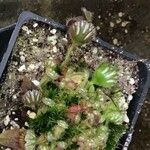
Cephalotus follicularis
Albany-pitcherplant · West Australian Pitcher Plant · American pitcherplant · Australian Pitcher Plant · Albany pitcher plant
Description
Source: leafsnapCephalotus follicularis, commonly known as the Australian pitcher plant or Albany pitcher plant, is a small, carnivorous perennial herb native to southwestern Australia. Growing up to 10 cm in height, it features a rosette of leaves that transform into pitchers. These pitchers are modified leaves resembling small jugs and are topped with lids to prevent rainwater from diluting the digestive enzymes within. Thriving in nutrient-poor soils, the Australian pitcher plant relies on its carnivorous abilities to gather nutrients. It lures insects with its sweet nectar and has slippery inner walls, causing unsuspecting prey to fall into the digestive fluid at the bottom of each pitcher. Cephalotus follicularis prefers cool temperatures ranging between 10-25°C (50-77°F) and high humidity levels. It requires bright but indirect sunlight for optimal growth but can also tolerate partial shade. Unfortunately, the Australian pitcher plant is considered an endangered species due to habitat loss from human activities such as land clearing for agriculture and urbanization. Despite this, its unique appearance and intriguing carnivorous nature have made it a popular ornamental houseplant among horticulturists.
Care Guide
💧 Water Every 7 days
The Albany pitcher plant, native to the peat bogs of Southwestern Australia, thrives in environments with high humidity and consistent moisture. To replicate its natural habitat, it is important to water the plant twice a week. This care is crucial for its survival. Usually cultivated outdoors in specialized containers, the Albany pitcher plant requires careful water management to fill its pitcher-like structures, which are essential for attracting prey.
☀️ Light Full sun
The Albany pitcher plant performs best in locations with full sun, though it can tolerate areas that receive a mix of sun and shade. Sunlight promotes strong growth, especially when it matches the plant’s native environment. Too much or too little sun can negatively impact its health, hindering growth and causing damage.
What are the sunlight requirements for the Albany pitcher plant?
The Albany pitcher plant, or Cephalotus follicularis, thrives best in full sun conditions, receiving more than 6 hours of direct sunlight a day, but can also grow well in partial sun, with about 3-6 hours of sunlight. It's essential to watch how sunlight moves through your garden to ensure your plants receive the appropriate balance of light and shade for optimal growth. In its native habitat, the right amount of solar exposure encourages sturdy and healthy development, although too much or too little light can be detrimental.
How can artificial lighting be used for the Albany pitcher plant?
When natural sunlight isn't sufficient, especially during winter or in less sunny spaces, artificial lighting becomes crucial for the growth of Albany pitcher plants. For these indoor plants, LED lights are advantageous because they can provide specific light wavelengths needed for growth. Full sun plants necessitate 30-50W per square foot of light, partial sun plants require 20-30W per square foot, and full shade plants need 10-20W per square foot. The artificial light source should be placed 12-36 inches above the plant to emulate natural sunlight, and the duration of exposure should match the natural daylight hours for the specific plant species, typically between 8-12 hours per day.
What are common symptoms of improper lighting for the Albany pitcher plant?
The Albany pitcher plant shows various symptoms when it doesn't receive adequate light. These include smaller new leaves, leggy or sparse growth, accelerated leaf drop, halted or nonexistent new growth, lighter-colored new leaves, and chlorosis, where leaves turn yellow due to chlorophyll breakdown. Excessive sunlight can cause sunscald, leaf curling as a protective measure against water loss, wilting from transpiration, and leaf scorching, indicated by brown, dry leaf edges. These symptoms highlight the plant's struggle with either too little or too much sunlight.
How can light conditions be improved for the Albany pitcher plant?
To enhance growth, gradually acclimate the Albany pitcher plant to receive at least 6 hours of direct sunlight daily by moving it to sunnier locations each week. For indoor plants that cannot be easily moved or that are too large, artificial lighting, such as desk or ceiling lamps or specialized grow lights, should be used for a minimum of 8 hours a day. Outdoors, ensure plants are gradually adjusted to prevent sunburn. It's also beneficial to prune nearby trees or bushes that may block sunlight, or transplant smaller plants during their dormant period to a location with better light and drainage. While parts of the plant already damaged by poor light may not recover, new growth should be healthy with these adjustments.
🌡️ Temperature 20–35°C
Native to temperate regions, the albany pitcher plant favors a warm climate of 68 to 95 °F (20 to 35 ℃). Adapting to seasonal temperature changes is necessary. Cooler winter months may require a protective cover or indoor placement.
What is the ideal temperature range for an Albany pitcher plant?
The Albany pitcher plant, also known by its botanical name Cephalotus follicularis, thrives in temperate regions and prefers a warm climate. The ideal temperature range for this plant is between 68 to 95 °F (20 to 35 °C). It has adapted to seasonal temperature changes, but during cooler winter months, it may require a protective cover or to be moved indoors to maintain temperatures above 20°C, ensuring the plant's growth is not hindered. It's crucial to keep the minimum temperature above the freezing point to prevent freezing damage.
How should Albany pitcher plants be protected during winter?
During the winter, when the temperature approaches -5°C (25°F), it is advisable to bring the Albany pitcher plant indoors or provide protection by setting up a temporary greenhouse or using materials such as plastic film or fabric to wrap the plant. This protection helps to maintain a suitable temperature above 20°C, essential for the plant's well-being and growth during the colder months.
What are the symptoms of low temperature exposure in Albany pitcher plants?
Albany pitcher plants exhibit moderate tolerance to low temperatures, thriving best between 20°C and 35°C. Exposure to temperatures below 0°C can lead to darkening of the leaves, and if the temperature falls below -5°C, symptoms such as water-soaked necrosis, wilting, drooping, and a gradual brown discoloration of the leaves may occur. These symptoms indicate the plant is suffering from cold stress.
How can you care for an Albany pitcher plant exposed to cold temperatures?
If an Albany pitcher plant is exposed to cold temperatures, the frost-damaged parts should be trimmed away. The plant should then be immediately moved indoors to a warmer environment or placed in a makeshift greenhouse for protection against the cold. When located indoors, positioning the plant near a south-facing window will ensure it receives ample sunlight. If natural light is insufficient, supplemental lighting could be considered to mimic ideal conditions.
What are the symptoms of high temperature exposure in Albany pitcher plants?
Albany pitcher plants should ideally be kept below 35°C during summer. If the temperature exceeds 41°C, the plant's growth may slow, and the leaves can become lighter in color and more susceptible to sunburn. These symptoms indicate that the plant is under heat stress and requires attention to prevent further damage.
💨 Humidity
🪴 Soil 4-5
🌱 Fertilizer
🪴 Pot & Repot 2-3 years
When repotting an Albany pitcher plant, select a pot 1-2 inches (2.5–5.1 cm) larger with good drainage. Use a well-draining potting mix. Repot in spring or fall, making sure the root ball is positioned slightly below the rim of the pot. Water thoroughly after repotting and keep it in a warm spot with indirect sunlight.
✂️ Pruning
To encourage healthy growth in the Albany pitcher plant, prune it from early to late spring by removing any dead foliage. Be sure to use sterilized tools to avoid harming the delicate pitchers. Regular pruning not only improves the plant's appearance but also helps control its size and prevent disease, ensuring the plant thrives.
🌿 Propagating
🐛 Diseases & pets
☠️ Toxicity
Cephalotus follicularis is not toxic, and it's considered safe to human and pets
Characteristics
- Plant Type
- Herb
- Life Cycle
- Perennial
- Genus
- Cephalotus
- Family
- Cephalotaceae
- Hardiness Zone
- 9-10
- Mature Height
- 10 cm
- Mature Spread
- 10 cm
- Leaf Color
- Green, Red
- Leaf Type
- Semi-evergreen
- Flower Color
- White, Green, Pink, Cream, Purple, Red
- Flower Size
- 0.51 cm to 0.76 cm
- Bloom Time
- Mid winter, Late winter, Early spring
- Planting Time
- Spring, Summer
- Harvest Time
- Spring