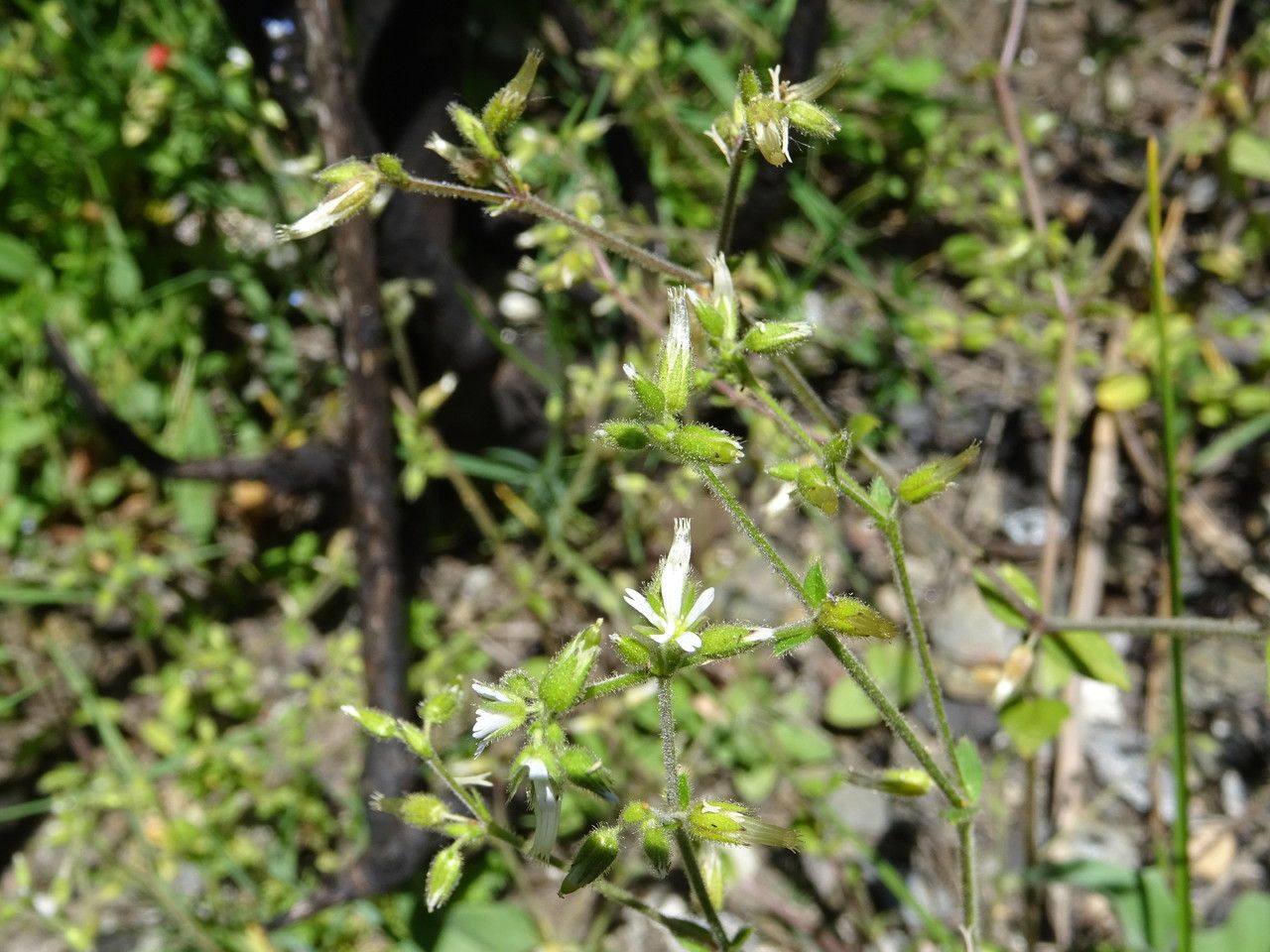
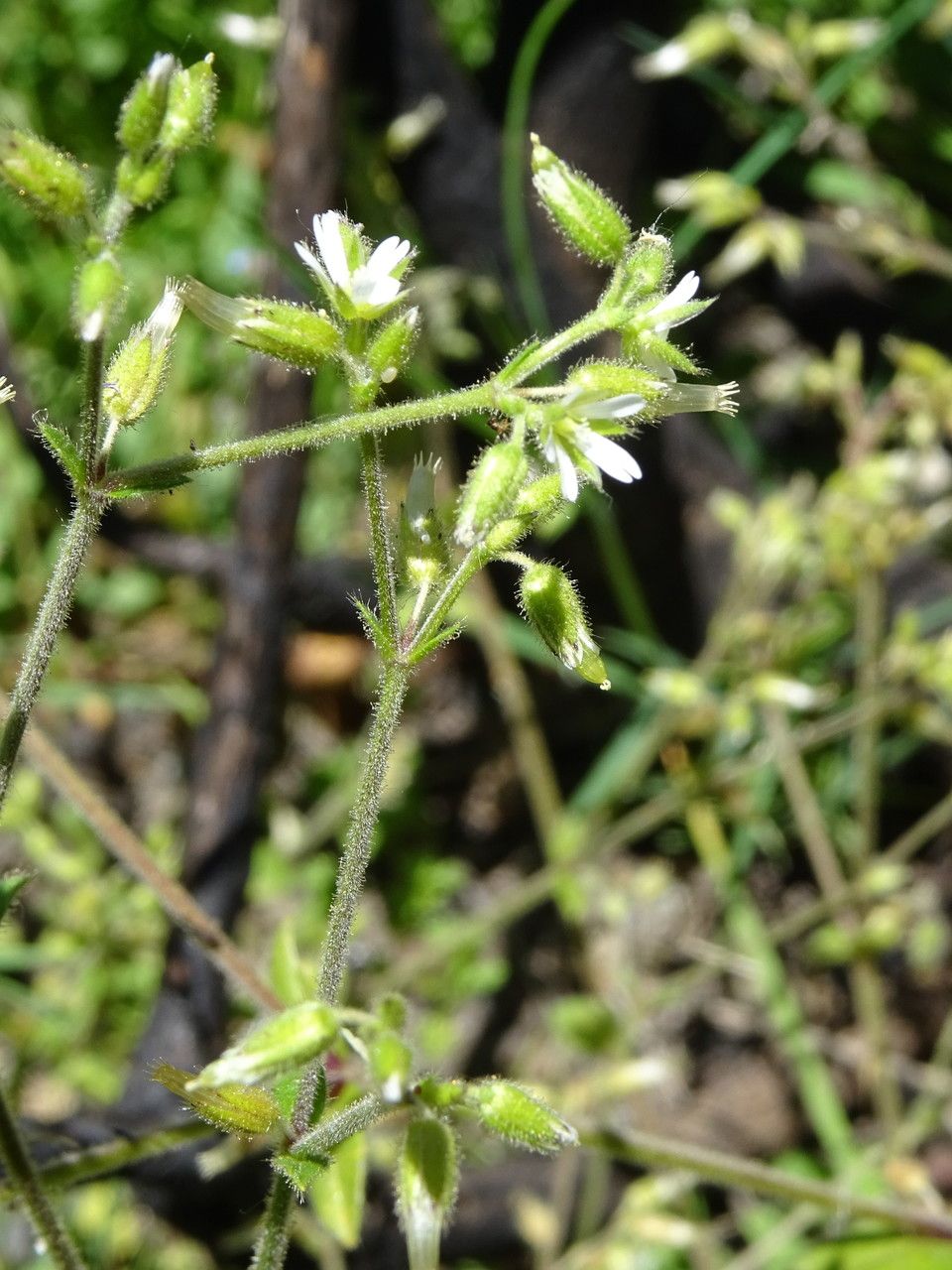
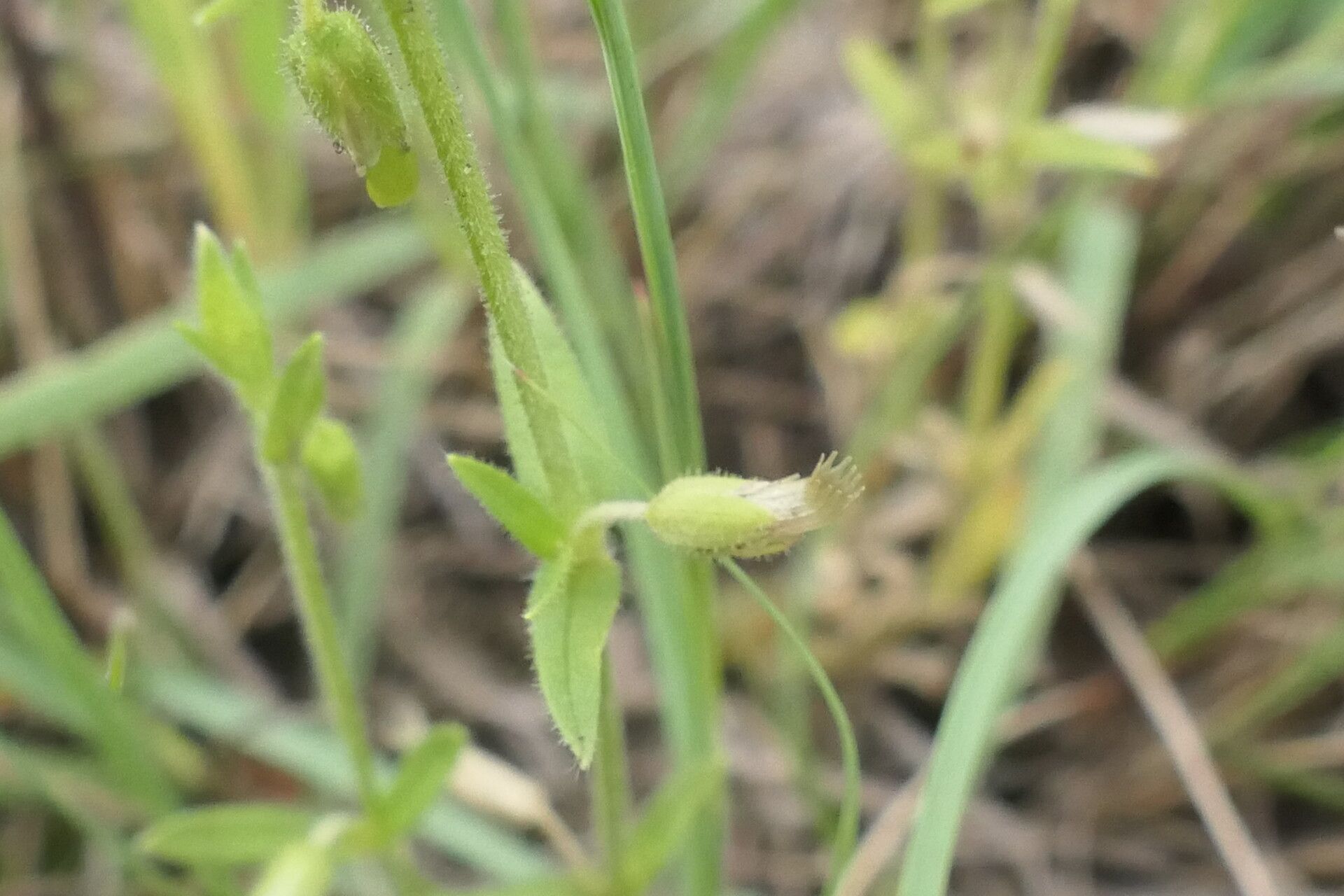
Cerastium glutinosum, commonly known as Sticky Mouse-ear Chickweed, is a perennial herbaceous plant in the family Caryophyllaceae. Native to Europe, it thrives in various habitats such as meadows, grasslands, and rocky slopes. The plant can grow up to 30 cm in height and has a spreading habit characterized by hairy, sticky stems.
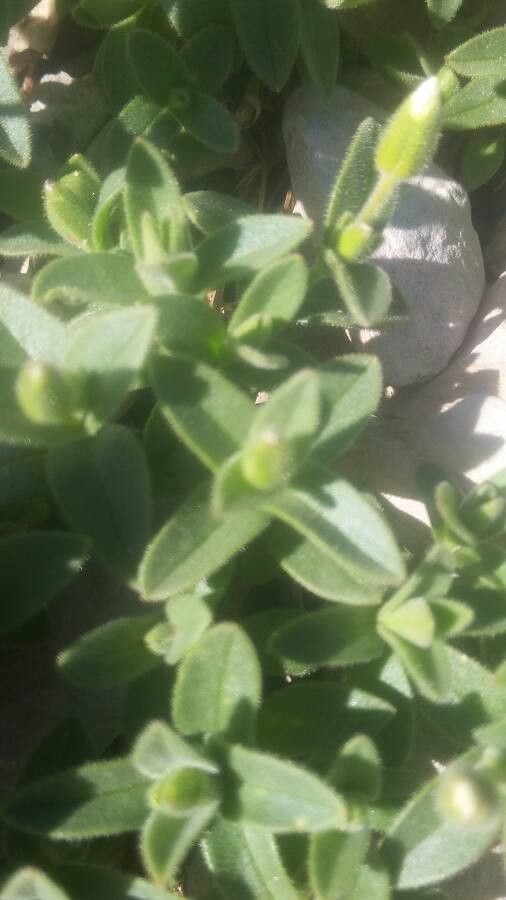
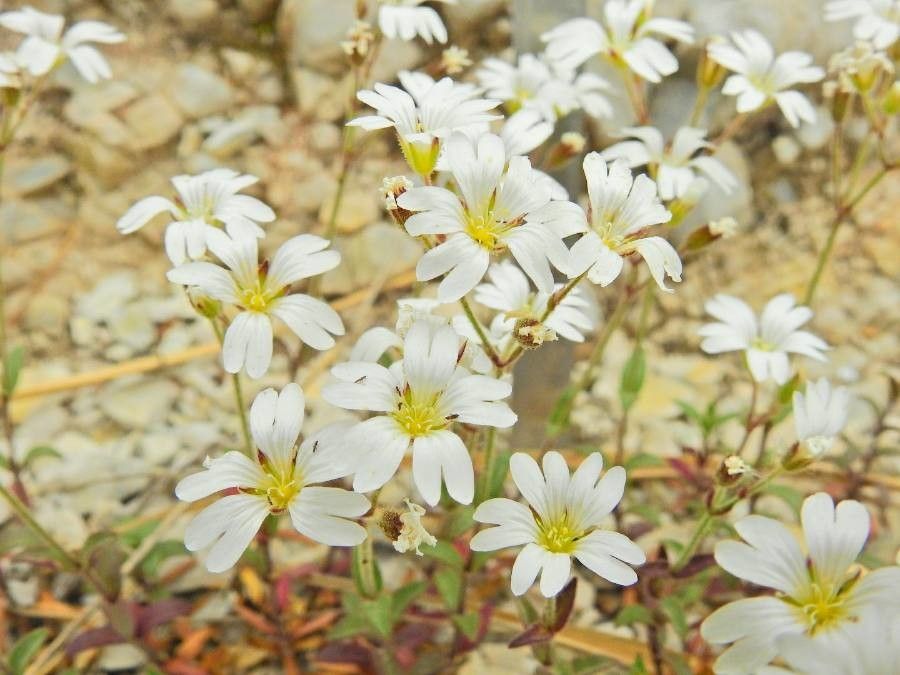
The leaves of Cerastium glutinosum are small, oval-shaped with pointed tips, and are arranged oppositely on the stem with short petioles. From May to August, the plant produces clusters of flowers at the end of each stem. These flowers have five white petals that are deeply notched at their tips.
Cerastium glutinosum serves as an important food source for various insects such as bees, butterflies, moths, and flies, which feed on its nectar or pollen. Additionally, birds consume its seeds, which ripen from July onwards.
The sticky nature of the plant’s stems aids in its ability to cling to other plants or objects for support, helping it grow upwards toward sunlight.
In traditional European medicine, including in Greece where it is known locally as "Kerasia," Cerastium glutinosum has been used to treat respiratory ailments like coughs and bronchitis. Its expectorant properties help to loosen phlegm buildup in the airways, making breathing easier.
Overall, Cerastium glutinosum is an attractive wildflower with significant ecological importance due to its role in supporting pollinators. Its medicinal properties add to its value, making it a beneficial addition to natural ecosystems throughout Europe and beyond.
Breitblttriges hornkraut shows good disease resistance and is typically not prone to illnesses. However, it can be vulnerable to pests and diseases present in its surroundings. These infections are generally not serious. For care, this plant needs moderate maintenance. It should be pruned regularly to keep a neat appearance and support healthy growth. Fertilizing can also help encourage flowering. Breitblttriges hornkraut is appropriate for anyone with outdoor space, such as a garden or patio, and does not demand extensive gardening experience. It may need more attention when grown indoors.
How to keep Cerastium Glutinosum.
Light
The perennial herbaceous plant, Breitblttriges hornkraut, is innately adaptable to open habitats, commonly found growing in meadows and grasslands. It holds a preference for exposure to bright, full sunlight, yet it demonstrates resilience in situations with only partial sun access.
Fertilizer
For Breitblttriges hornkraut, a one-time fertilizer application in the spring is typically enough, however, applying it several times can boost growth to its maximum. Provide nutrients every month to month and a half. Fertilizing improves the look and performance of the leaves, encouraging uniform color and robust texture. Furthermore, it promotes root development and nutrient uptake, contributing to the plant's overall well-being in the long run.
Botanical profile.
- Plant Type
- Herb
- Life Cycle
- Perennial
- Genus
- Cerastium
- Family
- Caryophyllaceae
- Hardiness Zone
- 4-8
- Mature Height
- 5 cm to 15 cm
- Mature Spread
- 10 cm to 30 cm
- Leaf Color
- Light Gray, Silver
- Leaf Type
- Evergreen
- Flower Color
- White
- Flower Size
- 1.52 cm to 2.03 cm
- Bloom Time
- Mid spring, Late spring, Early summer
- Planting Time
- Spring
- Harvest Time
- Summer
- Native Area
- Germany, Austria, Italy, Switzerland, Poland, Romania, France
Other names.