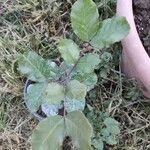
Ceratonia siliqua
خروب · Carob · Carob Tree · Locust-bean · St. John's-bread
Description
Source: leafsnapCeratonia siliqua, commonly known as the carob tree, is a flowering evergreen that belongs to the Fabaceae family. Native to the Mediterranean region, this tree can grow up to 15 meters tall. It features a broad, dense crown adorned with dark green, leathery leaves. The fruit of the carob tree, known as carob pods or locust beans, is long and narrow with a hard outer shell. These pods contain a sweet pulp that is used in a variety of food products including chocolate substitutes, syrups, and baked goods. The wood of Ceratonia siliqua is hard and durable, making it ideal for furniture making. Additionally, it has been utilized for centuries in traditional medicine for its anti-inflammatory properties. The carob tree plays a crucial role in Mediterranean ecosystems. It provides food for wildlife such as birds and insects and helps prevent soil erosion with its deep root system, which stabilizes soil on steep slopes. Overall, Ceratonia siliqua is an important plant species with numerous uses, ranging from food production to traditional medicine, while also offering ecological benefits within its native range.
🌳 Carob seeds have long been used in the leather industry as a natural softener. Aside from its culinary uses, the polymers in carob seeds are applied to enhance the texture and flexibility of leather products, highlighting the versatility of this often overlooked plant.
🎭 Modesty, coming back, being content with what you have
Care Guide
💧 Water Every 7 days
Adapted to the Mediterranean climate, the carob tree has a high tolerance for drought and thrives with minimal rainfall. Watering it every 1-2 weeks mimics natural conditions. As an evergreen, the carob tree needs consistent soil moisture for year-round growth. However, it's important to avoid overwatering to maintain its health.
How should I water my Carob tree in the best way?
Your Carob tree is not particular about the method you use to water it. You can use any common watering tool, such as a watering can, hose, or even a cup. It's important to water the soil directly and make sure that all areas of the soil are moistened evenly, so that all parts of the root system receive the water they need. To protect the plant, consider using filtered water instead of tap water, as tap water may contain harmful particles. Also, it's best to use water that is at or slightly above room temperature, as extreme temperatures can shock the Carob tree. However, the Carob tree generally responds well to any water it receives.
How frequently do I need to water my Carob tree?
Most outdoor plants can grow well with natural rainfall. However, if your area lacks rainfall, you should water your plants every 2 weeks in spring and fall. In summer, you'll need to water more frequently. In winter, when plant growth slows down, you can water less often, or even not at all. If your Carob tree is young or newly planted, it needs more water to establish and grow into a drought-tolerant plant. For potted plants, there are two main ways to determine watering frequency for your Carob tree. One way is to follow a predetermined schedule of watering, such as once a week or every other week. However, this may not always work well as it doesn't consider the specific environmental conditions for your tree. Another approach is to base watering frequency on soil moisture. In general, it's best to wait until the top several inches of soil, around 1/3 to 1/2 the depth of the pot, have completely dried out before watering again. Different seasons may affect watering needs, especially during the summer when the tree requires more water. So, adjusting your watering based on soil moisture is a good alternative.
How much water does my Carob tree require?
Watering your Carob tree may not always require a lot of water. If only a few inches of soil have dried since the last watering, giving it about five to ten ounces of water should promote healthy growth. You can also gauge the amount of water needed based on the moisture in the soil. Take note of how many inches of soil have dried between waterings. To ensure the tree receives enough moisture, water adequately to moisten all the dry soil layers since the last watering. If more than half of the soil is dry, consider giving more water until you see excess water draining from the pot's drainage holes. If your Carob tree is planted outdoors in a rainy area, it may not need additional watering. Young trees or those just getting established should receive 1-2 inches of rain per week. As the tree grows, it can rely solely on rainwater. However, in hot weather without rainfall for 2-3 weeks, it's advisable to provide a full watering to prevent stress.
How do I know if I'm giving my Carob tree enough water?
The Carob tree is often overwatered, which can be identified by yellowing leaves, leaf drop, and a shriveled structure. Overwatering can also lead to root rot. Conversely, an underwatered Carob tree will wilt and may have brown or brittle leaves. If you notice signs of either overwatering or underwatering, it is important to take action and restore the tree's health.
How should I water my Carob tree when it is growing at different stages?
The water needs of the Carob tree depend on its age and growth stage. Young seedlings require more water compared to mature trees. It is crucial to maintain consistently moist soil during the early stages to promote root development, the same applies when transplanting a Carob tree to a new location. Additionally, providing proper care can result in the tree producing beautiful flowers and fruits. During the flowering or fruiting phase, it may be necessary to increase watering slightly to support these structures.
☀️ Light Full sun
Carob grows best in full sun, though it can tolerate spots with less sunlight. It originates from sun-rich habitats, which support its strong growth. Both too much sun and too little light can hinder its health and development.
What are the sunlight requirements for a Carob tree?
The Carob tree, or Ceratonia siliqua, thrives best in full sunlight, requiring above 6 hours of sunlight daily, but it can also tolerate partial sun, with about 3-6 hours of sunlight. Its origin in sun-drenched environments aids its robust growth. However, both overexposure to the sun and inadequate sunlight can impede its health and development. It's essential to watch how sunlight moves through your garden and choose spots that offer a perfect balance of light and shade, ensuring the plants' happiness.
How can I compensate for insufficient natural light for my Carob tree?
When natural sunlight is insufficient, especially during winter or in less sunny spaces, artificial lighting becomes a crucial solution for maintaining optimal growth of Carob trees. LED lights are recommended because they can provide specific wavelengths of light needed by plants. Full sun plants require 30-50W/sq ft, partial sun plants need 20-30W/sq ft, and full shade plants should have 10-20W/sq ft of artificial light. The light source should be placed 12-36 inches above the plant to mimic natural sunlight and be kept on for 8-12 hours per day, depending on the plant species' natural daylight needs.
What are the common symptoms of light deficiency in Carob trees?
Carob trees show several symptoms when they suffer from inadequate light conditions, such as smaller new leaves, leggy or sparse growth, faster leaf drop, slower or no new growth, lighter-colored new leaves, chlorosis, sunscald, leaf curling, wilting, and leaf scorching. These symptoms indicate stress due to insufficient sunlight, affecting the plant's ability to photosynthesize and maintain its health.
How can I address sunlight-related issues for my indoor or outdoor Carob tree?
To ensure optimal growth for Carob trees facing sunlight-related issues, gradually move plants to sunnier locations, aiming for at least 6 hours of direct sunlight daily. For indoor plants, using a south-facing window or artificial lighting can help. Outdoor plants should be moved gradually to avoid sunburn. For plants grown in the ground, reducing obstructions like pruning trees can help. It's essential to choose the right timing for these actions, considering the plant's specific needs and the environment.
🌡️ Temperature 20–37.8°C
Carob favors temperatures from 68 to 100.4 ℉ (20 to 38 ℃). It originates in the Mediterranean region, where it grows in warm conditions. In summer, it is advisable to keep the tree in partial shade to avoid heat stress.
What are the ideal growing conditions for a Carob tree?
The Carob tree (Ceratonia siliqua), native to the Mediterranean region, thrives in a temperature range of 68 to 100.4°F (20 to 38°C). It loves warm temperatures and is extremely sensitive to cold. During summer, to prevent heat stress, it's advisable to keep the tree in partial shade. In autumn, Carob trees grown outdoors should be brought indoors, placed near a bright window but at a safe distance from heaters to avoid harm. Maintaining temperatures above the minimum suitable growth temperature during winter is beneficial for the plant's growth, while exposure to temperatures approaching the tolerable growing temperature minimum could be detrimental.
How do you manage a Carob tree in low temperatures?
Carob trees prefer warm temperatures and struggle in the cold, thriving best above the suitable growth temperature minimum. In winter, it's crucial to keep them above the tolerable growing minimum temperature. Exposure to temperatures below the growth limit causes leaves to lighten, and after frost damage, leaves turn brown or black with signs of wilting and drooping. To manage cold damage, trim off the frost-damaged parts and move the tree indoors to a warm spot preferably near a south-facing window for ample sunlight. It's important to avoid placing the plant near heaters or air conditioning vents to prevent air from getting too dry.
What should be done if a Carob tree is exposed to high temperatures?
In cases where a Carob tree is exposed to high temperatures, particularly above the tolerable growing temperature max, the leaves might lighten in color and the tree may become more susceptible to sunburn. To mitigate this, trim away sunburned and dried-up parts of the tree. Relocate the plant to an area that provides shade during the intense midday and afternoon sun to avoid further damage. Ensuring the soil remains moist by watering the plant in the morning and evening will also help in reducing stress from high temperatures.
💨 Humidity
🪴 Soil 6-7
🌱 Fertilizer
Fertilization is essential for caring for Carob. Regular feeding during the growing season maintains the energy required for its showy leaves and supports overall growth. Failing to fertilize can lead to unhealthy leaves, reduced ornamental value, and stunted or weak growth that is prone to breaking.
Why is it important to put fertilizer on my Carob tree?
Regular fertilization is necessary for Carob trees because their showy leaves require substantial energy for production and maintenance. The challenge lies in allocating enough energy not only to keep the leaves healthy, but also to support the growth of stems, branches, roots, and other vital structures. Neglecting fertilization can lead to two possible outcomes. Firstly, the leaves may lose their natural color and texture, becoming visibly unhealthy and diminishing the tree's ornamental appeal. Secondly, overall growth may slow down or become weak, making the tree more susceptible to breakage.
When should I fertilize my Carob tree?
To ensure the optimal growth of your Carob tree, occasional feedings are recommended, eliminating the need for a fixed feeding schedule upon planting. One convenient method of fertilizing is to apply the fertilizer while watering the plant at certain times. Additionally, it is essential to provide your Carob tree with an adequate amount of water during the growing season. Feeding the tree once every two-three weeks should suffice, maintaining this frequency throughout the period of new growth.
When is it best to not put fertilizer on my Carob tree?
For most of the year, you can fertilize your Carob tree on a regular schedule. This includes the active growing season of spring, summer, and early fall. However, during the winter, it's important to refrain from fertilizing the plant. During this time, the Carob tree goes into a dormant growth phase, where it either doesn't grow at all or only grows a little. Because there is minimal growth and the tree uses less energy, there is no need for fertilization during the winter.
What kind of fertilizer does my Carob tree require?
The fertilizer for a Carob tree needs a specific blend of nutrients, with each nutrient present in relatively low amounts. An ideal fertilizer has an N-P-K ratio of 3-1-2. However, in some cases, a general-purpose fertilizer with an even blend of nutrients can also work well. But even with a balanced fertilizer, the volume of each nutrient should be 3 or lower. You can choose between granular or liquid-based fertilizer for your Carob tree. If you opt for liquid fertilizer, it is often best to dilute it by half. Granular fertilizer has few downsides, but it is usually more sensible to use liquid fertilizer, especially when you water your Carob tree.
How do I give my Carob tree plant food?
To fertilize a Carob tree easily, you have two options. The first is to feed it whenever you water the tree. To do this, gather your fertilizer and a water container, like a watering can. Dilute the strength of the fertilizer by mixing it with water, and then pour the mixture onto the soil, allowing it to reach the roots. Alternatively, you can use a granular fertilizer. Simply sprinkle it onto the soil where your Carob tree is planted. Granular fertilizers are slow-release, so you won't have to fertilize as often as you would with a liquid fertilizer. Whichever method you choose, remember to water the tree while you feed it.
🪴 Pot & Repot Every 12 months
✂️ Pruning
The carob tree benefits from annual pruning, which should be done from early to late winter. Focus on removing dead or overcrowded branches to enhance airflow and sunlight exposure. This practice helps support the tree’s structure for bearing heavy pods, reduces the risk of disease, and promotes vigorous growth. For more detailed guidance, refer to the Royal Horticultural Society.
🌿 Propagating
🐛 Diseases & pets
☠️ Toxicity
Characteristics
- Plant Type
- Tree
- Life Cycle
- Perennial
- Genus
- Ceratonia
- Family
- Fabaceae
- Hardiness Zone
- 9-11
- Mature Height
- 14.94 m
- Mature Spread
- 10.06 m
- Leaf Color
- Green
- Leaf Type
- Evergreen
- Flower Color
- Red
- Flower Size
- 0.51 cm to 1.27 cm
- Bloom Time
- Mid summer
- Planting Time
- Spring, Autumn
- Harvest Time
- Early spring, Mid spring, Mid summer, Late summer, Fall, Winter
- Native Area
- Libya, Turkey, Tunisia, Montenegro, Cyprus, Greece, Croatia, Morocco, Yemen, Lebanon, Serbia, Iraq, Syria, Italy, Spain, Iran, Albania, Algeria, France