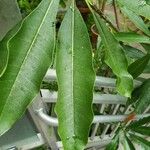
Cerbera manghas
Rubbertree · Beach milkwood · Madagascar ordeal-bean · Grey milkwood · Pink-eyed cerbera
Description
Source: leafsnapCerbera manghas, the sea mango, is a small evergreen coastal tree growing up to 12 metres (39 ft) tall. It is native to coastal areas in Africa, Asia, Australasia, and the Pacific islands. It is classified as one of the three species in the genus Cerbera that constitute as mangroves.
🌳 The plant's seeds and leaves contain potent toxins; although this renders them unsuitable for direct use, the unusual adaptation draws scientific interest. Rubbertree has a beauty that has made it an appealing yet dangerous ornamental in gardens, subtly illustrating the dichotomy between allure and peril in the botanical world. Moreover, research has suggested that rubbertree could potentially be used as a bioindicator for certain soil conditions, highlighting its remarkable capacity to intertwine with its environment.
Care Guide
💧 Water Every 2 weeks
Rubber trees thrive in environments similar to the tropics, where they have access to consistent moisture. Although they can handle brief periods of dryness, it's important to water them every two weeks. Make sure the soil dries out slightly between waterings to prevent root rot. Increased humidity is also beneficial for their health. You can achieve this by regularly misting the leaves or placing the pot on a tray filled with pebbles and water.
How should I water my Rubbertree to make it grow well?
Watering your Rubbertree is quite simple as it is not particular about your choice of watering tool. You can use common tools like watering cans, hoses, or even cups to water the plant effectively. It is important to water the soil directly, regardless of the tool you use. Make sure to evenly moisten all areas of the soil to ensure all parts of the root system receive the necessary water. Using filtered water is recommended as tap water may contain harmful particles for the plant. Additionally, it is best to use water at or slightly above room temperature to avoid shocking the Rubbertree. However, it generally responds well to any water you provide.
What should I do if I give my Rubbertree too much water or too little water?
Outdoor plants, especially newly planted ones or seedlings, can suffer from insufficient watering. It's important to consistently water them for a few months while they are small or newly planted, as they rely on rain once their roots are established. However, overwatering is a common issue when potted plants are involved. If you accidentally overwater your potted Rubbertree, take immediate action. Stop watering the plant right away to minimize the impact of overwatering. Then, take the plant out of the pot and check its roots. If there is no root rot, you can return the plant to its container. If there is root rot, trim affected roots and consider applying a fungicide. Repot the Rubbertree in well-draining soil. On the other hand, if your Rubbertree is underwatered, simply increase the frequency of watering. Drooping and drying leaves are signs of underwatering, but they will recover quickly once the plant receives sufficient water. Adjust your watering routine promptly if you notice underwatering.
How many times should I water my Rubbertree?
Most plants can grow naturally with rainfall, but if your area lacks rainfall, you should water them every 2 weeks in the spring and fall, and more often in the summer. In the winter, water them sparingly as they need less water. If you have a young or newly planted Rubbertree, water it more frequently to help it establish and grow. For potted plants, there are two ways to determine how often to water your Rubbertree. One way is to set a predetermined watering schedule, such as once a week or every other week. However, this may not always work due to the unique conditions of your Rubbertree's environment. Another option is to water based on soil moisture. Wait until the top 2-4 inches of soil have dried out before watering again.
How much water should I give my Rubbertree?
When watering your Rubbertree, you may be surprised to learn that it doesn't always require a lot of water. Instead, if only a few inches of soil have dried out since the last watering, you can support healthy growth by giving it about five to ten ounces of water each time. You can also base the amount of water on the moisture of the soil. Keep track of how many inches of soil have dried between waterings. To ensure the Rubbertree gets enough moisture, water it enough to moisten all the dry soil layers since the last watering. If more than half of the soil has dried out, consider giving more water. In that case, keep adding water until you see excess water draining from the pot's drainage holes. If your Rubbertree is planted in an area that receives sufficient rain, it may not need additional watering. When the tree is young or establishing, make sure it receives 1-2 inches of rain per week. As it grows, it can rely solely on rainfall unless there is a hot spell without rain for 2-3 weeks. In that situation, give your Rubbertree a full watering to prevent stress.
How do I know if I'm giving my Rubbertree enough water?
Overwatering is a widespread issue for the Rubbertree, and there are several signs to watch for. An overwatered Rubbertree typically has yellowing leaves, and it may even shed some leaves. Additionally, overwatering can cause the plant's overall structure to shrink and can encourage root rot. Conversely, an underwatered Rubbertree will also start to droop. Its leaves may also turn brown or become brittle. Regardless of whether you notice signs of overwatering or underwatering, it is important to take action and restore the health of your Rubbertree.
☀️ Light Full sun
Rubbertree does best with constant sunlight, although it can tolerate locations with somewhat reduced illumination. Since it comes from environments with strong sun, limited light can hinder its growth. Excessive shading leads to poor development, while too much sun exposure can cause leaf scorch.
What are the sunlight requirements for a Rubbertree?
The Rubbertree requires full sun, which is defined as over 6 hours of sunlight per day, but it can also tolerate partial sun, about 3-6 hours of sunlight. It's important to observe how sunlight travels through your garden to find the optimal balance of light and shade for your plants. Originating from areas with a strong presence of sunlight, the Rubbertree's growth can be negatively affected by limited light, leading to poor development. Excessive shading or too much exposure can result in problems such as leaf scorch.
How does artificial lighting support Rubbertree growth indoors?
Indoor Rubbertree plants require adequate lighting for optimal growth. When natural sunlight is insufficient, especially in winter or in less sunny spaces, artificial lights become essential. They can promote faster, healthier growth by offering a vital solution. LED lights are popular for indoor planting as they provide specific wavelengths needed by the plants. Full sun plants require 30-50W/sq ft of artificial light, partial sun plants need 20-30W/sq ft, and full shade plants need 10-20W/sq ft. The light source should be placed 12-36 inches above the plant, mimicking natural sunlight. Most plants need 8-12 hours of light per day.
What are the symptoms of inadequate lighting for a Rubbertree?
Symptoms of light deficiency in a Rubbertree include small new leaves, leggy or sparse growth, faster leaf drop, slower or no new growth, lighter-colored new leaves, chlorosis (leaves turning yellow due to chlorophyll breakdown), sunscald, leaf curling, wilting, and leaf scorching. These symptoms indicate that the plant is not receiving sufficient sunlight for its needs and may suffer from poor photosynthesis and overall health.
What solutions exist for Rubbertree plants suffering from inadequate light?
For Rubbertree plants indoors struggling with light, gradually moving them to sunnier spots to ensure at least 6 hours of sunlight daily is recommended. Using a south-facing window and keeping curtains open during the day maximizes sunlight exposure. If the plant is large or not easily movable, consider artificial lighting, keeping lamps on for at least 8 hours a day. Outdoors, plants should be moved gradually to prevent sunburn. Reducing obstructions, like pruning trees that block sunlight, or transplanting smaller plants to sunnier locations during their dormant period ensures better sunlight access. Note that parts of the plant damaged by insufficient light might not recover, but new growth with increased light exposure will be healthy.
🌡️ Temperature 20–35°C
Rubbertree is a plant that comes from environments with a moderate temperature range of 68 to 95 °F (20 to 35 ℃). Because it prefers warmth, large temperature swings can affect its growth. During colder periods, keeping a warmer atmosphere is recommended for its health.
What is the origin and preferred temperature range of the Rubbertree?
The Rubbertree, botanically known as Cerbera manghas, originates from environments with moderate temperatures ranging from 68 to 95°F (20 to 35°C). It prefers warm conditions and may be affected by major temperature fluctuations. Maintaining a warmer atmosphere during colder seasons is beneficial to its health, as it is extremely heat-loving and adversely affected by cold temperatures.
How should Rubbertree be cared for during colder seasons?
During the colder seasons, it's recommended to bring Rubbertree plants grown outdoors indoors and place them near a bright window but at a certain distance from heaters to avoid drying out. To support its growth, maintaining indoor temperatures above 20°C, especially during winter, is crucial, as temperatures approaching 5°C can be harmful to the plant.
What are the symptoms of low-temperature damage in Rubbertree, and how can it be treated?
Rubbertree plants are not tolerant of low temperatures and thrive best above 20°C. Exposure to temperatures below 1°C can lead to leaves lightening in color, which after frost damage, gradually turn brown or black, accompanied by wilting and drooping. To treat cold damage, trim off the frost-damaged parts and immediately move the plant indoors to a warm environment. Place the plant near a south-facing window for ample sunlight, ensuring it's not placed too close to heaters or air conditioning vents to prevent excessive dryness.
What are the effects of high temperature on Rubbertree, and what measures should be taken?
Rubbertree should ideally be kept under 35°C during the summer. Temperatures exceeding 41°C can result in the leaves' color lightening and increased susceptibility to sunburn. If sunburn occurs, trim the sunburned and dried parts of the plant, move it to a shaded location away from the midday and afternoon sun, and ensure the soil remains moist by watering the plant in the morning and evening.
💨 Humidity
🪴 Soil 6-7
🌱 Fertilizer
The ideal time to fertilize a Rubbertree is in early spring when it comes out of dormancy. This encourages overall growth and flower development. Fertilization improves the foliage, stems, and branches, and promotes large, vibrant, long-lasting flowers. It helps transfer nutrients from the roots to the flowers and enhances the plant's health and resistance to disease.
Why should I put fertilizer on my Rubbertree?
Fertilization plays a crucial role in promoting the overall health and well-being of a Rubbertree. By providing the necessary energy and nutrients, the Rubbertree can develop an abundance of healthy foliage and strong stems and branches. Additionally, gardeners often find the flowers of the Rubbertree to be immensely valuable. Luckily, fertilization can also enhance the production of large, vibrant, and long-lasting flowers. This is because the right type of fertilizer enables efficient fuel transfer from the roots to the stems and flowers of the Rubbertree. Proper fertilization not only enhances flower growth but also maintains the plant's overall health, allowing it to better fend off diseases.
When should I put fertilizer on my Rubbertree?
To ensure optimal growth and flower development for your Rubbertree, it is best to fertilize it during early spring as it emerges from its dormant phase and prepares to bloom. This initial feeding provides ample energy for overall growth. However, it is not the only time to fertilize your plant. A second smaller feeding at the end of the season, during fall, can also benefit the Rubbertree. Additionally, some gardeners opt to fertilize the plant during planting, but this step is not always essential.
When is the best time to not fertilize my Rubbertree?
Rubbertrees, like many plants, do not require fertilization during the winter. During this dormant phase, Rubbertrees do not need much energy from the soil to grow new leaves, so fertilizing during this time increases the risk of overfertilization. The best times to feed a Rubbertree are in early spring and fall. This means that during most of spring and summer, the plant does not need fertilizer. It's also a good idea to avoid feeding if the plant is experiencing extremely hot or dry conditions.
What kind of plant food does my Rubbertree need?
When fertilizing Rubbertree plants, it is generally recommended to use a specific type rather than a general-purpose fertilizer with balanced amounts of nitrogen, phosphorus, and potassium. Nitrogen and phosphorus are the most important nutrients for Rubbertrees, so they should make up a larger portion of the fertilizer compared to potassium. A fertilizer with an N-P-K ratio of 10-10-8 or something similar is ideal. Additionally, applying organic material like compost during one of your yearly feedings can be beneficial. If you decide to use fertilizer, granular fertilizer is the most commonly used type for Rubbertrees.
How can I make my Rubbertree healthier by adding fertilizer?
Applying fertilizer for your Rubbertree is an easy task that any gardener, even those with minimal experience, can do. To feed your Rubbertree with granular fertilizer, simply sprinkle it on the soil after moistening it with water. If you want to amend the soil of your Rubbertree plant with organic materials like compost or manure, place some of the material on top of the soil. Then, gently work the material into the first few inches of soil using a hand rake, being careful not to disturb the roots.
🪴 Pot & Repot
✂️ Pruning
The rubbertree is a tropical evergreen known for its glossy leaves and fragrant flowers. It should be pruned from early to late winter while it is dormant. During pruning, remove any dead branches and thin out crowded areas. This promotes healthy growth and improves air circulation. Always use clean, sharp tools to reduce the risk of disease.
🌿 Propagating
🐛 Diseases & pets
☠️ Toxicity
Characteristics
- Plant Type
- Tree
- Life Cycle
- Perennial
- Genus
- Cerbera
- Family
- Apocynaceae
- Hardiness Zone
- 10
- Mature Height
- 7.62 m to 10.67 m
- Mature Spread
- 6.1 m to 7.92 m
- Leaf Color
- Dark Green
- Leaf Type
- Evergreen
- Flower Color
- White, Pink
- Flower Size
- 2.54 cm to 5.08 cm
- Bloom Time
- Early summer, Mid summer
- Planting Time
- Summer, Autumn
- Harvest Time
- Early spring, Mid spring, Late summer, Fall, Winter
- Native Area
- Malaysia, Philippines, Madagascar, Bangladesh, Fiji, Brunei, Tanzania, China, Indonesia, Cambodia, Vietnam, Myanmar, Japan, Singapore, Thailand