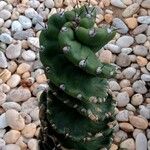
Cereus forbesii
Spiral Cactus
Description
Source: leafsnapCereus forbesii, commonly known as the Forbes' columnar cactus, is a species native to South America. This cactus is tall and slender, reaching heights of up to 10 feet and diameters of about 4 inches. Its stem is ribbed and adorned with sharp spines that can grow up to 2 inches long. During the summer, the Cereus forbesii produces striking white flowers that bloom at night. These large, fragrant blooms can measure up to 6 inches in diameter, adding a touch of beauty to any garden or home. This cactus is remarkably low-maintenance and thrives in hot, dry conditions with minimal water. It prefers well-draining soil and full sun exposure but can also tolerate partial shade. Traditionally, indigenous people have used Cereus forbesii medicinally to treat various conditions such as fever, inflammation, pain, and digestive issues. Overall, Cereus forbesii is an attractive ornamental plant that makes a unique addition to any garden or collection of exotic plants. Its distinctive shape and beautiful blooms make it an excellent choice for garden enthusiasts and collectors alike.
Care Guide
💧 Water Every 7 days
In the heat of summer, the plant needs regular watering. During winter, water just enough that the soil (mixture) doesn’t completely dry out. This cactus requires more water than the other, normal cacti. Too much shade or less watering might change the color of your plant and make it gray (sometimes even pale). Keep an eye on your plant and water it as much as it wants, but make sure not to overwater the plant.
☀️ Light Full sun
Native to arid regions, Cereus forbesii thrives in full sun; its natural habitat is marked by strong sunlight and minimal shade. It also tolerates partial sun, giving it some adaptability in its growth.
🌡️ Temperature 20–37.8°C
Cereus forbesii prefers warm conditions and requires relatively high temperatures during the growing season to support growth and metabolic processes. It likes plenty of sunlight, suitable moisture levels, and good air circulation. However, it is vulnerable to damage from very low temperatures and from overwatering. It’s important to keep conditions balanced and to avoid both excessively high heat and overly dry conditions.
💨 Humidity
🪴 Soil 6-7
🌱 Fertilizer
For Cereus forbesii, small amounts of fertilizer applied once or twice a year during the growing season are adequate. Do not fertilize in winter and summer when the plant is dormant. Cut back on fertilizer for repotted plants and wait a couple of months after repotting before resuming feeding. Fertilizing promotes healthy growth and encourages flowering.
🪴 Pot & Repot 2-3 years
Repot Cereus forbesii in spring or summer, choosing a pot a little larger than the current one with good drainage. Use a well-draining, sandy or gritty cactus mix. Handle the plant carefully to avoid its spines. Allow the cactus to dry out before repotting to prevent root rot. After repotting, wait one week before watering to let the roots heal.
✂️ Pruning
🌿 Propagating
🐛 Diseases & pets
☠️ Toxicity
This plant is not considered toxic to people or pets. However, in case that someone has consumed or eaten the plant and feels off, consult their doctor immediately.
Characteristics
- Plant Type
- Succulent, Shrub
- Life Cycle
- Perennial
- Genus
- Cereus
- Family
- Cactaceae
- Hardiness Zone
- 9-11
- Mature Height
- 3.05 m to 6.1 m
- Mature Spread
- 0.91 m to 2.13 m
- Leaf Color
- Dark Green
- Leaf Type
- Evergreen
- Flower Size
- 15.24 cm to 20.32 cm
- Bloom Time
- Summer, Early fall
- Planting Time
- Spring, Summer, Autumn
- Harvest Time
- Late summer, Fall
- Native Area
- Bolivia