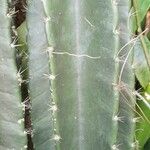
Cereus hexagonus
Queen-of-the-night · Tall columnar cactus · Blue cereus · Lady of the night cactus · Columnar cactus
Description
Source: leafsnapCereus hexagonus, commonly known as the Queen of the Night cactus, is a cactus species native to South America. It is a columnar cactus that can grow up to 10 meters tall and 15-20 centimeters in diameter. The stem has six sides and is covered with small spines, which are usually white or yellowish. The Queen of the Night cactus blooms at night, producing large white flowers that can reach up to 30 centimeters in diameter. These fragrant flowers attract moths for pollination. This plant prefers well-draining soil and full sun exposure but can also tolerate partial shade. It requires minimal watering during its dormant period but needs regular watering during its growing season. For centuries, indigenous people have used Cereus hexagonus for medicinal purposes. Various parts of the plant have been used to treat ailments such as fever, inflammation, and pain. Overall, Cereus hexagonus is a stunningly beautiful plant with unique characteristics, making it an interesting addition to any garden or collection.
💡 The Blue Cereus (Cereus hexagonus) is a columnar cactus native to Ecuador and Venezuela. It can grow up to 15 meters tall and produces pale red edible fruits.
🌳 By flowering at night with large, scented blossoms that supply important nectar, blue cereus plays a key role in supporting nocturnal pollinators like bats and moths. These pollinators are essential for pollinating many plants, helping to maintain ecosystem balance and biodiversity. Aside from its ecological functions, the distinctive nighttime flowering of blue cereus intrigues botanists and has prompted studies into the evolutionary benefits of nocturnal pollination strategies.
Care Guide
💧 Water Every 7 days
Blue cereus, native to arid regions, is highly drought-tolerant and thrives with minimal moisture. It needs deep watering every three weeks. Well-suited for xeric landscapes and rock gardens, blue cereus benefits from well-draining soil, which prevents root rot and mimics its natural dry habitat.
How should I water my Blue cereus plant?
To water this species effectively, it is recommended to water from the bottom. This allows for proper absorption by the roots and helps nutrients circulate throughout the plant. Avoid spilling water on the top as this can lead to diseases and fungi. When using sprinklers, opt for small ones if you have Blue cereus in your garden. Revolving sprinklers are ideal as they allow you to adjust the water delivery patterns. Avoid using sprinklers on windy days. Regardless if the Blue cereus is in a pot or in your garden, use the soak and dry method for watering. This ensures that moisture is evenly distributed to the root systems, promoting healthier growth. Some owners may consider a built-in drainage system for their succulents. This includes placing porous materials like recycled glass or hydro stones beneath the soil. These materials act as reservoirs for excess water, but be cautious not to overwater these built-in systems.
What should I do if I give my Blue cereus plant too much or too little water?
If you notice that the Blue cereus is turning yellow, it could be due to either underwatering or overwatering. Overwatering can lead to fungal infections, so it's important to let everything dry out and avoid excessive watering. On the other hand, if the plant is not receiving enough water, you may see yellow tips forming on the stems and branches. When buying a Blue cereus, make sure to ask if the soil drains properly or if it is sandy. If the topsoil doesn't drain well, the plant may not get enough water in the future. Additionally, the Blue cereus doesn't do well with too much water, so if it's constantly overwatered or exposed to heavy rain when planted outside, it can die. Using rainwater or distilled water is preferable to water with high mineral content. If you notice squishy stems, drooping growth, or discolored parts, it means there is too much moisture. In such cases, it's important to give the plant time to recover and allow the pot to dry. Transferring it to a different container can help prevent root rot and dripping. If the plant is planted outside, consider transferring it to a pot, especially during the winter, to aid in its recovery.
How often should I give water to my Blue cereus plant?
Watering frequency for succulents can vary depending on the season. In the summer and spring, you typically only need to water them once every two to three weeks. However, during the winter and fall, it's best to reduce or avoid watering altogether since these plants become dormant. It's important to let the soil dry completely before watering again. It's better to slightly underwater than to overwater. When potted, deep watering at intervals promotes healthier soil growth. When planted outdoors, avoid watering lightly as this encourages shallow root growth. Instead, wait a few weeks and only water when the surrounding soil is too dry.
How much water does my Blue cereus plant need?
To efficiently water your succulent, cover the entire pot and place a saucer at the bottom to provide adequate moisture to the roots. Remove the saucer as soon as you notice the soil becoming saturated. The frequency and amount of water needed for your plant depend on the pot's holes and soil volume. Generally, a can of water is sufficient for potted Blue cereus plants. If planted in the garden, consider the rainwater they receive, as about an inch can sustain them for a few weeks without additional watering. When outdoors, water them in the morning with a gallon of water after the soil has become completely dry to allow excess moisture to evaporate in the sunlight.
Why do I need to water my Blue cereus?
Watering the Blue cereus is essential for the plant's overall health. It allows the necessary nutrients to be transported from the soil throughout the plant. Insufficient moisture can lead to poor health or malnourishment in the Blue cereus. It is important to water the plant when you notice signs of thirst. However, it is crucial not to overwater, as this can cause harm. The recommended watering method for the Blue cereus is the soak and dry method. When the soil appears too dry, soak the plant until water begins to drip from the pot. Afterward, allow the soil to rest for several weeks without watering.
☀️ Light Full sun
The blue cereus thrives with prolonged sun exposure and also tolerates moderate sunlight. Native to sunlit environments, it develops vigorously. Too much sun can scorch its leaves, while too little light restricts growth and fades its bright color.
What are the sunlight requirements for Blue Cereus?
Blue Cereus thrives in environments with extensive sunlight exposure, favoring full sun conditions of above 6 hours of direct sunlight daily. It can also adapt to partial sun conditions with about 3-6 hours of sunlight. The plant's origins in sun-drenched habitats contribute to its robust growth, though overexposure might scald the leaves, and insufficient light could stunt growth and dim its vibrant color. It's advised to observe your garden's sunlight patterns to ensure plants receive the ideal balance of light and shade.
How does artificial lighting benefit indoor plants like Blue Cereus?
Artificial lighting is crucial for indoor plants, especially when natural sunlight is insufficient. For optimal growth, the right type of light, such as LED, offers a solution by providing the specific wavelengths plants need. Full sun plants require 30-50W/sq ft of artificial light, partial sun plants need 20-30W/sq ft, and full-shade plants need 10-20W/sq ft. Installing the light 12-36 inches above the plant replicates natural sunlight, and most plants will need 8-12 hours of artificial light daily to mimic natural daylight hours.
What are the symptoms of inappropriate light exposure in Blue Cereus?
Symptoms of poor lighting in Blue Cereus include smaller new leaves, leggy or sparse growth, faster leaf drop, slowed or ceased growth, and lighter-colored or chlorotic leaves. These signs indicate either too little or too much light. For example, chlorosis and sunscald occur from excessive light, harming the plant's ability to photosynthesize. Conversely, inadequate light leads to less chlorophyll and essential nutrients, visible in the plant's diminished vibrancy and health.
What solutions can help Blue Cereus with light exposure issues?
To address light exposure issues for Blue Cereus, indoors, you may need to gradually move the plant to a sunnier spot, aiming for at least 6 hours of direct sunlight daily, or use artificial lighting for at least 8 hours a day. Outdoors, moving plants to sunnier locations gradually helps avoid sunburn. Removing obstructions like overhanging branches can improve sunlight access. For ground plants, transplanting them during their dormant period to a location with ample sunlight could also be beneficial. It's important to note that damaged parts might not recover, but new growth should be healthy with proper light adjustment.
🌡️ Temperature 20–41.1°C
Blue cereus prefers warm conditions and needs higher temperatures during the growing season to support growth and metabolism. It thrives with plenty of sunlight, correct moisture levels, and good airflow. However, it can be damaged by very low temperatures and by overwatering. It's also important to maintain balance and avoid excessively high temperatures or overly dry conditions.
What are the essential growing conditions for Blue cereus?
Blue cereus thrives in warm environments and benefits from higher temperatures during its growing season to enhance growth and metabolism. It requires ample sunlight, appropriate moisture levels, and good ventilation. However, it is vital to avoid excessively low temperatures and overwatering to prevent damage. The plant loves heat but enters a dormant state in winter, ceasing growth. To protect it when temperatures drop below 5°C, it should be moved indoors, preferably near a south-facing window for maximum sunlight exposure. Supplemental lighting can be used if natural light is insufficient. Watering should be reduced or stopped when temperatures fall below 20°C to prevent root rot, and outdoor plants should not be watered at all in low temperatures. Temporary greenhouses or protective wraps can help insulate outdoor plants in cold weather.
How should I care for Blue cereus in low temperatures?
Blue cereus prefers high temperatures and struggles in cold weather, growing best above 20°C and requiring temperatures to stay above 5°C during winter. Exposure to temperatures below 1°C can weaken the plant, causing wilting and making it prone to root rot. Frost damage may initially show no symptoms, but the plant will gradually wither. If frostbite occurs, trim the affected areas and check for root rot, cutting off rotted roots as necessary. Propagate through cuttings if required. Move the plant to a warm indoor environment near a south-facing window for enough sunlight, and use supplemental lighting if natural light is insufficient.
What steps should be taken if Blue cereus is exposed to high temperatures?
During summer, it's important to keep Blue cereus below 41°C, as temperatures exceeding 45°C halt its growth, leading to water loss, wilting, and an increased risk of sunburn. To assist recovery, remove any sunburned or rotten parts and protect the plant from intense afternoon sunlight until it begins to grow again. In the case of root rot, cease watering until new roots form. These actions help the plant recover and thrive despite high temperature exposure.
💨 Humidity
🪴 Soil 6-7
🌱 Fertilizer
For Blue cereus, apply light doses of fertilizer one to two times a year during the growing season. Do not fertilize in winter or summer when the plant is dormant. Use less fertilizer for recently repotted plants and wait a couple of months after repotting before applying any fertilizer. Fertilizing promotes healthy growth and encourages blooming.
Why should I put fertilizer on my Blue cereus?
Fertilizing Blue cereus provides nutrients for the plant and supports healthy growth during the growing season. It can also stimulate blooming in mature specimens.
When should I fertilize my Blue cereus for the best results?
Blue cereus plants require a small amount of fertilizer during the growing season. Ideally, they should be fertilized 1-2 times per year, specifically in the spring and autumn. Avoid fertilizing during the dormant periods of winter and summer. When repotting, be cautious and decrease the amount of fertilizer used. Additionally, it's recommended to wait a few months after repotting before applying any fertilizer.
When is it not a good idea to use fertilizer on my Blue cereus?
Blue cereus, like other plants, experiences periods of dormancy. During these times, such as in the summer and winter, it ceases to grow, making it necessary to halt the application of fertilizer. It is also advised to refrain from fertilizing for a few months after repotting in the spring.
Which fertilizer should I use for my Blue cereus plant?
To properly fertilize Blue cereus, it is recommended to use a liquid plant food specifically made for succulents and cacti. When applying the fertilizer, mix it with water to create a half-strength solution to avoid excessive buildup in the soil. Ensure the fertilizer is applied to the base of the plant and water the plant thoroughly, making sure any excess moisture drains from the container or seeps into the ground.
How should I fertilize my Blue cereus plant?
When fertilizing Blue cereus, it is preferable to use liquid plant food, although granules can also be used. Follow the instructions on the packaging, making sure to dilute liquid fertilizers to half-strength. Regardless of whether you are using granules or liquid plant food, always apply it to the soil. Cover the granules with a thin layer of soil and water the plant, regardless of the type of plant food you are using.
🪴 Pot & Repot 2-3 years
Repot the blue cereus every 2 to 3 years in early spring. Use a pot that is slightly larger than its root ball to help prevent water retention. Choose a cactus mix for the soil and ensure the plant receives bright light. When handling the blue cereus, be cautious of its spiky nature to promote healthy growth.
✂️ Pruning
Minimally prune blue cereus by removing withered flowers and branches. This helps the plant allocate nutrients more effectively towards healthy growth.
🌿 Propagating
🐛 Diseases & pets
☠️ Toxicity
Characteristics
- Plant Type
- Tree, Shrub
- Life Cycle
- Perennial
- Genus
- Cereus
- Family
- Cactaceae
- Hardiness Zone
- 10-12
- Mature Height
- 14.94 m
- Mature Spread
- 0.91 m to 7.62 m
- Leaf Color
- Dark Green
- Leaf Type
- Evergreen
- Flower Color
- White
- Flower Size
- 15.24 cm
- Bloom Time
- Late spring, Early summer, Mid summer
- Planting Time
- Spring, Summer, Autumn
- Harvest Time
- Mid summer
- Native Area
- Guyana, Colombia, Venezuela