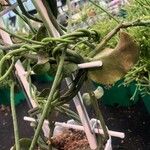
Ceropegia sandersonii
Fountain-flower · Parachute-plant
Description
Source: leafsnapCeropegia sandersonii, commonly known as the parachute plant or umbrella plant, is a unique and fascinating flowering species belonging to the Apocynaceae family. Native to South Africa, this plant captures attention with its distinctive features. The most striking aspect of Ceropegia sandersonii is its flowers. Shaped like tiny parachutes or umbrellas, these flowers feature a long, slender tube that opens into a wide, bell-shaped structure at the top. They typically exhibit a pinkish-purple hue, adorned with darker stripes running along their length. The plant's leaves are small, oval-shaped, and arranged in pairs along thin stems that can extend several feet. These wiry stems enable the plant to climb or trail along other plants or objects. Ceropegia sandersonii thrives in bright, indirect light and prefers well-draining soil that remains moist but not waterlogged. Propagation is relatively straightforward and can be done through stem cuttings taken during the growing season in spring or summer. Overall, Ceropegia sandersonii is an intriguing addition to any indoor garden, thanks to its unique appearance and easy care requirements.
Care Guide
💧 Water Every 7 days
The parachute plant flourishes best under balanced conditions, needing water approximately every three weeks. It originates from regions with moderate rainfall, so it thrives in well-draining soil to avoid waterlogging. Often cultivated indoors for its appealing foliage, this plant requires careful moisture management to ensure optimal health and growth.
☀️ Light Partial sun
The parachute plant is native to habitats like forest understories and rocky areas, where it grows in natural shade. It prefers partial sun but can tolerate full sun or full shade, demonstrating its versatile and hardy nature.
🌡️ Temperature 15–37.8°C
Parachute plant comes from tropical areas, where the climate is usually warm and humid. As a result, it is well adapted to high temperatures and moisture. It does not tolerate sudden temperature shifts and prefers a stable thermal environment, so it's important to prevent temperature fluctuations indoors. It generally cannot withstand cold and requires warmer conditions for growth. If the surrounding temperature falls too low, the plant may stop growing or even die.
💨 Humidity
🪴 Soil 6-7
🌱 Fertilizer
Proper fertilization is essential for the Parachute plant's health and appearance. Feed the Parachute plant in summer, repeating the application every month throughout the season. Nutrients support growth and sustain the plant's structures. Fertilizing the Parachute plant improves its flower display, promoting the best blooms.
🪴 Pot & Repot 2-3 years
Repot the parachute plant in early spring, choosing a pot only slightly larger than the current one with proper drainage. Use a well-draining potting mix and place the root ball at the same level it was before. Gently loosen roots that are root-bound. After repotting, water thoroughly and set the plant in a warm, shady spot. Regular pruning helps keep its size in check and encourages new growth.
✂️ Pruning
To encourage better growth and flowering, prune the parachute plant from early to late spring, paying special attention to removing dead or weak stems. Regular pruning not only improves air circulation but also helps reduce pests. Additionally, promptly removing any yellowing foliage will keep the plant healthier and more attractive.
🌿 Propagating
🐛 Diseases & pets
☠️ Toxicity
There are no reports regarding the toxicity of this plant for humans or pets.
Characteristics
- Plant Type
- Herb, Vine
- Life Cycle
- Perennial
- Genus
- Ceropegia
- Family
- Apocynaceae
- Hardiness Zone
- 8-12
- Mature Height
- 49 cm
- Mature Spread
- 49 cm
- Leaf Color
- Green
- Leaf Type
- Evergreen
- Flower Color
- White
- Flower Size
- 5.08 cm to 7.62 cm
- Bloom Time
- Summer, Early fall, Mid fall
- Planting Time
- Spring, Summer, Autumn
- Harvest Time
- Late summer, Fall, Early winter
- Native Area
- South Africa, Eswatini, Mozambique