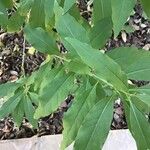
Cestrum parqui
Chilean jessamine · Chilean cestrum · Green cestrum · Green poison-berry · Iodine-bush
Description
Source: leafsnapCestrum parqui, commonly known as green cestrum or green poisonberry, is a species of flowering plant in the nightshade family, Solanaceae. Native to South America, it has been introduced to various parts of the world as an ornamental plant. The plant can reach heights of up to 3 meters and features long, narrow leaves that are dark green in color. It produces small, fragrant flowers that are either white or pale yellow, which attract pollinators such as moths. Cestrum parqui is renowned for its medicinal properties and has been traditionally used to treat ailments such as fever, headaches, rheumatism, and respiratory problems. However, it's important to note that all parts of the plant are toxic if ingested. In some regions where it has been introduced, like New Zealand, Cestrum parqui is considered an invasive species due to its rapid growth and ability to outcompete native vegetation. Overall, Cestrum parqui is a fascinating plant with significant medicinal properties, but it also poses risks to local ecosystems if not properly managed.
Care Guide
💧 Water
☀️ Light Full sun
🌡️ Temperature 15–37.8°C
💨 Humidity
🪴 Soil 6-7
🌱 Fertilizer
🪴 Pot & Repot
✂️ Pruning
🌿 Propagating
🐛 Diseases & pets
☠️ Toxicity
Characteristics
- Plant Type
- Tree, Shrub
- Life Cycle
- Perennial
- Genus
- Cestrum
- Family
- Solanaceae
- Hardiness Zone
- 8-11
- Mature Height
- 1.22 m to 4.57 m
- Mature Spread
- 1.52 m
- Leaf Color
- Green
- Leaf Type
- Deciduous
- Flower Color
- Yellow, Green
- Flower Size
- 2.54 cm
- Bloom Time
- All year round
- Planting Time
- Spring, Summer, Autumn, Winter
- Harvest Time
- All year round
- Native Area
- Bolivia