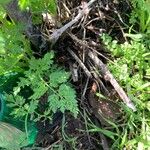
Chaerophyllum tainturieri
Chervil · Hairy-fruit chervil · Hairyfruit chervil
Description
Source: leafsnapChaerophyllum tainturieri, commonly known as purple chervil or wild chervil, is a herbaceous plant species in the Apiaceae family. Native to North America, it thrives in moist woodlands and meadows. The plant typically reaches up to 1 meter in height and features finely divided leaves that are tinged purple when young. Its small flowers, which are white or pinkish, are arranged in umbels atop long stalks that rise above the foliage. Purple chervil has a long history of use as a medicinal herb for treating various ailments, including digestive disorders, respiratory problems, and skin conditions. It is also utilized as an edible herb, boasting a flavor akin to parsley or celery, though with slightly bitter undertones. However, caution is advised when consuming this plant raw, as it contains toxic compounds that can cause skin irritation or digestive issues if ingested in large quantities. In summary, Chaerophyllum tainturieri is a fascinating plant species with both medicinal and culinary applications. However, it should be used carefully due to its potential toxicity if not properly prepared for consumption.
🌳 Southern chervil might appear modest, yet it plays an interesting role as a bioindicator. The plant tends to prosper in soils with specific characteristics, which can tell botanists and ecologists about the soil conditions in southern chervil's natural habitat. Knowing where southern chervil thrives can help assess a region's ecological condition and inform conservation and land management approaches.
Care Guide
💧 Water Every 7 days
Southern chervil, a plant native to temperate regions, thrives with moderate soil moisture and typically needs watering once a week. While it can withstand short periods of drought, using mulch is beneficial for retaining moisture and regulating soil temperature. This practice is essential for maintaining the plant's vitality during its active growing season.
How should I water my Southern chervil plant?
To water Southern chervil, you have a few options. You can use a garden hose with a spray nozzle, a watering can, or any other common watering tool. Southern chervil is not too particular about how it gets its water. It can thrive on rainwater, tap water, or filtered water. However, it's best to avoid watering this plant from overhead, as it can harm the leaves and flowers and potentially cause disease. Instead, a drip irrigation system is often the most effective method. These systems provide even and direct watering to the soil. If you have a container-grown Southern chervil, you can use a cup, watering can, or even just your tap to water it directly at the soil.
What do I need to do if I give my Southern chervil too much water or too little water?
Underwatering Southern chervil is easy to fix. If you see that your plant is dry, just water it more regularly. Overwatering, on the other hand, is a bigger problem. If you don't catch it early, it can lead to diseases and the death of the plant. To prevent this, choose a growing spot with lots of sun and good drainage so the soil can dry properly. If your potted chervil is overwatered, you might need to switch it to a different pot. The old container might not have good soil drainage or holes for excess water to escape. When repotting, make sure to use loose soil and a pot that drains well.
How frequently do I need to water my Southern chervil?
Southern chervil needs regular watering throughout the growing season. In spring, water it once a week. As the season gets hotter, increase watering to two to three times a week. It's important not to exceed this rate as it can harm the plant. Keep the soil moist but not wet. Watering potted Southern chervil is slightly different. Potted soil dries out faster, so water container-grown plants a few times per week, compared to once a week for plants in the ground.
How much water should I give my Southern chervil?
Determining how much water to give to your Southern chervil can be approached in a few different ways. Some gardeners prefer to feel the soil for moisture, watering until the top six inches are moist. Another option is to use a set measurement of around two gallons per week, adjusting based on weather and soil dryness. However, it's important to avoid overwatering if your plant requires less water. When growing your chervil in a container, a different method is needed. You should water enough to moisten all layers of dry soil, you can check this by sticking your finger in the soil for moisture or allowing excess water to drain out of the pot's holes.
How do I know if I'm giving enough water to my Southern chervil?
Avoiding overwatering your Southern chervil can be challenging due to their deep roots needing weekly soil moistening. However, these plants are highly prone to root rot and may turn brown if overwatered. Underwatering is less of a concern as these plants can survive without supplemental watering for some time. Nevertheless, if you wait too long to water them, they may start to wilt and exhibit dry leaves.
☀️ Light Partial sun
Southern chervil does best with moderate sunlight, as in its native habitat. Throughout its growth phases it needs evenly distributed light to develop properly. Excessive light can be harmful, while too little light may impede its growth.
What are the sunlight requirements for Southern Chervil?
Southern Chervil, or Chaerophyllum tainturieri, thrives in conditions that offer moderate levels of sunlight, akin to its natural habitat. It requires about 3-6 hours of sunlight daily, striking a balance between sun exposure and shade to ensure healthy growth. Overexposure or insufficient lighting can negatively affect the plant, either by causing damage or stunting its development. When choosing a location for your garden or indoor setting, observe how sunlight moves throughout the day to select spots that provide the ideal light conditions, thereby ensuring your plants' well-being.
How should artificial lighting be used for indoor Southern Chervil plants?
When natural sunlight is insufficient, especially during winter or in less sunny areas, artificial lighting becomes crucial for the growth of indoor Southern Chervil plants. Optimal growth is achieved by providing adequate lighting, with LED lights being a popular choice due to their customizability to match specific plant needs. The general guideline for artificial light intensity is 30-50W/sq ft for full sun plants, 20-30W/sq ft for partial sun plants, and 10-20W/sq ft for full shade plants. Place the light source 12-36 inches above the plant to simulate natural sunlight. Additionally, mimic the natural daylight duration most suited to your plant species, typically between 8-12 hours of light per day.
What are some common symptoms of inadequate light in Southern Chervil?
Southern Chervil may exhibit several symptoms when not receiving enough light, including smaller new leaves, leggy or sparse growth, faster leaf drop, slower or no new growth, and lighter-colored new leaves. These symptoms indicate the plant is in survival mode due to poor light conditions, leading to a reduction in leaf production and overall growth. Chlorosis, sunscald, leaf curling, wilting, and leaf scorching are additional symptoms that can occur either from excessive sunlight exposure or as adaptive responses to intense light conditions.
How can light exposure be optimized for Southern Chervil?
Optimizing light exposure for Southern Chervil involves gradual adaptation to sunlight, both indoors and outdoors. For indoor plants, increase their exposure to sunlight each week until they receive 3-6 hours of direct sun daily, or use artificial lighting such as desk lamps or professional grow lights for at least 8 hours a day. For outdoor plants, move them to sunnier spots gradually to avoid shock and potential sunburn. Reducing obstructions that block sunlight, like pruning trees, or transplanting smaller plants to areas with better sunlight and drainage, can also improve light exposure. It's important to remember that parts of the plant affected by low light may not recover, but new growth will be healthy following these adjustments.
🌡️ Temperature 15–32.2°C
Southern chervil is indigenous to temperate regions, and its ideal growth range is 68 to 95 °F (20 to 35 °C). Adjusting temperatures seasonally is usually unnecessary unless local conditions fall outside that range.
What is the optimal growth temperature for Southern chervil?
Southern chervil, botanically known as Chaerophyllum tainturieri, thrives in temperate climates with an optimal growth temperature range of 68 to 95°F (20 to 35°C). Adjusting for seasonal temperatures might not be necessary unless the local temperatures deviate significantly from this range. This plant exhibits strong cold resistance, negating the need for special frost protection measures in most winter conditions. However, in instances where winter temperatures are anticipated to drop below -15°C, it becomes crucial to protect the plant from the cold, which can be done by covering it with soil or straw. Additionally, to prepare for the winter's first freeze, it is advisable to water the plant thoroughly, ensuring the soil remains moist and is able to enter a frozen state. This practice helps in preventing drought and water scarcity for the plant during the winter and early spring seasons.
How should you care for Southern chervil in low temperatures?
Southern chervil is cold-tolerant and performs best when temperatures remain above 20°C. During the colder months, it is essential to ensure that the temperature does not drop below 0°C. However, if the temperature falls beneath -15°C, the plant may not exhibit any noticeable changes initially but could face a decrease in sprouting or fail to sprout at all come spring. To address this issue, any portions of the plant that have not sprouted by spring should be removed to encourage new growth and maintain the health of the plant.
What steps should be taken if Southern chervil experiences high temperatures?
In the warmer months, particularly during summer, it is vital to keep Southern chervil's surroundings below 35°C. Should temperatures soar above 38°C, the plant's leaves might become lighter, curl, suffer from sunburn, or in extreme cases, the entire plant may wilt and dry out. To alleviate these high-temperature stresses, it is recommended to trim away any sunburned or dried parts of the plant. Moving the plant to a shadier location or providing shade with a cloth can protect it from the harsh midday and afternoon sun. Moreover, watering the plant during the cooler morning and evening hours will help maintain the moisture levels in the soil, thus supporting the plant's overall health and well-being during hot spells.
💨 Humidity
🪴 Soil 6-7
🌱 Fertilizer
Southern chervil does well with regular, light applications of fertilizer to encourage healthy leaf development. Feed Southern chervil about once a month during the summer. Nitrogen is important for foliage, so supplying nitrogen-rich sources helps Southern chervil thrive.
🪴 Pot & Repot
✂️ Pruning
🌿 Propagating
🐛 Diseases & pets
☠️ Toxicity
Characteristics
- Plant Type
- Herb
- Life Cycle
- Annual
- Genus
- Chaerophyllum
- Family
- Apiaceae
- Hardiness Zone
- 7
- Mature Height
- 30 cm to 61 cm
- Mature Spread
- 30 cm
- Leaf Color
- Green, Dark Green
- Leaf Type
- Deciduous
- Flower Color
- White
- Flower Size
- 2.54 cm
- Bloom Time
- Mid spring, Late spring, Early summer
- Planting Time
- Spring, Summer
- Harvest Time
- Early summer, Mid summer