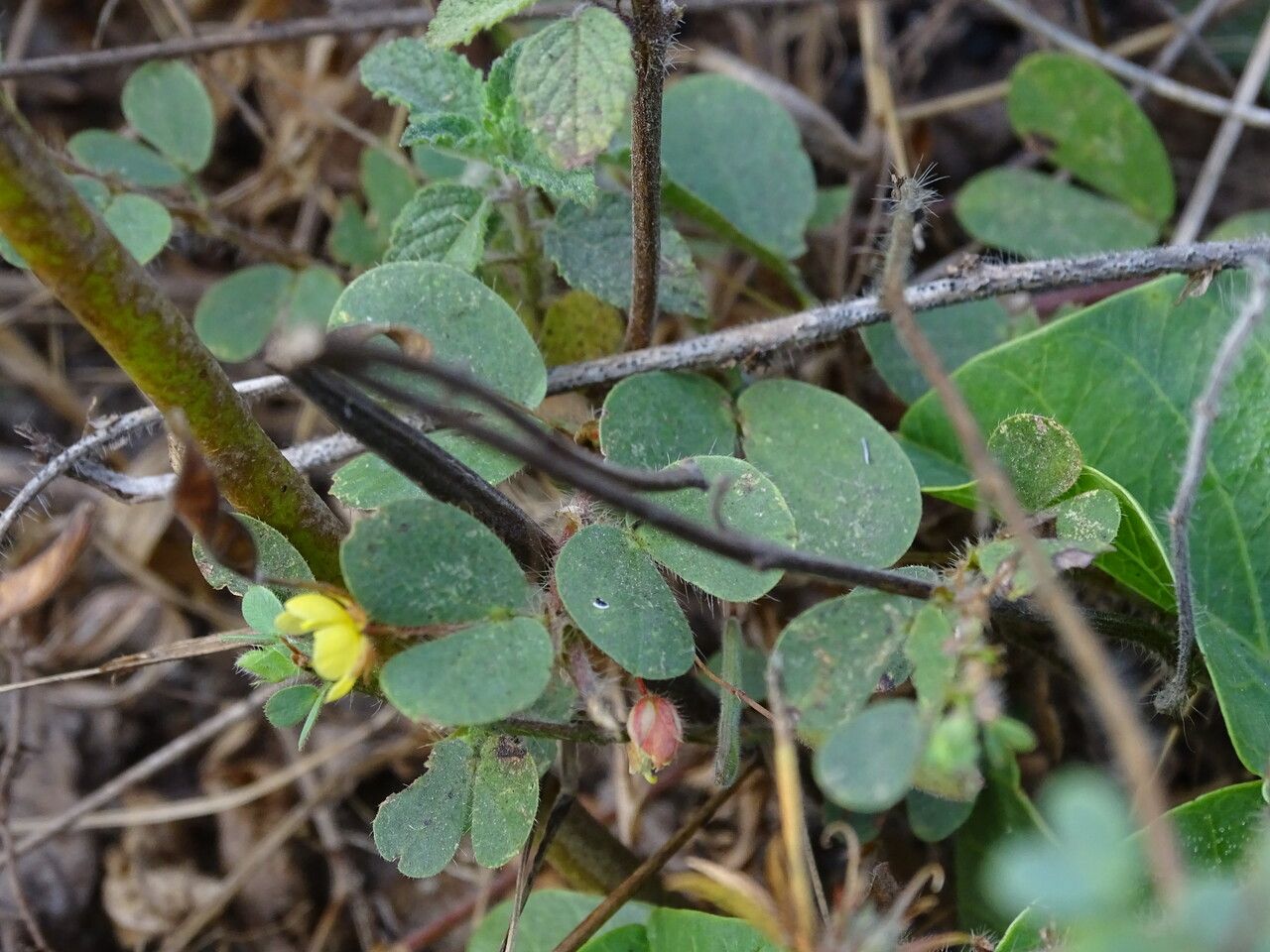
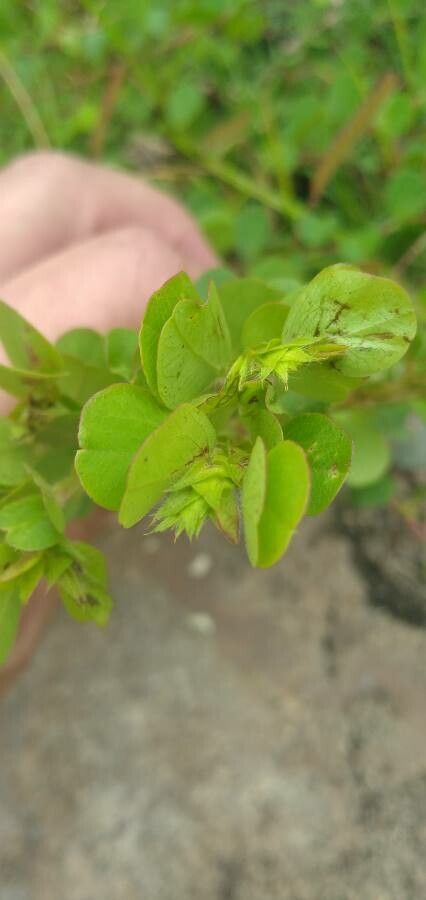
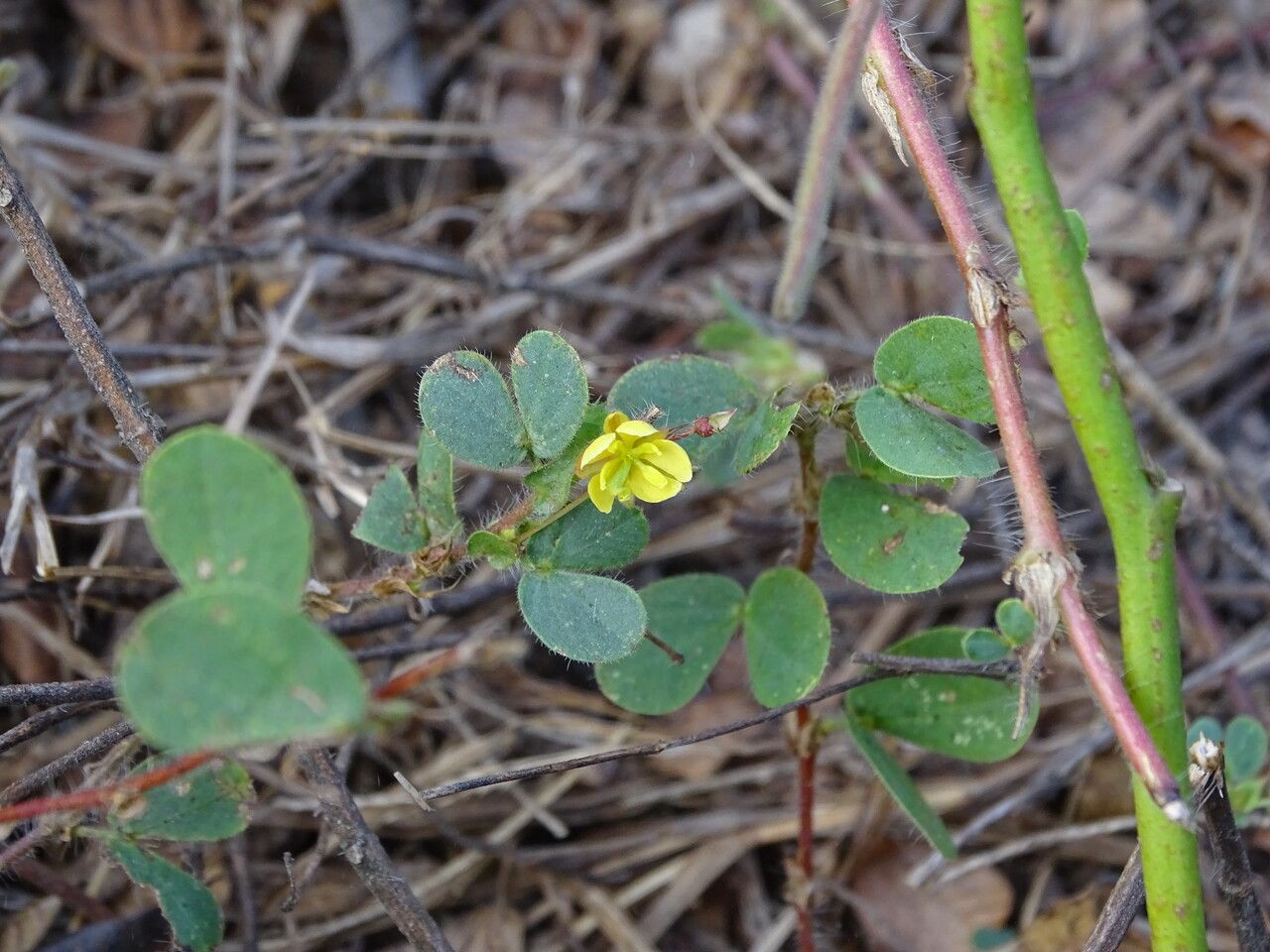
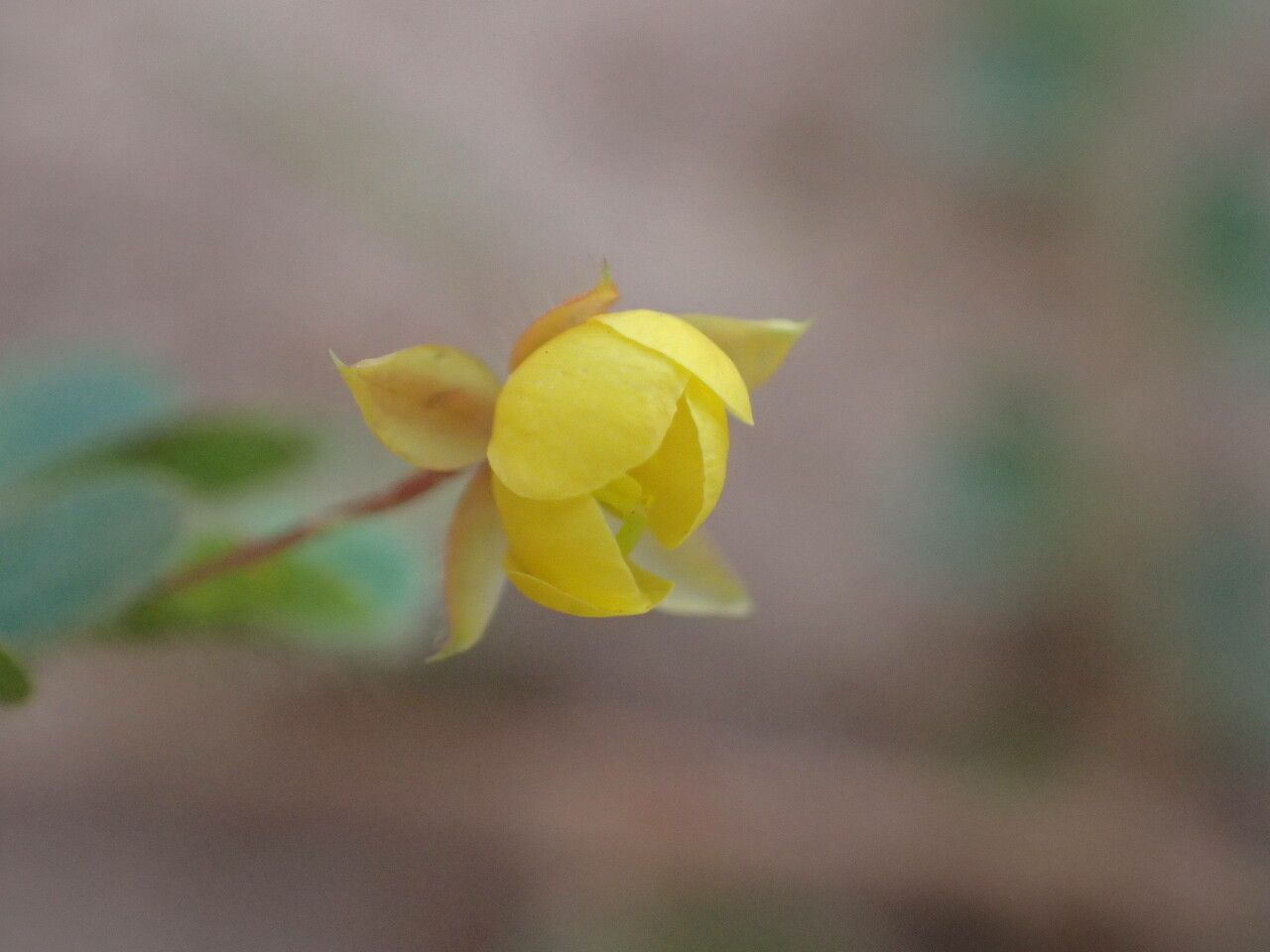
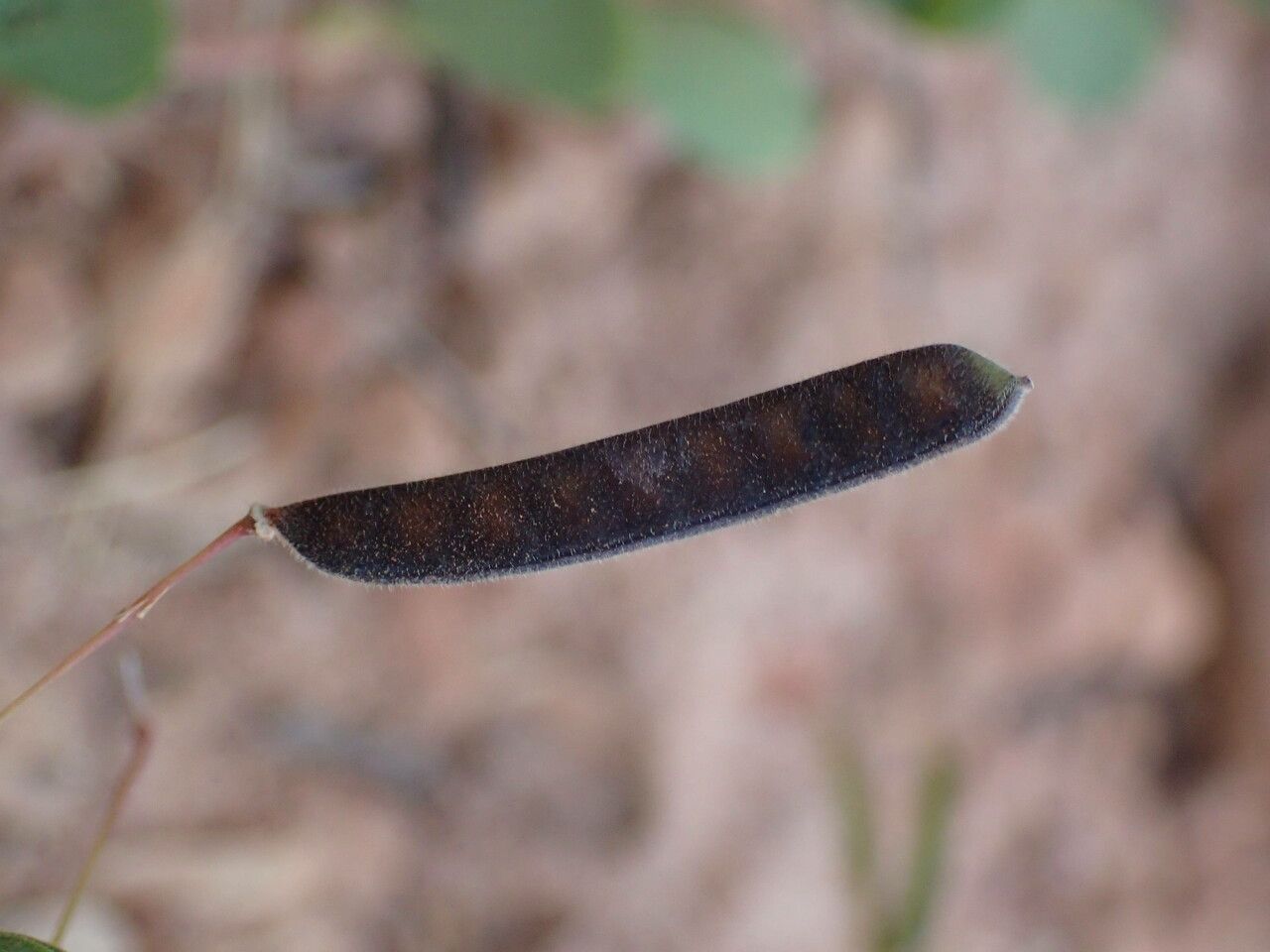
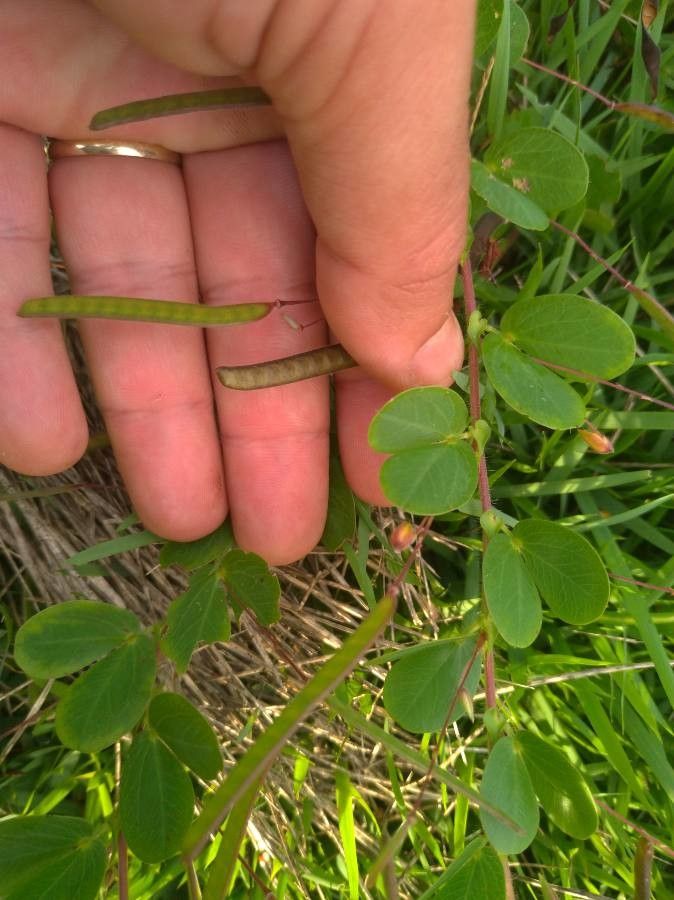
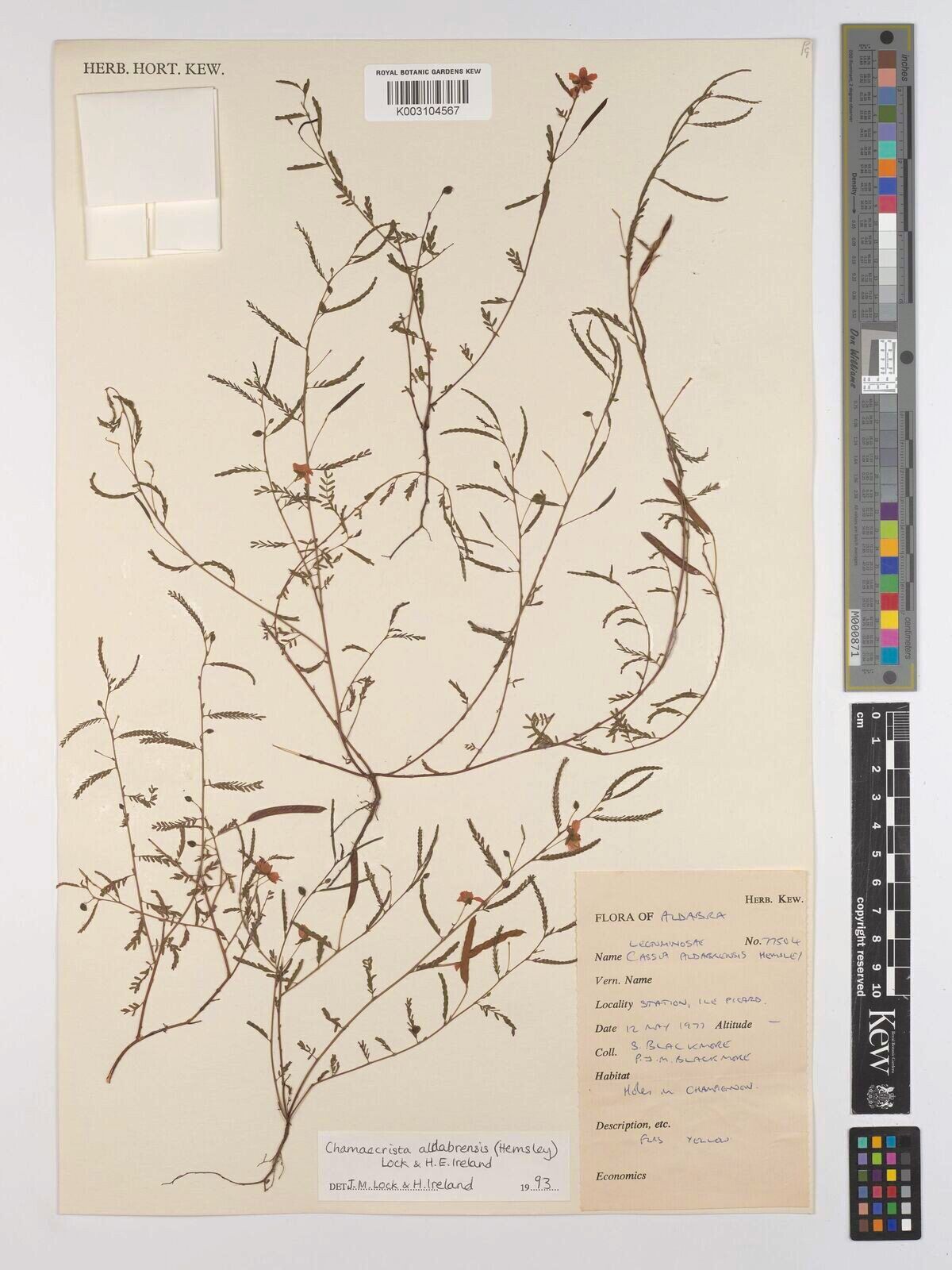
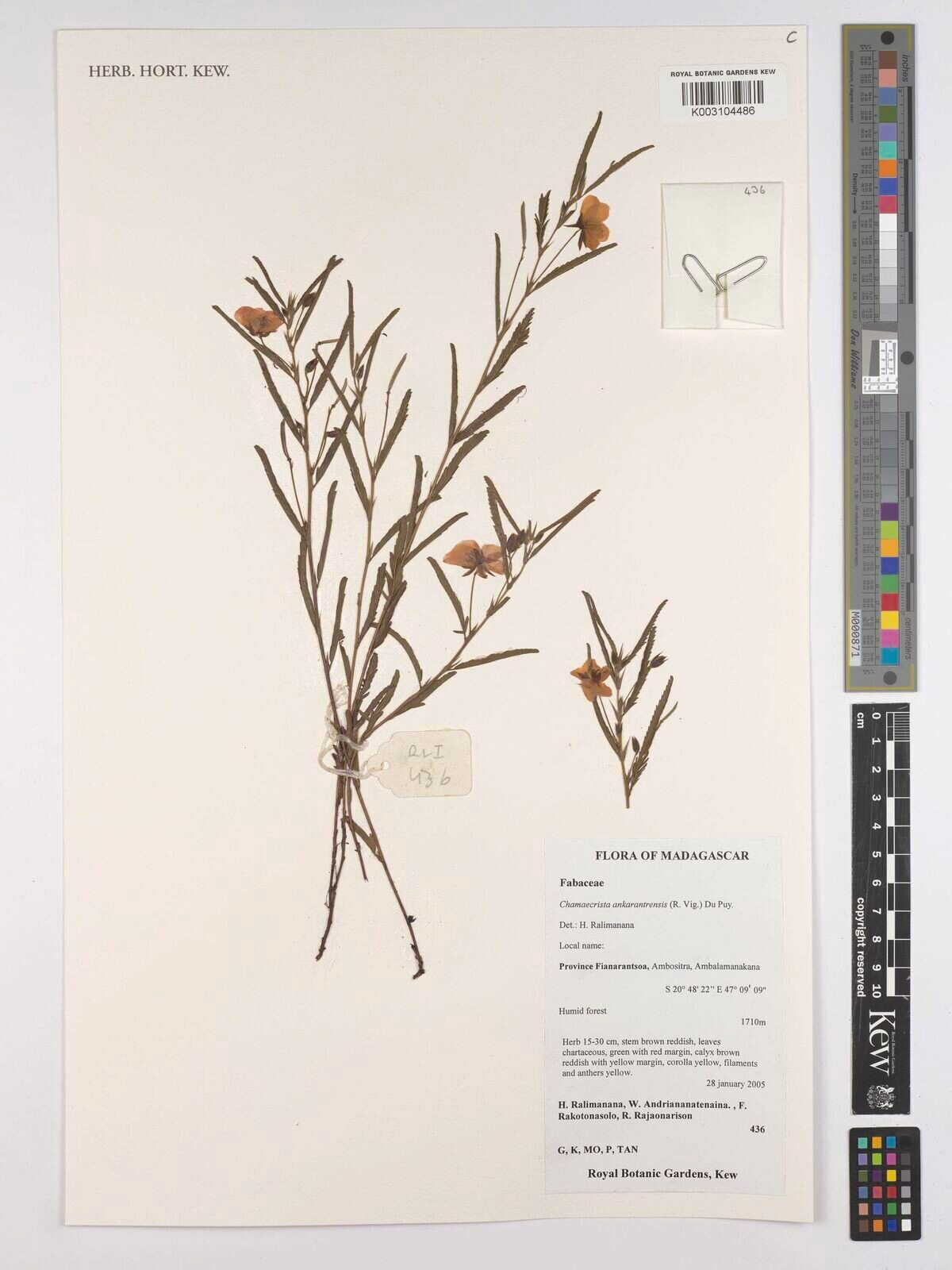
Chamaecrista rotundifolia, round-leaf cassia, also known as pasto rastiero, roundleaf sensitive pea, and Wynn cassia, is a short-lived perennial or self-generating annual plant in the subfamily Caesalpinioideae of the family Fabaceae. It originated in North America, Mesoamerica, the Caribbean, and Tropical South America but is grown in other parts of the world today. It grows in dry soils and areas of low rainfall, as well as in low-fertility and acidic soils with high levels of solubilized aluminum. It can also reduce erosion and runoff over time. These factors make it a potential asset to farmers in the African Subtropics and elsewhere where soil quality is a barrier to farming. It serves as a source of feed for livestock and acts as a green fertilizer, raising soil quality and nutrient content which can improve yields. These combined benefits make round-leaf cassia a potential solution to many problems faced by poor farmers and their communities.
Round-leaf cassia has strong resistance to disease and is generally not easily affected by illnesses. However, it can be vulnerable to pests and diseases present in its immediate environment. These infections tend to be mild. Regarding care, the plant needs moderate maintenance. It should be pruned regularly to maintain a neat appearance and support healthy growth. Fertilizing can also aid in encouraging blooms. Round-leaf cassia is appropriate for anyone with outdoor space, such as a garden or patio, and does not demand extensive gardening experience. It may require additional care when kept indoors.
How to keep Chamaecrista Rotundifolia.
Light
Round-leaf cassia comes from sunny, open habitats and grows best in full sun. It will tolerate some shade but favors direct sunlight for optimal growth. This plant, which can be annual or biennial, is recognized for its sun-loving nature.
Water
Round-leaf cassia is well-suited to semi-arid regions and can tolerate drought conditions, thriving on intermittent rainfall. When grown indoors, it only needs to be watered once a week. It's crucial to use a well-draining soil mix to prevent waterlogging. Its growth cycle mirrors outdoor climates, reflecting its natural moisture intake patterns.
Temperature
Round-leaf cassia comes from tropical areas, where the weather is usually warm and humid. Consequently, it is well suited to high temperatures and moisture. It is sensitive to sudden temperature changes and prefers a steady thermal environment, so indoor temperature swings should be avoided. It generally cannot tolerate cold and needs warmer conditions to grow. If the environmental temperature falls too low, the plant may stop growing or even die.
Fertilizer
When most of the Round-leaf cassia blooms have opened to full size, it’s time to resume fertilizing. At the point when bloom production is at its peak, start fertilizing again every three to four weeks, as the weather allows. Then, once the plant begins to produce fewer new blooms, cease fertilizing; there is no need to fertilize when the plant can no longer produce additional blooms.
Pruning
The round-leaf cassia is known for its circular leaves and vibrant blooms. To keep the plant healthy, prune it from early to late spring. Focus on removing dead branches to enhance air circulation. Selective pruning encourages denser foliage and more abundant flowering. Always use clean, sharp tools to ensure proper care.
Botanical profile.
- Plant Type
- Herb
- Life Cycle
- Annual
- Genus
- Chamaecrista
- Family
- Fabaceae
- Hardiness Zone
- 9-11
- Mature Height
- 30 cm to 61 cm
- Mature Spread
- 40 cm to 76 cm
- Leaf Color
- Green, Dark Green
- Leaf Type
- Deciduous
- Flower Color
- Yellow
- Flower Size
- 1.02 cm to 2.03 cm
- Bloom Time
- Summer, Fall
- Planting Time
- Summer, Autumn
- Harvest Time
- Late summer, Fall, Early winter
- Native Area
- Colombia, Belize, Cuba, Honduras, Mexico, Bolivia, Venezuela, Guyana, Brazil, Nicaragua, Ecuador, Costa Rica, Panama, Jamaica
Other names.
Reader questions.
What are the sunlight requirements for Round-leaf cassia (Chamaecrista rotundifolia)?
Round-leaf cassia thrives in environments that provide full sun, meaning it requires more than 6 hours of direct sunlight daily for optimal growth. It can also tolerate partial sun, which is about 3-6 hours of sunlight. When cultivating this plant, it's important to observe how sunlight moves through your garden to find spots that offer a good balance between light and shade, ensuring the plant's well-being. Round-leaf cassia is known for its preference for bright, open spaces, indicative of its natural habitat.
How can artificial lighting support the growth of Round-leaf cassia indoors?
When natural sunlight is insufficient, especially during winter or in spaces that don't receive enough sunlight, artificial lighting can be a vital solution to support the growth of Round-leaf cassia indoors. To ensure optimal growth under artificial lights, it's recommended to use LED lights because they can provide specific wavelengths needed by the plants. Full sun plants require 30-50W per square foot of light, partial sun plants need 20-30W per square foot, and full shade plants need 10-20W per square foot. The light source should be placed 12-36 inches above the plant and kept on for 8-12 hours per day to mimic natural daylight hours.
What are signs of insufficient light in Round-leaf cassia when grown indoors?
When Round-leaf cassia doesn't receive adequate light indoors, it may show several symptoms indicating light deficiency. These symptoms include smaller new leaves, leggy or sparse growth, faster leaf drop, slower or halted new growth, lighter-colored new leaves, chlorosis (leaves turning yellow), sunscald, leaf curling, wilting, and leaf scorching. Each of these symptoms can affect the plant’s health, indicating a need to adjust its light exposure.
How can I manage Round-leaf cassia's light exposure to improve its health?
To optimize Round-leaf cassia's growth, gradually increase its sunlight exposure. For indoor plants, move them to a sunnier spot each week until they receive at least 6 hours of sunlight daily, using a south-facing window for maximum exposure. Artificial light can complement sunlight for large or immobile plants, keeping a desk or ceiling lamp on for at least 8 hours a day or using professional grow lights. Outdoors, adapt your plants to increased sunlight by moving them to a sunnier location each week, avoiding abrupt changes to prevent sunburn. If sunlight is blocked by obstructions like trees, consider pruning to allow more light through. For smaller, manageable plants, transplanting during their dormant season to a location with ample sunlight and good drainage is advisable.