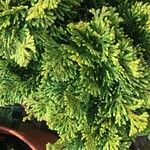
Chamaecyparis obtusa
Hinoki false cypress · Hinoki-cypress · Hinoki · Japanese false cypress · ヒノキ
Description
Source: leafsnapChamaecyparis obtusa, commonly known as Hinoki cypress, is a slow-growing evergreen tree native to Japan. It can reach up to 50 feet in height and 20 feet in width, featuring a conical or pyramidal shape. The tree is recognized for its distinctive reddish-brown bark that peels off in thin strips and its flat sprays of scale-like leaves that are dark green on top and lighter green underneath. In Japanese culture, Hinoki cypress is highly prized for its wood, which is used in construction, furniture-making, and even as an ingredient in traditional incense. The tree also holds ornamental value due to its attractive foliage and shape. In landscaping, Hinoki cypress can serve as a specimen plant or be planted in groups for privacy screening or windbreaks. It prefers well-drained soil with consistent moisture but can tolerate some drought once established. Overall, Chamaecyparis obtusa is an elegant evergreen tree with cultural significance and ornamental value, making it a popular choice among gardeners worldwide.
🌳 Hinoki cypress is celebrated for its high-quality timber, highly valued in Japan for building, particularly in the making of temples, shrines, and traditional "hinoki-buro" (wooden bathtubs). The wood is also used to produce masu, wooden boxes originally used to measure rice and later employed as vessels for sake. Hinoki wood gives off a lemon-scented aroma that is both pleasant and naturally repellent to insects, which is why it is used in closets and storage chests to protect clothing from moths.
🎭 Eternal life
Care Guide
💧 Water Every 7 days
Hinoki cypress flourishes in a subtropical climate with consistent moisture. It should be watered every 1-2 weeks, ensuring the soil remains moist but not waterlogged. Indoors, regular misting helps maintain the necessary humidity levels. During the growing season, adequate hydration is crucial to support its lush evergreen foliage.
How should I water my Hinoki cypress tree?
Watering your Hinoki cypress is a simple task. To do it, just turn on your garden hose and use it to slowly soak the soil. This is the best method for larger trees that require a lot of water. However, for smaller trees, you can use a watering can or another smaller tool. Just be careful not to water the leaves too much, as this can cause disease, especially in young trees.
What should I do if I give too much or too little water to my Hinoki cypress?
Overwatering can occur if the soil does not drain effectively when growing Hinoki cypress. If this is the case, you can improve drainage by amending the soil or moving the plant to a better location. If you have your Hinoki cypress in a pot, you may need to repot it with looser soil to improve drainage. Overwatering can lead to the plant becoming diseased, so it's important to treat any diseases promptly. If your Hinoki cypress is underwatered, you can solve the issue by watering it more frequently. To determine if your plant is overwatered, look at the foliage, particularly the new growth. Discolored or easily breakable new growth is a sign of overwatering. Standing water or slow drainage is also an indicator. Underwatered plants will have sparse, brown leaves. Consider recent rainfall or high temperatures when assessing the symptoms.
How often do I need to water my Hinoki cypress tree?
A mature Hinoki cypress is highly drought tolerant and can survive solely on rainfall. During the hottest months, watering once a week is sufficient, while in other seasons, watering may not be necessary. Newly planted trees require regular watering to establish their roots and maintain consistent soil moisture. It's crucial to avoid overwatering as Hinoki cypress cannot tolerate standing water. When unsure, it is better to err on the side of underwatering rather than risking overwatering.
How much water should I give my Hinoki cypress?
During the height of summer, it is necessary to water your Hinoki cypress. Usually, about one inch of water per week is sufficient at this time. However, the amount may vary if it has rained. If it has rained one inch or more that week, no additional watering is needed. Newly planted Hinoki cypress, on the other hand, require more water during the establishment period. Typically, they should be watered once every one to two weeks for the first few growing seasons.
How should I water my Hinoki cypress tree throughout the year?
During the summer months when the weather is the hottest, the Hinoki cypress tree requires the most water. To keep it hydrated, you should water it about once per week if there is no rainfall. However, during other times of the year, this plant can usually survive without any water at all. Occasionally, in the spring and fall, you may need to provide some water if the weather becomes exceptionally hot, but this is not very common. One unique aspect of the Hinoki cypress is that it does not go into full dormancy during the winter. This means that it continues growing even during the coldest months. However, because the cool temperatures do not cause the soil to dry out quickly, its water needs during winter remain relatively low.
☀️ Light Full sun
The hinoki cypress does best with extended daily sunlight, though it can adapt to partly sunny conditions. Native to environments with ample light penetration, it achieves healthy growth when provided sufficient sun. Excessive exposure can cause the foliage to fade, while insufficient light may lead to sparse, unhealthy foliage.
What are the sunlight requirements for Hinoki Cypress?
Hinoki Cypress requires full sun exposure, characterized by more than 6 hours of sunlight daily, but can also tolerate partial sun, or about 3-6 hours of sunlight. It is important to watch how sunlight moves through your garden to ensure that your plants get a balanced exposure for their health and happiness. Although Hinoki Cypress thrives in substantial sunlight, it can adjust to semi-sunny conditions. Originating from areas with ample light, it achieves healthy growth with sufficient solar exposure. However, overexposure might cause the foliage color to fade, while inadequate light can lead to sparse, unhealthy foliage.
Can I use artificial lighting for Hinoki Cypress indoor growth?
Yes, if natural sunlight is insufficient, especially during winter or in less sunny spaces, artificial lighting can be a vital solution for indoor Hinoki Cypress growth, promoting faster, healthier development. LED lights are recommended for their ability to provide specific wavelengths needed by plants. For full sun plants, 30-50W/sq ft of artificial light is required, partial sun plants need 20-30W/sq ft, and full shade plants need 10-20W/sq ft. The light source should be placed 12-36 inches above the plant, and most plants need 8-12 hours of light per day.
What are the symptoms of light deficiency in Hinoki Cypress?
Symptoms of light deficiency in Hinoki Cypress include small, newer leaves growing smaller than the old ones, leggy or sparse growth with longer spaces between leaves or stems, faster leaf drop as older leaves are shed early to conserve resources, slower or halted new growth signaling survival mode due to poor light conditions, lighter-colored new leaves indicating lack of chlorophyll and essential nutrients, chlorosis or the loss of green color in leaves, sunscald appearing as pale or necrotic areas on the plant from intense light exposure, leaf curling to minimize water loss and damage, wilting due to increased water loss through transpiration, and leaf scorching characterized by brown, dry edges on leaves from excessive sunlight.
How can I adjust my Hinoki Cypress's light exposure for optimal growth?
To ensure optimal growth for Hinoki Cypress, gradually increase its sunlight exposure to at least 6 hours of direct sunlight daily. For indoor plants, use a south-facing window and keep curtains open during the day, or consider using artificial lighting, such as a desk or ceiling lamp for at least 8 hours daily, or invest in professional plant grow lights for ample exposure. For outdoor plants, avoid sudden changes in light intensity to prevent sunburn by gradually moving them to sunnier locations each week. Reduce obstructions by pruning trees or branches that block sunlight, and for smaller plants, consider transplanting during their dormant period to a location with better sunlight and drainage. Remember, parts of the plant affected by insufficient sunlight may not recover, but new growth will be healthy with increased light exposure.
🌡️ Temperature 5–35°C
Hinoki cypress is native to cooler environments, such as mountainous areas. It prefers temperatures from 41 to 95 ℉ (5 to 35 ℃). To help it acclimate to seasonal temperature changes, it should be kept in a sheltered spot while still receiving natural light.
What are the essential care tips for Hinoki Cypress?
The Hinoki Cypress (Chamaecyparis obtusa) thrives in cooler temperatures, preferring a range between 41 to 95°F (5 to 35°C), typically found in mountainous areas. It is essential to place the plant in a sheltered location to help it adjust to temperature changes across seasons while still ensuring it receives natural light. Although Hinoki Cypress has strong cold resistance, extra cold protection is advised if temperatures are expected to drop below -30°C. This protection can be provided by wrapping the trunk and branches with non-woven fabric or cloth. Additionally, abundant watering before the first freeze in autumn is recommended to keep the soil moist, preventing drought and water scarcity during winter and early spring.
What should I do if the Hinoki Cypress experiences low temperatures?
Hinoki Cypress is quite cold-tolerant, ideally thriving in temperatures above 5°C and needing to be kept above -25°C during winter. If temperatures fall below -30°C, while there may not be immediate noticeable changes, come spring, the branches might become brittle, dry, and fail to produce new shoots. To manage this, prune away the dead branches that haven’t produced new leaves in the spring.
How do I care for Hinoki Cypress during high temperatures?
During the summer, it's crucial to ensure that the Hinoki Cypress is kept below 35°C. Exposure to temperatures above 41°C can cause the leaves to lighten in color and the tips to dry and wither, increasing the plant's susceptibility to sunburn. To mitigate damage, trim away the sunburned and dried parts of the plant. Relocate the plant to a shaded area during the midday and afternoon sun or use a shade cloth. Furthermore, water the plant in the morning and evening to maintain soil moisture.
💨 Humidity dry (<40%)
This plant prefers dry conditions, so don't mist it. However, watering it less often can also thrive in higher humidity.
🪴 Soil 5-7
🌱 Fertilizer
Hinoki cypress has distinct nutrient needs and does not require heavy fertilization. Spring is the best time to apply fertilizer for optimal growth. Providing nutrients improves its health, strengthens its resistance to pests and diseases, and supports its long lifespan.
Why should I put fertilizer on my Hinoki cypress tree?
To promote healthy growth in Hinoki cypress, it is important to fertilize it during spring. Considering the plant's long lifespan, adequate support is necessary. Additionally, enriching the soil with nutrients can boost the plant's overall health, helping it resist common pests and diseases that might hinder growth or reduce its lifespan.
When should I fertilize my Hinoki cypress?
Hinoki cypress is different from typical garden plants in that it doesn't need a lot of extra nutrients to thrive. While the soil it grows in may not always provide enough nutrients, the best time to fertilize it is in the spring before new growth appears.
When should I not put fertilizer on my Hinoki cypress?
While monthly or weekly fertilization benefits many plants, the Hinoki cypress thrives without excessive nutrients. Applying too much fertilizer can cause the Hinoki cypress to deteriorate. It is only necessary to apply fertilizer in the spring, and it is advisable to avoid adding fertilizer or organic matter to the soil during the summer, fall, and winter seasons.
What kind of fertilizer does my Hinoki cypress tree require?
When choosing a fertilizer for your Hinoki cypress, keep in mind that its age is important. Although this plant doesn't need a lot of additional nutrients, a balanced plant food can still promote strong root development and growth. Just be cautious of fertilizers that have high nitrogen content.
How do I give nutrients to my Hinoki cypress plant?
To properly fertilize Hinoki cypress, it is crucial to consider both the application method and timing. In the spring, apply the fertilizer at the base of the plant, taking care not to let any get on the trunk. If using granulated fertilizer, cover the pellets with a thin layer of soil to facilitate absorption into the soil.
🪴 Pot & Repot 2-3 years
When repotting Hinoki cypress, select a pot 1-2 inches (2.5–5.1 cm) larger with good drainage. Use a well-draining potting mix. Repot in spring or fall, making sure the root ball is positioned slightly lower than the rim of the flower pot. Water thoroughly after repotting and place it in a warm spot with indirect sunlight.
✂️ Pruning
The Hinoki cypress is known for its soft, fan-like foliage and naturally conical shape. To manage its growth and improve air circulation, it's best to prune it in the winter. When pruning, make sure to remove any dead branches while avoiding cuts to old wood. Using clean, sharp tools will ensure precise cuts, enhancing both the tree's health and appearance.
🌿 Propagating
🐛 Diseases & pets
☠️ Toxicity
The Hinoki cypress is not toxic to humans or pets. As a safety precaution, pick up any fallen cones that are easily accessible.
Characteristics
- Plant Type
- Tree
- Life Cycle
- Perennial
- Genus
- Chamaecyparis
- Family
- Cupressaceae
- Hardiness Zone
- 4-10
- Mature Height
- 39.93 m
- Mature Spread
- 1.52 m
- Leaf Color
- Green, Yellow
- Leaf Type
- Evergreen
- Flower Color
- Yellow, Blue, Brown, Orange, Gold, Purple, Violet
- Flower Size
- 0.25 cm
- Bloom Time
- Late spring, Early summer, Mid summer
- Planting Time
- Spring, Autumn
- Harvest Time
- Mid summer, Late summer, Early fall
- Native Area
- Japan