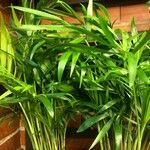
Chamaedorea elegans
شامادورا · Parlor palm · Parlour palm · Good-luck palm · Neanthe bella palm
Description
Source: leafsnapChamaedorea elegans, commonly known as the Parlor Palm, is a popular indoor plant that belongs to the Arecaceae family. Native to Mexico and Central America, it has been cultivated for centuries due to its attractive appearance and ease of care. The plant features a slender stem that can grow up to 3–4 feet tall, topped with clusters of delicate, dark green fronds with a glossy texture, lending it an elegant look. The Parlor Palm thrives in bright but indirect light and prefers moderate humidity levels. While it can tolerate low-light conditions, its growth may slow, and it might not produce new leaves as frequently. The soil should be kept moist but not waterlogged, allowing it to dry out slightly between waterings. This plant is renowned for its air-purifying properties, effectively removing toxins such as formaldehyde from indoor air, making it an excellent choice for homes or offices with poor ventilation. Overall, Chamaedorea elegans is an excellent choice for those seeking an attractive yet low-maintenance indoor plant that adds greenery to their living spaces while also improving air quality.
🌳 Often dismissed as mere ornamentation, the parlor palm actually serves as an environmental ally, readily removing harmful compounds like formaldehyde from the air we breathe. Other members of the palm family produce oils used in food and beauty products, and although the parlor palm shares this trait, its slow growth and small stature prevent it from being a source of those oils.
🎭 Vigor, good luck
Care Guide
💧 Water Every 7 days
The parlor palm originates from tropical rainforests and thrives in environments with high humidity and moderate light. Water the plant every 1 to 2 weeks, allowing the soil to dry out slightly between waterings. During the growing season, misting the leaves can help increase humidity, mimicking the plant's natural habitat.
When Should I Water My Parlor Palm?
Watering your parlor palm correctly is vital for its health and growth. You should water when the soil feels dry at a depth of 1 to 2 inches. Look for signs in the leaves; wilting, drooping, curliness, or yellowish and dry edges indicate it's time to water. The roots should also be healthy and hydrated, not dry or brittle. Performing a weight test on the pot or observing the watering frequency can also guide when to water. High temperatures and low humidity increase water needs, while risks of underwatering include stunted growth and leaf discoloration. Conversely, overwatering can cause root rot and fungal diseases. Monitoring these signs will help ensure your parlor palm receives just the right amount of water.
How Should I Water My Parlor Palm?
Parlor palm prefers methods that avoid over-saturation, such as bottom watering or using a watering can with a long spout. Consider using a moisture meter to check the soil's moisture before watering; a reading of 4 (on a scale of 1 to 10) suggests it's time to water again. Ensure you water the soil directly without wetting the leaves to prevent fungal issues and root rot. Smaller and more frequent watering schedules are recommended over less frequent heavy watering. Avoid over-watering by allowing the soil to dry slightly between sessions and ensure the pot has good drainage.
How Much Water Does Parlor Palm Really Need?
The amount of water your parlor palm requires depends on several factors including pot size, plant size, and root depth. Typically, the top 6 inches of soil where the roots mainly occupy should be kept moist but not waterlogged. Larger plants and smaller pots will generally need more frequent watering than smaller plants and larger pots. Water thoroughly and then allow the top inch of soil to dry out before watering again. Well-hydrated parlor palms display lush, green leaves and evenly moist soil without signs of soggy or dry conditions. Balancing is key—too much water leads to root rot while too little can cause dry, brown leaves.
What Kind of Water is Best for Parlor Palm?
Rainwater or filtered water is ideal for parlor palms due to its sensitivity to chemicals often found in tap water, including chlorine and fluoride. These can cause leaf tip burn or other growth issues. Letting tap water sit for 24 hours before use can help to dechlorinate it, making it safer to use. Avoid water with high mineral content such as hard water to prevent toxicity. Using room temperature water is also advisable to prevent shock to the plant's roots.
How Do Parlor Palm's Watering Needs Change with the Seasons?
The watering needs of your parlor palm will vary throughout the year. In spring, it's crucial to keep the soil consistently moist to support active growth. During summer, reduce watering as the plant may naturally conserve energy. In autumn, decrease the frequency gradually, maintaining lightly moist soil as the plant prepares for dormancy. Water sparingly in winter, letting the topsoil dry out between waterings, as growth slows down significantly during this season.
☀️ Light Partial sun
Parlor palm does best in filtered sunlight, enjoying the gentle warmth of rays that aren't direct. Originating from understory habitats, it grows well even in lower-light conditions. However, inadequate light can cause stunted growth, while too much light may scorch the leaves.
What are the sunlight requirements for a Parlor Palm?
Parlor Palms thrive in conditions with filtered sunlight and can endure lower light environments, making them ideal for indoor settings. They prefer receiving about 3-6 hours of sunlight daily but can survive in full shade areas where sunlight is less than 3 hours. It's crucial to monitor the movement of sunlight through your space to find the best spots that offer a balance of light and shade, ensuring the plants’ well-being.
How does artificial lighting benefit indoor plants, and what are the guidelines for its use?
Artificial lighting is essential for indoor plant growth, especially when natural sunlight is insufficient. This can happen in winter or in spaces that don't receive enough sunlight. LED lights are recommended due to their ability to provide specific light wavelengths needed for plant growth. The intensity required varies depending on the type of plant: full sun plants need 30-50W/sq ft, partial sun plants require 20-30W/sq ft, and full shade plants should have 10-20W/sq ft. Lights should be placed 12-36 inches above the plant and turned on for about 8-12 hours daily to mimic natural daylight conditions efficiently.
What are the typical symptoms of improper lighting for a Parlor Palm?
When a Parlor Palm doesn't receive adequate light, several symptoms can arise, signaling distress. These include slower or halted growth, due to the plant entering a survival mode with reduced leaf production. Leaves may also show lighter coloration or irregular patterns, indicating a lack of chlorophyll and essential nutrients, while new leaves might grow smaller than usual. Additionally, excessive sunlight can lead to chlorosis (yellowing of leaves), sunscald, leaf curling, wilting, and leaf scorching, each affecting the plant's ability to photosynthesize and overall health.
What are the solutions for managing insufficient or excessive sunlight exposure for a Parlor Palm?
To address insufficient sunlight, gradually relocate the plant to sunnier spots to receive 3-6 hours of direct sunlight daily. If moving the plant isn't feasible, consider artificial lighting solutions, such as keeping a lamp on for at least 8 hours a day or using professional grow lights. For outdoor plants, avoid sudden changes in light exposure to prevent sunburn. Pruning obstructions like tree branches can improve sunlight access. If feasible, transplanting smaller plants during their dormant period to a brighter location can also help. Note that while affected parts of the plant may not recover, new growth should be healthy after adjusting light conditions.
🌡️ Temperature 20–37.8°C
The parlor palm, a temperate woody plant, thrives at temperatures from 68 to 100 ℉ (20 to 38 ℃). It comes from tropical areas where temperatures are generally between 75 and 85 ℉ (24 to 29 ℃). In winter, keep the plant out of drafts and ensure the temperature does not fall below 60 ℉ (15.5 ℃) to prevent leaf damage.
What is the ideal temperature range for a Parlor Palm?
The Parlor Palm thrives in a temperature range of 68 to 100°F (20 to 38°C), with native temperatures of its tropical habitat typically ranging from 75 to 85°F (24 to 29°C). To prevent leaf damage, it's crucial to avoid exposure to drafts and ensure the temperature does not fall below 60°F (15.5°C) during winter. This plant loves heat, and exposure to cold can be detrimental. In autumn, if grown outdoors, it should be brought indoors and placed near a bright window but kept away from direct heat sources to maintain optimal growing conditions.
What should I do if my Parlor Palm is exposed to low temperatures?
Parlor Palms prefer warm temperatures and are not tolerant of the cold, thriving best above 68°F (20°C). In the event of exposure to temperatures below 34°F (1°C), the leaves may lighten before gradually turning brown or black, with wilting and drooping likely to occur. If frost damage happens, trim off the frost-damaged parts of the plant and move it to a warm, indoor environment for protection against the cold. Positioning the plant near a south-facing window ensures sufficient sunlight, but keep it away from heaters or air conditioners to avoid air dryness.
How should I care for my Parlor Palm during high temperatures?
During the summer, it's important to keep the Parlor Palm below 100°F (38°C) to avoid overheating. Temperatures above 109°F (43°C) can cause the leaves to lighten and increase the plant's susceptibility to sunburn. To care for a plant that has been exposed to excessively high temperatures, trim away the sunburned and dried-up parts. Relocating the plant to a shaded area, especially from midday and afternoon sun, and watering it in the morning and evening helps keep the soil moist and supports its health.
What are the basics of Parlor Palm care?
The Parlor Palm, or Chamaedorea elegans, is a temperate woody plant that demands specific environmental conditions to thrive. It is essential to maintain a warm temperature above 68°F (20°C) during the winter and ensure the temperature does not approach 41°F (5°C) to prevent damage. The plant requires a bright location away from direct heat sources when brought indoors during autumn. Adhering to these temperature guidelines and providing proper care, especially during extreme weather conditions, is key to nurturing a healthy Parlor Palm.
💨 Humidity normal (40-60%)
This plant will thrive in moderate humidity, which is probably the level in your home. However, misting it a few times a week can be very beneficial. Make sure the room has good ventilation.
🪴 Soil 6-7
🌱 Fertilizer
Fertilize your Parlor palm in early spring to encourage healthy development. Routine fertilization boosts overall vigor, producing stronger growth, greater tolerance of challenging conditions, and improved resistance to pests and disease. Keep a consistent fertilizing schedule for your Parlor palm to maintain lush, deeply colored foliage.
Why should I put plant food on my Parlor palm?
Whether you own a Parlor palm, regular fertilization is key for its overall health. By providing the proper nutrients, your plant will grow stronger, making it more resilient to tough conditions and better able to combat diseases and pests. The foliage of your Parlor palm is its main allure, so it is crucial to maintain it. This can be achieved by following a specific fertilization schedule tailored to your Parlor palm, resulting in vibrant, lush leaves.
When should I fertilize my Parlor palm for best results?
To keep your Parlor palm healthy and promote growth, it's recommended to fertilize it for the first time in late winter or early spring. This provides the necessary nutrients for the plant to thrive once the weather warms up. Additionally, if you live in a warm climate region, it can be beneficial to fertilize your Parlor palm again in early fall. This not only adds extra nutrients to the soil for the upcoming growing season, but also helps the plant become more resilient against winter cold, reducing the risk of foliage damage. Early fertilization ensures that new branches have enough time to grow and withstand the cold winter.
When is a bad time to fertilize my Parlor palm?
You should not fertilize your Parlor palm a few times throughout the year. The first time is during the early and mid-winter months when the plant is dormant. During this period, the Parlor palm does not require any feeding. It is also not recommended to fertilize the plant during the late spring and summer. These seasons are characterized by hotter and drier weather, which can have a negative impact on the palm if fertilized. To avoid any issues, it is best to stick to a fertilization schedule that involves feeding only in early spring and early fall.
What kind of fertilizer does my Parlor palm require?
Parlor palms primarily need nitrogen as their main nutrient, but that doesn't mean phosphorus and potassium are unimportant. They actually require a decent amount of all three nutrients for optimal growth. A balanced fertilizer like 10-10-10 can be effective, but a more specific ratio of nutrients, with higher nitrogen content, like 10-6-4, often leads to better results. Both granular and liquid fertilizers can be used for fertilizing.
How should I add fertilizer to my Parlor palm?
To fertilize your Parlor palm, you have two options: granular or liquid fertilizer. If you choose granular fertilizer, simply sprinkle it on the soil at the correct time. The nutrients will be released slowly over time. Before applying the fertilizer, it's a good idea to lightly water your palm. Using liquid fertilizer is less common, but if you prefer this method, mix the fertilizer with water and pour it around the base of the palm. It's sometimes helpful to do a soil test before fertilizing to check if the pH needs any adjustment.
🪴 Pot & Repot 1-2 years
When you repot a parlor palm, choose a pot slightly larger that provides good drainage. Use a well-draining potting mix. Repot in spring, taking care not to harm the roots during the move. Place the palm at the same level it was in the previous pot. Water thoroughly after repotting and keep it in a warm spot with bright, indirect light. Avoid overwatering because it can cause root rot.
✂️ Pruning
The parlor palm is a tropical plant known for its tolerance to low light and its elegant, feathery fronds. It requires minimal pruning; simply trim the dead leaves in early spring to promote growth and maintain its health. Use clean, sharp scissors to prevent damage and minimize the risk of disease and pests.
🌿 Propagating
🐛 Diseases & pets
☠️ Toxicity
Parlor palm is a non-toxic plant for humans and pets. Indoor houseplants are even praised for their air-purifying qualities.
Characteristics
- Plant Type
- Palm, Herb
- Life Cycle
- Perennial
- Genus
- Chamaedorea
- Family
- Arecaceae
- Hardiness Zone
- 10-12
- Mature Height
- 1.83 m to 4.88 m
- Mature Spread
- 91 cm
- Leaf Color
- Green
- Leaf Type
- Evergreen
- Flower Color
- Yellow
- Flower Size
- 2.54 cm
- Bloom Time
- Summer
- Planting Time
- Spring, Summer, Autumn, Winter
- Harvest Time
- All year round
- Native Area
- Honduras, Mexico, Guatemala, Belize