Chamaedorea tepejilote
Pacaya palm
Description
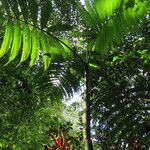
Source: leafsnapChamaedorea tepejilote, also known as the pacaya palm, is a species of Chamaedorea palm tree found in the understory of the forests of southern Mexico, Central America, and northern Colombia.
Care Guide
💧 Water
☀️ Light Partial sun
The Pacaya palm naturally grows in habitats like forest understories and rocky locations, where it is subject to natural shade. It favors partial sun but can tolerate both full sun and deep shade, illustrating its hardy, adaptable character.
🌡️ Temperature 20–37.8°C
The Pacaya palm comes from tropical areas where the climate is generally warm and humid. Consequently, it is well suited to high temperatures and moisture. It does not tolerate sudden temperature changes and prefers a steady thermal environment, so avoiding temperature fluctuations indoors is important. It typically cannot withstand cold and requires warmer conditions for growth. If the ambient temperature falls too low, the plant may stop growing or even die.
💨 Humidity
🪴 Soil 6-7
🌱 Fertilizer
To encourage healthy growth, fertilize your Pacaya palm in early spring. Regular feeding boosts its overall health, producing vigorous growth, greater resilience to harsh conditions, and improved resistance to pests and diseases. Stick to a consistent fertilization schedule for your Pacaya palm to maintain lively foliage with deep color and a lush look.
🪴 Pot & Repot
✂️ Pruning
🌿 Propagating
🐛 Diseases & pets
☠️ Toxicity
Characteristics
- Plant Type
- Palm
- Life Cycle
- Perennial
- Genus
- Chamaedorea
- Family
- Arecaceae
- Hardiness Zone
- 10-11
- Mature Height
- 2.13 m to 3.96 m
- Mature Spread
- 1.52 m to 2.44 m
- Leaf Color
- Dark Green, Forest Green
- Leaf Type
- Evergreen
- Flower Size
- 0.51 cm to 0.76 cm
- Bloom Time
- Spring, Summer
- Planting Time
- Spring, Summer, Autumn
- Harvest Time
- Summer, Fall
- Native Area
- Colombia, Belize, Honduras, Mexico, Guatemala, El Salvador, Nicaragua, Costa Rica, Panama