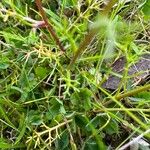
Chamaemelum fuscatum
Chamomile · Dusky Dogfennel
Description
Source: wikipedia (CC BY-SA)Chamaemelum fuscatum, commonly known as dusky dogfennel or dark chamomile, is an annual herb in the family Asteraceae, native to Europe and introduced to California.
Care Guide
💧 Water
Chamomile, which is native to well-drained temperate soils, thrives with moderate moisture and can withstand dry spells. To prevent waterlogging, water the plant weekly, mimicking its natural rainfall patterns. Chamomile is ideal for container gardening, as it benefits from controlled watering that reflects its native habitat.
☀️ Light Full sun
Chamomile comes from bright, open settings and thrives in full sun. It can tolerate some partial sun but prefers direct sunlight for optimal growth. This plant, which may be annual or biennial, is known for its sun-loving nature.
What are the sunlight requirements for growing Chamomile?
Chamomile thrives best in full sun, requiring more than 6 hours of sunlight daily. It can also tolerate partial sun, which entails about 3-6 hours of sunlight. It's important to observe the movement of sunlight in your garden to ensure that your Chamomile plants get the right balance of light and shade, contributing to their health and growth.
How does Chamomile grow and in what conditions?
Chamomile is originally from bright, open environments and it flourishes under full sun exposure. Although it can grow in partial sun, it shows a preference for full sun for optimal growth. This plant, whether an annual or biennial, exhibits its sun-loving nature prominently. When natural sunlight is not enough, especially during winter or in less sunny areas, artificial lighting can be a great support for indoor plants. LED lights, mimicking natural sunlight, should be adjusted in intensity and duration according to the plant's needs to foster healthy growth.
What symptoms indicate Chamomile is not getting enough light?
Chamomile plants not receiving sufficient light may show several symptoms, such as smaller new leaves, leggy or sparse growth, faster leaf drop, slower or no new growth, and lighter-colored new leaves. These signs suggest the plant may be trying to conserve resources or adapt to low light levels. Additionally, excessive sunlight can cause chlorosis, sunscald, leaf curling, wilting, and leaf scorching. Observing your plant's response to light is key to adjusting its exposure for healthy growth.
What solutions are available to address sunlight issues for Chamomile?
For indoor Chamomile plants, gradually increasing sun exposure to at least 6 hours daily or using artificial light for 8 hours daily can improve growth. Outdoor plants benefit from a gradual relocation to sunnier spots to prevent shock. To enhance sunlight access, remove obstructions or consider transplanting to a better-lit area. It's essential to note that while increasing light exposure helps, parts of the plant already affected by previous poor light conditions may not recover fully. New growth, however, should be healthy with these adjustments.
🌡️ Temperature 15–35°C
Chamomile can tolerate a wide range of temperatures, but its distribution can still be restricted by specific combinations of moisture and heat. It grows best in warm summer conditions with enough rainfall or watering. Extended periods of cloudy, rainy weather, as well as sustained high temperatures, raise the likelihood of Chamomile dying. In winter, adequate protection from the cold can improve the plant's chances of survival.
💨 Humidity
🪴 Soil 6-7
🌱 Fertilizer
When most of Chamomile's blooms have fully opened, it's time to resume fertilizing. At the peak of bloom production, begin feeding every three to four weeks, as weather permits. Once Chamomile starts producing fewer new blooms, stop fertilizing; there's no need to feed the plant when it can no longer produce additional blooms.
🪴 Pot & Repot
✂️ Pruning
Chamomile is a perennial herb known for its fragrant flowers and therapeutic benefits. To keep your plant healthy and encourage new blooms and bushier growth, prune it between early and late spring to remove dead stems and spent flowers. Regular pruning helps maintain a compact shape and increases flowering, resulting in a healthier plant.
🌿 Propagating
🐛 Diseases & pets
☠️ Toxicity
Characteristics
- Plant Type
- Herb
- Life Cycle
- Annual, Perennial
- Genus
- Chamaemelum
- Family
- Asteraceae
- Hardiness Zone
- 7-10
- Mature Height
- 20 cm to 40 cm
- Mature Spread
- 15 cm to 30 cm
- Leaf Color
- Green, Blue
- Leaf Type
- Deciduous
- Flower Color
- White, Yellow
- Flower Size
- 2.03 cm to 3.05 cm
- Bloom Time
- Late winter, Spring
- Planting Time
- Spring, Summer, Autumn
- Harvest Time
- Late spring, Summer
- Native Area
- Tunisia, Italy, Spain, France, Albania, Algeria, Morocco, Portugal